- By the dedicated team of editors and writers at Newsletter Station.
Setting a dinner table may seem like a simple task, but a thoughtfully arranged table can transform an ordinary meal into a warm, elegant, and memorable dining experience. Whether you're hosting a holiday celebration, a formal dinner party, or a relaxed family gathering, learning how to set a table properly helps create a welcoming atmosphere that guests will appreciate.
From choosing linens and arranging dinnerware to adding decorative accents, the details of a well-set table can elevate the entire meal. In this guide, we’ll walk through the essentials of dinner table setup along with modern tips to help you create a polished and inviting presentation for any occasion.
Choose the Right Tablecloth and Napkins
The foundation of an attractive table setting begins with your linens. A tablecloth helps define the tone of the meal and can instantly make the table feel more refined. Crisp white linens offer a timeless and elegant appearance, while textured fabrics or seasonal patterns can add personality and warmth.
Before guests arrive, make sure your tablecloth is clean, wrinkle-free, and sized correctly for the table. A table runner can also add visual interest without covering the entire surface, making it a popular choice for casual and contemporary dining.
Napkins are another important detail. Cloth napkins create a more polished look than paper options and can be folded or styled creatively for added charm. Traditionally, napkins are placed to the left of the plate or centered neatly on top of the dinner plate.
For seasonal gatherings, consider coordinating napkin colors with your décor or centerpiece to create a cohesive look.
Arrange the Essential Dinnerware
A proper table setting starts with the dinner plate placed at the center of each seat. For formal meals, a charger plate or underplate is often used beneath the dinner plate to add elegance and structure to the arrangement.
Next, arrange utensils in the order they will be used, working from the outside inward:
Forks go to the left of the plate
Knives and spoons go to the right
Knife blades should face inward toward the plate
If salad or appetizers are being served, place the salad fork to the outer left of the dinner fork. Soup spoons should sit to the outer right of the knives.
When serving bread or rolls, place a small bread plate above the forks, with a butter knife resting diagonally across it.
Modern table settings are often more minimal, so don’t feel pressured to include extra pieces unless they are needed for the meal being served.
Position Glassware Properly
Glassware placement helps create balance and functionality on the table. Traditionally, glasses are arranged above the knives on the upper right side of the place setting.
For formal dinners:
The water glass sits closest to the plate
Red wine and white wine glasses are placed slightly behind and to the right
Champagne flutes may be added for celebrations or special occasions
For casual gatherings, a single water glass is perfectly acceptable and keeps the table feeling clean and uncluttered.
Matching glassware creates a polished appearance, but mixing styles can also add charm and character for more relaxed dining experiences.
Add Serving Utensils and Decorative Details
Additional utensils, such as dessert spoons, seafood forks, or soup spoons, should be included only if needed for the menu. Dessert utensils are typically placed horizontally above the dinner plate.
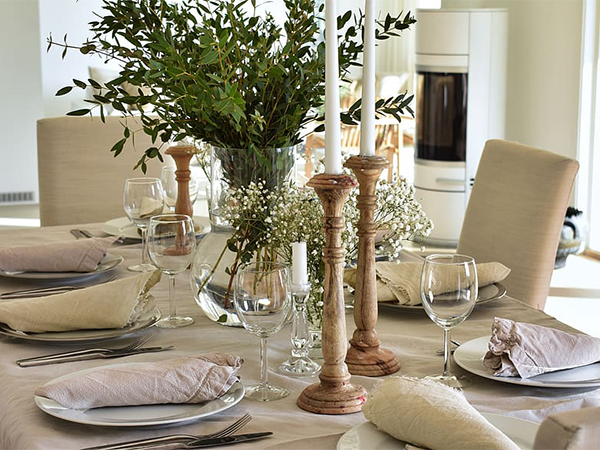
A centerpiece can beautifully tie the entire table together. Fresh flowers, candles, greenery, or seasonal decorations all work well. Still, it’s important to keep arrangements low enough so guests can comfortably see and talk to one another across the table.
Simple decorative accents can also enhance the atmosphere, including:
Place cards for assigned seating
Small decorative napkin rings
Seasonal accents like pinecones, greenery, or fresh herbs
Soft candlelight for warmth and ambiance
Current entertaining trends often favor natural textures, sustainable décor, and understated elegance rather than overly formal presentations.
Review the Final Presentation
Before guests sit down, take a few moments to review the entire table setup. Straighten utensils, center plates, and ensure glassware is spotless and free from fingerprints or water spots.
Symmetry and spacing help the table look organized and intentional. Each guest should have enough room to dine comfortably without crowded place settings.
If you’re hosting a larger gathering, consider setting the table in advance to reduce stress and allow more time to focus on food preparation and enjoying your guests.
Create a Dining Experience Guests Will Remember
Setting a dinner table is about more than following etiquette rules. It’s an opportunity to create a welcoming environment where guests feel comfortable, appreciated, and ready to enjoy good food and meaningful conversation.
Whether your style is formal and elegant or casual and cozy, thoughtful table settings can make every meal feel special. By combining practical organization with personal touches, you can create a dining experience that leaves a lasting impression on family and friends alike.
With a little preparation and attention to detail, any table can become the perfect setting for memorable moments and shared meals.