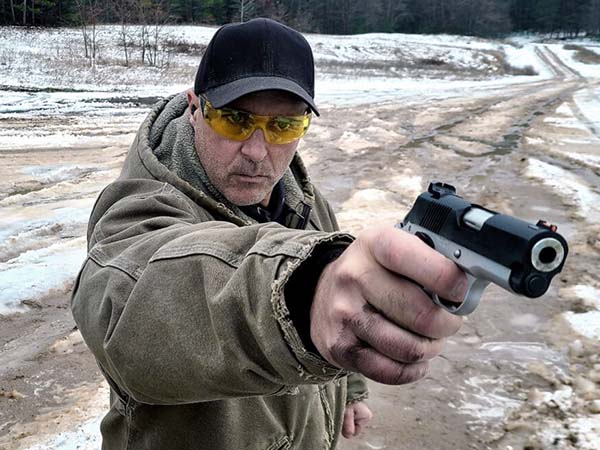
Why One-Handed Shooting Is an Essential Firearms Skill
- By the dedicated team of editors and writers at Newsletter Station.
When it comes to firearms training, most shooters focus heavily on two-handed techniques for stability, control, and accuracy. While that foundation is critical, one-handed shooting is an equally important skill that is often overlooked in modern firearm training programs.
Developing the ability to safely and effectively operate a firearm with one hand improves adaptability, confidence, and real-world preparedness. In dynamic situations where conditions change quickly, this skill can make a meaningful difference in performance and safety.
Below are key reasons why incorporating one-handed shooting into your training routine is so valuable.
Real-World Self-Defense Situations
In a real self-defense scenario, conditions are rarely ideal. You may need to react while:
Carrying an object or protecting someone
Moving through tight spaces
Recovering from physical imbalance or disruption
One-handed shooting helps prepare you for unpredictable environments where a stable two-handed grip may not be possible. Training under these conditions builds adaptability and situational awareness.
Injury or Limited Mobility Scenarios
One of the most important reasons to learn one-handed shooting is the possibility of injury. In high-stress situations, you may not have full use of both arms.
Training for one-handed control ensures you can still:
Operate your firearm safely
Maintain trigger discipline
Engage effectively if necessary
This type of training is widely emphasized in modern defensive shooting programs because it builds resilience under pressure.
Close-Quarters and Confined Spaces
Environments such as hallways, vehicles, stairwells, or crowded areas can limit movement and restrict two-handed positioning.
One-handed techniques allow you to:
Maintain control in tight spaces
Move more freely during engagement scenarios
Keep your firearm accessible while navigating obstacles
This added flexibility can be critical in confined or rapidly changing environments.
Improved Use of Cover and Angles
One-handed shooting can significantly improve your ability to use cover effectively. It allows you to:
Lean around barriers more efficiently
Reduce exposure to potential threats
Maintain better body positioning behind cover
By practicing one-handed techniques, shooters learn to work with their environment rather than against it.
Developing Ambidextrous Skills
Training your non-dominant hand is a key component of becoming a well-rounded shooter. Ambidextrous ability is valuable when:
Switching hands due to injury or fatigue
Adjusting shooting angles around cover
Improving overall coordination and control
Consistent practice with both hands increases flexibility and overall firearm proficiency.
Building Confidence Under Stress
Confidence plays a major role in safe and effective firearm handling. Knowing you can operate your firearm with either hand helps reduce hesitation during stressful situations.
Benefits include:
Better focus under pressure
Improved decision-making speed
Greater comfort with adaptive shooting positions
This mental preparedness is just as important as physical skill development.
Competitive Shooting Advantages
In many competitive shooting sports, one-handed shooting is a required or highly beneficial skill. Practicing these techniques can improve:
Speed and transition control
Accuracy under varied conditions
Overall shooting discipline and consistency
Competitive shooters who train one-handed often gain a performance edge in events that test versatility.
Safety and Responsible Training
One-handed shooting should always be practiced under proper supervision and in a controlled environment. Prioritizing firearm safety is essential, including:
Following all range rules
Using certified instructors when possible
Practicing with unloaded or training-safe equipment when appropriate
Responsible training ensures skill development without compromising safety.
While two-handed shooting remains the foundation of firearm accuracy and control, one-handed shooting is a critical complementary skill. It enhances adaptability, improves confidence, and prepares shooters for real-world conditions where flexibility is essential.
Whether you are training for personal defense, professional preparedness, or competitive shooting, incorporating one-handed techniques into your practice routine can help you become a more capable and well-rounded firearm user.