Firearm Carry Safety: 9 Mistakes Every Responsible Gun Owner Should Avoid
- By the dedicated team of editors and writers at Newsletter Station.
Carrying a firearm is both a legal right in many jurisdictions and a serious responsibility. Whether you're a law enforcement professional, a licensed concealed carrier, a competitive shooter, or a recreational firearm owner, safe firearm handling should always be your highest priority.
Responsible firearm ownership extends beyond marksmanship. It includes understanding applicable laws, practicing proper handling techniques, maintaining your equipment, and making sound decisions every time you carry.
Here are some of the most common mistakes firearm owners should avoid to help promote safe and responsible firearm carry.
Skipping Professional Firearms Training
Owning a firearm does not automatically prepare someone to carry or use it safely. Professional instruction teaches the fundamentals of firearm safety, safe handling, marksmanship, situational awareness, and legal considerations.
Even experienced shooters benefit from refresher courses and ongoing practice. Regular training helps reinforce good habits and keeps your skills sharp.
Failing to Secure Your Firearm
When your firearm is not under your direct control, it should be stored securely.
A quality gun safe, lockbox, or other secure storage device helps prevent unauthorized access, especially by children or visitors. Secure storage also helps reduce the risk of theft and accidental injury.
Responsible ownership includes safely storing both firearms and ammunition according to applicable laws and your household's needs.
Carrying Without Understanding Local Laws
Firearm laws vary significantly by state and local jurisdiction and may change over time.
Before carrying a firearm, make sure you understand:
Licensing or permit requirements
Location restrictions
Transportation regulations
Reciprocity rules when traveling
Duty-to-inform requirements where applicable
Staying informed helps ensure you remain in compliance with current laws.
Ignoring Trigger Discipline
One of the most important firearm safety rules is keeping your finger off the trigger until your sights are on target and you have made the conscious decision to fire.
Proper trigger discipline greatly reduces the risk of negligent discharges and should become second nature through consistent practice.
Failing to Identify Your Target and What Is Beyond It
Responsible firearm use requires complete awareness of your surroundings.
Before firing, always positively identify your intended target and understand what lies behind and around it. Every projectile has the potential to continue beyond its intended target, making situational awareness essential for safe firearm handling.
Carrying While Impaired
Never carry or handle a firearm while under the influence of alcohol, illegal drugs, or medications that impair judgment, coordination, or reaction time.
Responsible decision-making requires a clear mind. If your abilities are impaired in any way, avoid handling firearms until it is safe to do so.
Improperly Displaying or Handling a Firearm
Displaying or handling a firearm carelessly can create unnecessary alarm and may violate local laws.
Keep your firearm properly holstered or securely stored unless there is a lawful and legitimate reason to handle it. Responsible firearm owners understand that discretion and sound judgment are essential parts of safe carry.
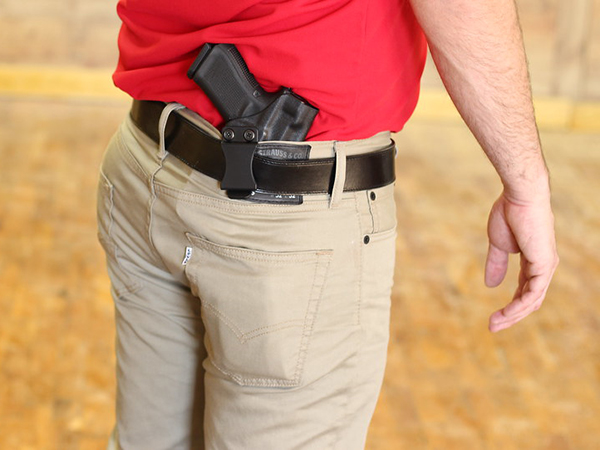
Using an Unsafe or Poorly Fitted Holster
A quality holster is an important piece of safety equipment.
Choose one that:
Is designed specifically for your firearm model
Completely covers the trigger guard
Provides proper retention
Allows consistent, safe access
Fits your preferred carry method comfortably
A poorly designed or worn holster can compromise both safety and firearm retention.
Neglecting Regular Maintenance
Firearms should be inspected and maintained according to the manufacturer's recommendations.
Routine maintenance includes:
Cleaning after use
Inspecting for excessive wear
Checking sights and accessories
Verifying proper function
Safely confirming the firearm's unloaded condition before cleaning or handling
Well-maintained firearms are generally more reliable and safer to operate.
Responsible Firearm Ownership Is an Ongoing Commitment
Safe firearm carry is built on preparation, discipline, and continuous education. Responsible gun owners understand that safety doesn't stop after purchasing a firearm—it requires consistent practice, secure storage, regular maintenance, and respect for applicable laws.
Whether you're new to firearm ownership or have years of experience, continually reinforcing safe habits helps protect you, your family, and those around you. By prioritizing education and responsible decision-making, you contribute to a stronger culture of firearm safety for everyone.