- By the dedicated team of editors and writers at Newsletter Station.
Imagine this scenario: You're rushing to work, and as you turn the key in your car's ignition, all you hear is a frustrating click, and your car won't start. Chances are, you have a dead battery. In such situations, jumpstarting your car is often the quickest solution to get back on the road. However, jumpstarting a vehicle can be potentially dangerous if not done correctly.
This blog will discuss some essential safety tips for jumpstarting a car to ensure you can safely and effectively get your vehicle up and running again.
Gather the Right Equipment
Before attempting to jumpstart your car, ensure you have the necessary equipment:
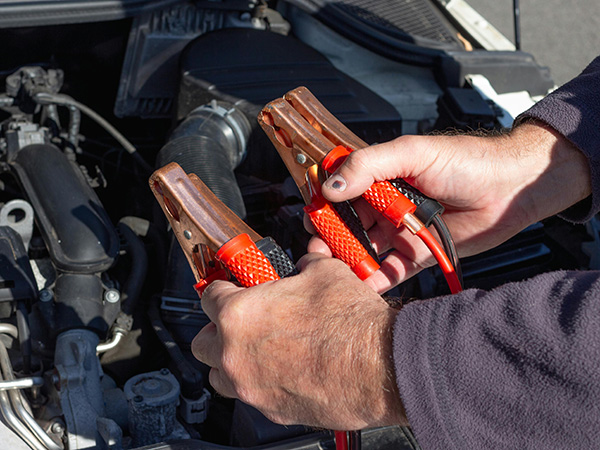
Jumper cables: Make sure you have a set of good-quality jumper cables with thick, sturdy clamps.
Another vehicle: You'll need another functioning vehicle with a healthy battery to jumpstart your car.
Park the Vehicles Safely
Once you have the required equipment, follow these steps:
Position both vehicles so that their batteries are as close to each other as possible, but do not let them touch.
Make sure both vehicles are in "park" or "neutral" and that the ignition is turned off in both cars.
Engage the parking brake on both vehicles to prevent them from moving.
Identify the Battery Terminals
Before connecting the jumper cables, identify the battery terminals. In most cases, the battery terminals are labeled as "positive" (+) and "negative" (-). The positive terminal is usually red, while the negative terminal is black.
Connect the Jumper Cables
Here's the correct sequence for connecting the jumper cables:
Start with the functioning vehicle. Connect one end of the red (positive) jumper cable to the positive terminal of the good battery.
Next, attach the other end of the red (positive) cable to the dead battery's positive terminal.
Connect one end of the black (negative) cable to the good battery's negative terminal.
Instead of connecting the other end of the black (negative) cable directly to the dead battery's negative terminal, attach it to an unpainted, metal part of the engine block or chassis of the stalled vehicle. This serves as a grounding point and reduces the risk of sparks near the battery, which can be dangerous.
Start the Functioning Vehicle
Once the cables are securely connected, start the functioning vehicle and let it run for a few minutes. This will allow the dead battery to charge a bit.
Attempt to Start the Stalled Vehicle
Now, try to start the stalled vehicle. If it starts successfully, let both vehicles run for a few more minutes to allow the dead battery to recharge further.
Remove the Jumper Cables
When removing the jumper cables, do it in the reverse order of how you connected them:
Start by disconnecting the black (negative) cable from the grounded point on the stalled vehicle.
Then, remove the black (negative) cable from the negative terminal of the functioning battery.
Next, disconnect the red (positive) cable from the dead battery's positive terminal.
Finally, remove the red (positive) cable from the positive terminal of the functioning battery.
Drive the Stalled Vehicle
After successfully jumpstarting your car, drive it for at least 15-20 minutes to allow the battery to recharge fully. This will help prevent future dead battery issues.
Jumpstarting a car can be a lifesaver in a pinch, but following safety precautions is essential to avoid accidents or damage to your vehicle's electrical system. By gathering the right equipment, parking the cars safely, and connecting and disconnecting the jumper cables in the correct order, you can safely and effectively jumpstart your vehicle when needed.
Remember that if you are unsure about the process or have concerns about your vehicle's condition, it's best to seek professional assistance from a mechanic or roadside assistance service.