
| Period | Medieval Europe, 9th–15th centuries |
|---|---|
| Worn By | Peasants and rural workers |
| Typical Occasion | Everyday wear for farming and labor |
| Materials | Wool, linen |
| Distinctive Details | Simple cut, loose fit, often belted |
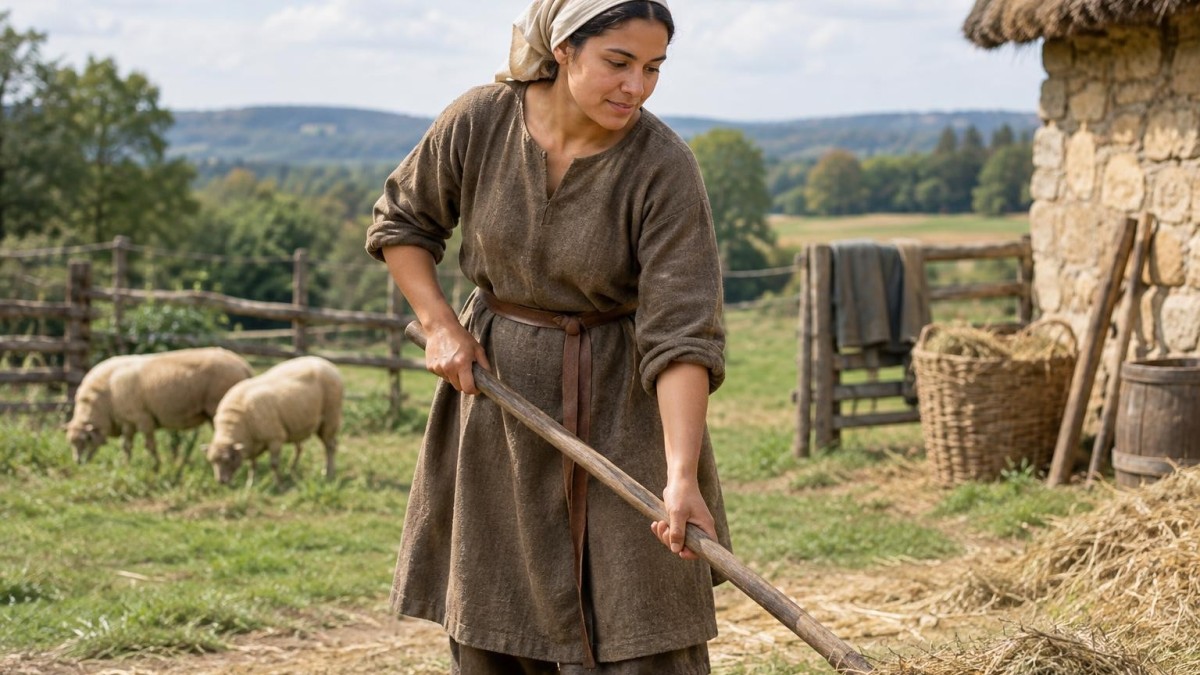
The medieval European peasant's tunic was more than just a piece of clothing; it was a practical solution tailored to the demands of rural life. Picture a plain, knee-length garment made of coarse wool or linen, hanging loose on the body with wide sleeves that allowed freedom of movement. Its natural earth tones—muted browns, grays, and greens—blended seamlessly with the rural environment.
Designed for Daily Labor
The tunic's simplicity made it ideal for peasants who engaged in constant physical work like planting, harvesting, and tending livestock. Unlike more elaborate garments that featured numerous decorations and close fits, the tunic was constructed to withstand wear and tear. Its loose fit eased movement, while the sleeves could be rolled up or tied back. Often secured with a leather belt, it provided a silhouette that was functional rather than fashionable.
This garment required minimal skill to make and repair, which was important as peasants typically acquired clothing through home production or local tradespeople. The choice of wool and linen throughout the seasons helped regulate body temperature—wool kept wearers warm in the chilly months, while linen offered breathability during the warmer seasons.
Everyday Essential and Symbol of Peasant Life
The tunic was everyday wear for the rural class, emblematic not only of their work but also their modest social status. Unlike nobles who adorned themselves with elaborate tunics featuring intricate embroidery, peasants wore plain versions without adornments. This simplicity didn't diminish the tunic’s importance; rather, it fulfilled a vital role as durable, comfortable clothing that enabled peasants to meet the physical challenges of medieval rural life.
Accessories and grooming also complemented the practical nature of the tunic. Hairstyles for peasants were typically simple, often tied back or covered with a linen headscarf to keep hair clean during labor. Footwear was sturdy and functional, made from leather or simple woven materials. Makeup and ornamental accessories were generally absent, emphasizing the tunic's role as functional everyday attire.
Through centuries, the tunic remained a foundational garment in the peasant wardrobe precisely because it balanced simplicity, durability, and comfort—a testament to the everyday resilience of medieval rural communities.
Newsletter Station provides professionally written, ready-to-send newsletters customized for your market and brand.
EXPLORE NEWSLETTER OPTIONS