
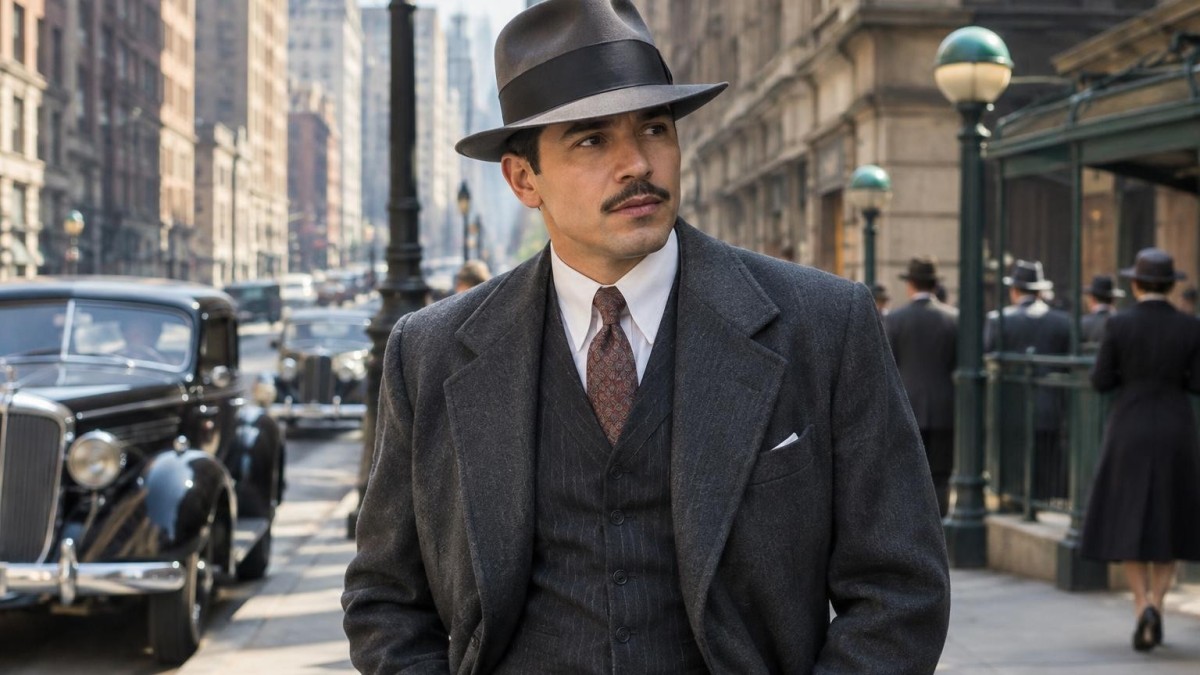
| Period | 1930s |
|---|---|
| Place | United States |
| Worn By | Urban men, professionals, entertainers |
| Typical Occasion | Casual to formal daytime wear |
| Materials | Felt, usually wool or fur felt |
| Distinctive Details | Pinched crown, medium brim, ribbon hatband |
Soft yet structured, the fedora’s felt brim cast a sharp shadow over the eyes of 1930s American men stepping onto bustling city streets. With its distinctive pinched crown and wide ribbon band, it was both a fashion statement and a practical accessory against the sun and rain. Its sleek silhouette perfectly matched the tailored suits prominent in urban centers, making it an essential part of daily menswear during the era.
The Fedora’s Rise in Urban America
The 1930s marked a time of rapid urbanization in the United States. Men migrating to cities for work needed attire that balanced formality with function. The fedora fit that niche perfectly. Able to complement a sharp suit while providing shelter from variable weather, it became the hat of choice for businessmen, clerks, and professionals who ventured outdoors daily. Its moderate brim shielded faces without restricting vision—a practical design for navigating crowded sidewalks or boarding streetcars.
Hollywood’s Influence and Cultural Appeal
Popularity for the fedora soared as it was embraced by Hollywood icons and movie characters, who helped cement the hat’s image as cool, confident, and sophisticated. Stars of film noir and gangster flicks often sported fedoras, infusing the accessory with an aura of intrigue and toughness. Audiences nationwide, captivated by these portrayals, eagerly adopted the fedora’s style, weaving it into the fabric of everyday fashion and popular culture.
Practical Style Meets Distinctive Details
Beyond looks, the fedora provided durability and comfort. Made commonly from wool or fur felt, it was warm in winter yet breathable enough for warmer seasons. The pinched crown allowed for easy gripping when putting the hat on or taking it off, while the ribbon band added a finishing touch of elegance. Its versatility made it suitable for a variety of occasions—from office workdays to weekend outings—solidifying its status as a wardrobe staple for decades.
In sum, the fedora’s blend of style, functionality, and cultural symbolism made it a defining element of 1930s American menswear. By harmonizing urban practicality with cinematic glamour, it secured a lasting place in fashion history, signaling a man’s readiness to face the city with confidence and panache.
Newsletter Station provides professionally written, ready-to-send newsletters customized for your market and brand.
EXPLORE NEWSLETTER OPTIONS