
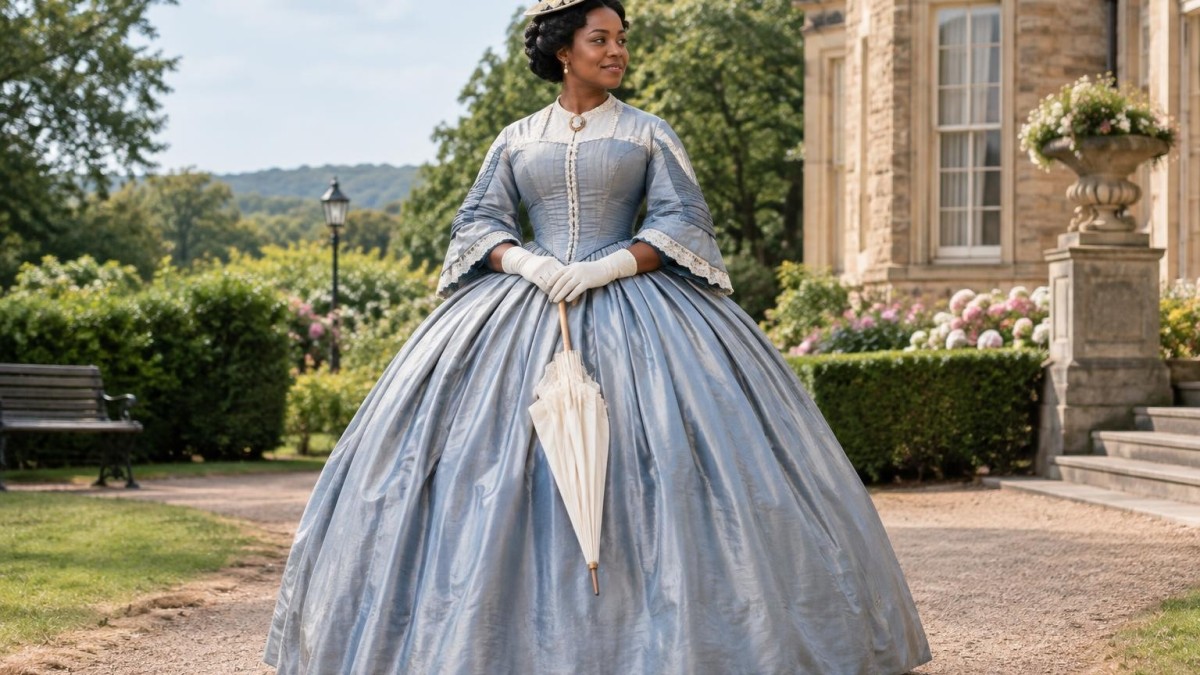
| Period | Mid-19th century (circa 1850s–1860s) |
|---|---|
| Place | Western societies, primarily Europe and North America |
| Worn By | Women of varied social classes, especially middle and upper classes |
| Typical Occasion | Both everyday wear and formal events |
| Materials | Steel or whalebone hoops, cotton or silk fabrics |
| Distinctive Details | Wide, bell-shaped skirts supported by hoops; often paired with corsets and fitted bodices |
Imagine the wide swish of a bell-shaped skirt brushing the floor, its voluminous curve shaped perfectly beneath delicate silk or crisp cotton. The hoop skirt, also called a crinoline, was the essential cornerstone of women's fashion in mid-19th century Western societies. Its distinct wide silhouette, created by concentric hoops sewn into petticoats, was both a style statement and a technological innovation that transformed everyday dress.
The Rise of the Hoop Skirt
The hoop skirt’s popularity surged around the 1850s and 1860s, replacing earlier layers of heavy petticoats that women had to wear to achieve a similar fullness. These petticoats were cumbersome and heavy, making movement difficult. The invention of the steel hoop cage, inspired by crinoline fabric (a stiffened horsehair textile), allowed wearers to support very wide skirts without excessive weight. This innovation made it possible to create dramatic volumes that flared outward in a bell shape, often extending several feet on each side.
This technological breakthrough corresponded with advancements in textile manufacturing and steel production, making hoop skirts more affordable and accessible beyond just the wealthiest women. It was a significant step in the industrialization of fashion, as mass production of hoops and fabrics increased availability.
Social Influences on Fashion
Beyond technology, social factors played a big role in the hoop skirt’s dominance. The silhouette was symbolic of femininity and social status. A wide skirt physically sealed off a personal space around the wearer, suggesting refinement and modesty. It communicated leisure; narrow working garments gave way to elaborate ensembles signaling women who were not engaged in manual labor.
Moreover, the hoop skirt aligned with contemporary ideals of beauty—emphasizing a small waist contrasted with a dramatically wide skirt, often further accentuated by a corset and fitted bodice. Hairstyles during this period were typically upswept, and accessories might include bonnets or hats perched atop carefully arranged curls. Makeup was subtle, focusing on natural tones, while gloves and parasols completed the ensemble.
The hoop skirt’s popularity faded towards the late 1860s as fashion shifted towards narrower shapes and bustle skirts, which relocated volume to the back. But during its heyday, the hoop skirt was a technological marvel and social emblem, defining Western women’s dress through a combination of innovation and evolving cultural ideals.
Newsletter Station provides professionally written, ready-to-send newsletters customized for your market and brand.
EXPLORE NEWSLETTER OPTIONS