
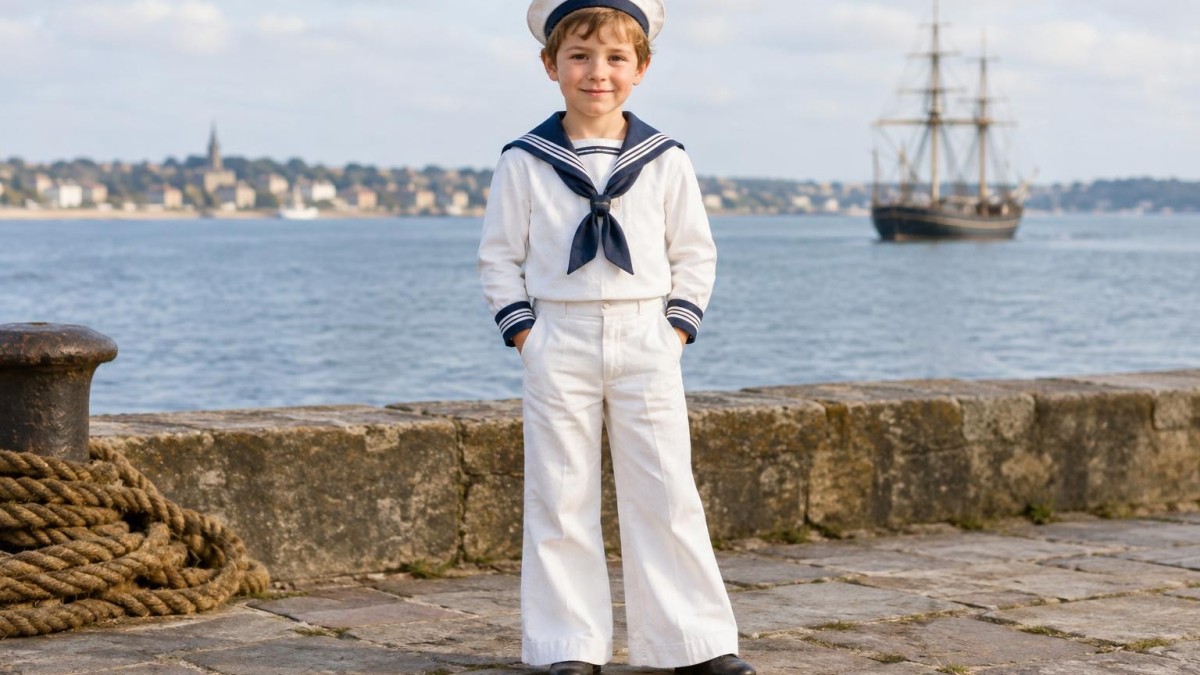
| Period | Mid to late 19th century |
|---|---|
| Place | Europe, especially Britain |
| Worn By | Young boys, occasionally girls |
| Typical Occasion | Everyday wear and formal portraits |
| Distinctive Details | Square collar, flap, nautical stripes, bell-bottom trousers |
Imagine a small boy dressed in crisp cotton trousers with wide bell-bottoms, topped by a white blouse featuring a broad square collar edged with navy blue stripes. This outfit—known widely as the sailor suit—became a defining image of childhood in 19th century Europe, especially across Britain. What began as a miniature naval uniform soon morphed into a fashionable and symbolic garment for children, worn both at play and in formal portraits.
From Navy Decks to Nursery Rooms
The sailor suit’s origins trace back to real naval uniforms worn by British sailors in the early 1800s. Its practical design, with wide collars and loose trousers, accommodated sailors’ movements at sea. But how did this working garment cross over into children's fashion?
The transformation largely began with Queen Victoria, who dressed her eldest son, the Prince of Wales, in a small-scale sailor suit in 1846. This highly publicized image sparked enormous popular interest. It combined royal endorsement and a romanticized vision of the navy, widely respected for its role in protecting the British Empire. The sailor suit thus came to symbolize patriotism, discipline, and wholesomeness—qualities parents sought to instill in their children.
Childhood Ideals and Practical Appeal
The sailor suit also reflected changing ideas about childhood during the Victorian era. Growing emphasis on childhood innocence and playfulness called for specialized clothing that was both comfortable and visually appealing. The loose fit and breathable fabrics of the sailor suit made it ideal for active boys, while its distinctive style set them apart from adults.
Moreover, the sailor suit was worn beyond the royal family, quickly spreading among middle-class families who admired naval power or simply appreciated the suit’s charming look. Both everyday outings and special occasions saw children decked out in these nautical-inspired outfits, often complemented by sailor hats or bows. Occasionally, young girls were dressed in modified sailor suits, highlighting the style’s broad appeal.
Over time, the sailor suit became more than just clothing; it was a symbol bridging childhood, national pride, and social aspiration, defining an era’s childhood fashion that endures in nostalgic memory today.
Newsletter Station provides professionally written, ready-to-send newsletters customized for your market and brand.
EXPLORE NEWSLETTER OPTIONS