
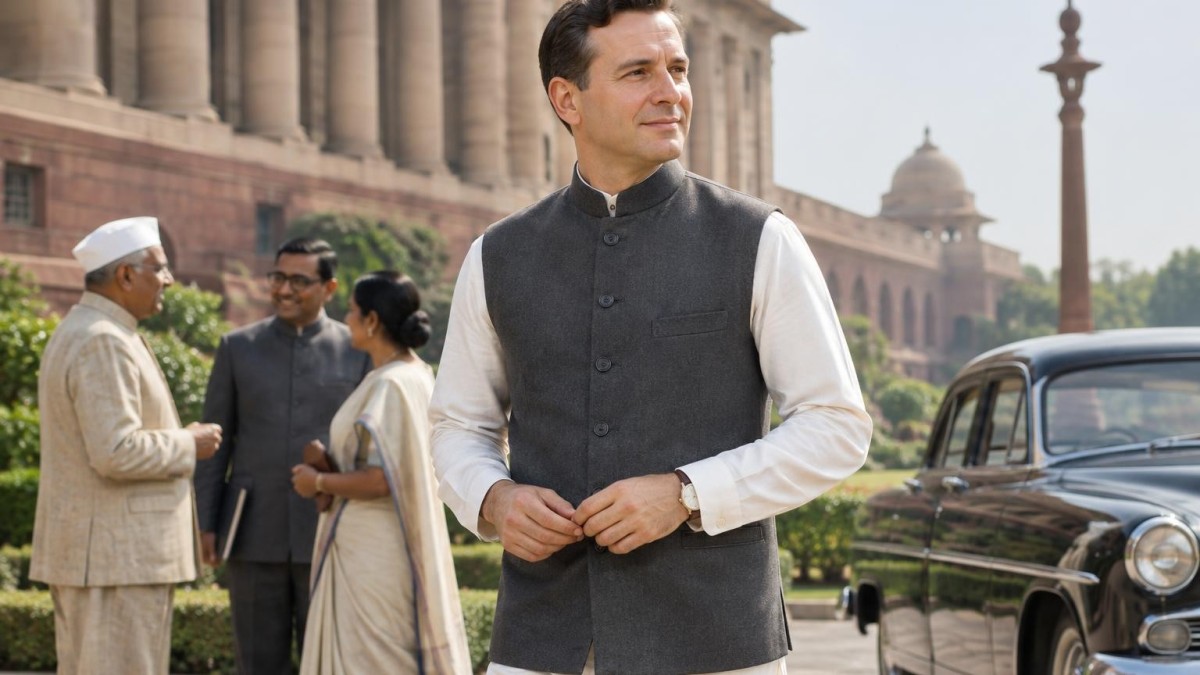
| Period | 1950s |
|---|---|
| Place | India |
| Worn By | Postcolonial elites, politicians, professionals |
| Typical Occasion | Formal and semi-formal events |
| Distinctive Details | Mandarin collar, streamlined silhouette, fusion of traditional and Western tailoring |
In the bustling decades following India’s independence, the sharp silhouette of the Nehru jacket became a powerful sartorial emblem. Crafted from smooth wool or cotton blends, this hip-length coat featured a high, stand-up collar known as a mandarin collar and was worn buttoned to the neck. Its clean, streamlined lines offered a departure from more ornate, embroidered traditional garments yet retained a decidedly Indian character.
A Modern Twist on Tradition
The Nehru jacket was named after Jawaharlal Nehru, India’s first prime minister, who frequently sported this style. Unlike the longer, flowing achkans or sherwanis that were often reserved for weddings or royal events, the Nehru jacket struck a balance between formal and practical. It was intended for everyday use by India’s new class of political leaders and professionals eager to express national pride through their clothing while embracing a modern, global outlook.
The jacket’s minimal embroidery and simple buttons were a conscious design choice reflecting the postcolonial era’s spirit—eschewing British colonial excess for something authentically Indian yet contemporary. Its mandarin collar harked back to the traditional Indian and Asian collar styles, making it instantly recognizable and symbolic of Indian identity in an international context.
Completing the Look
Men often paired the jacket with slim trousers and occasionally a kurta underneath for comfort. Hairstyles in the 1950s reflected a polished, neat look, with combed-back hair or short, tidy cuts common among Nehru jacket wearers. Accessories were modest; sometimes a traditional watch or simple cufflinks, emphasizing the understated elegance of the outfit. The jacket’s versatility allowed it to transition comfortably from day meetings to formal gatherings, which helped solidify its place in Indian wardrobes.
Over time, the Nehru jacket became more than just clothing—it was a statement of India's aspirations and cultural sovereignty. By blending traditional touches with a clean, modern cut, it visually represented the country’s journey and pride in forging a distinct postcolonial identity that embraced both heritage and progress.
Newsletter Station provides professionally written, ready-to-send newsletters customized for your market and brand.
EXPLORE NEWSLETTER OPTIONS