
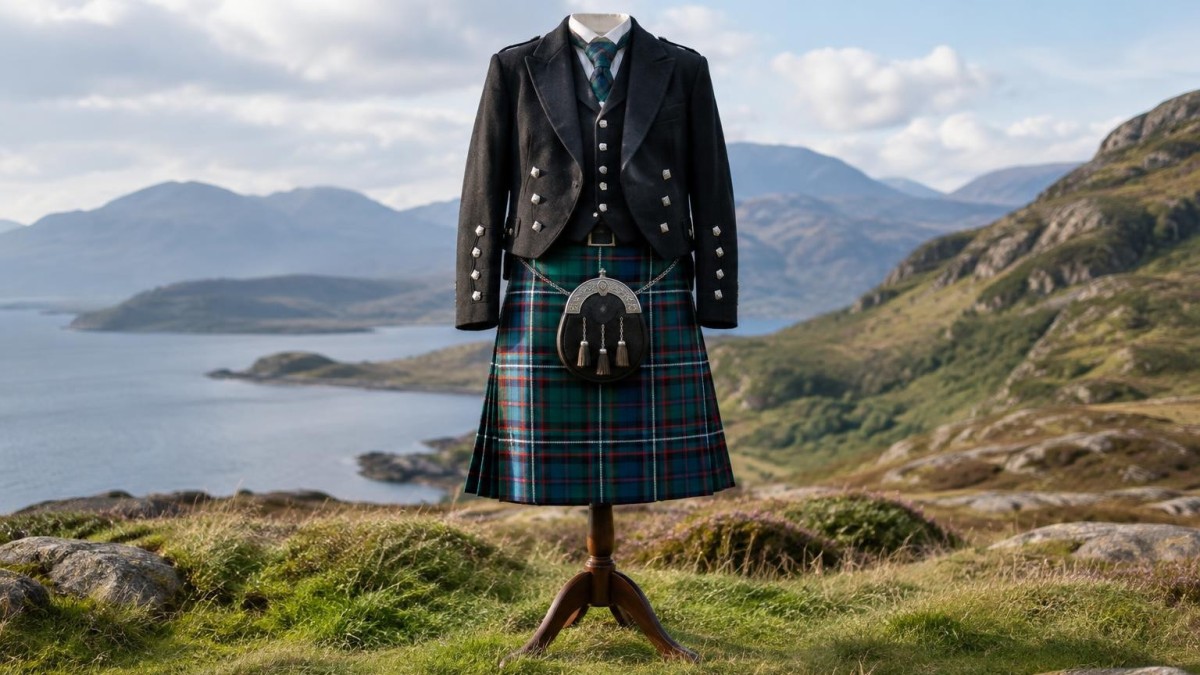
| Period | 16th century to present |
|---|---|
| Place | Scotland |
| Worn By | Scottish Highland clansmen and descendants |
| Typical Occasion | Everyday wear historically; ceremonial and formal events today |
| Distinctive Details | Unique tartan patterns tied to clans, wool fabric, pleated construction |
Imagine the bold, crisscrossing bands of color wrapping around a sturdy wool garment, its pleats flowing with every movement. This is the Scottish tartan kilt—a vivid symbol that has clung tightly to the identity of clans for centuries. More than just clothing, these vibrant patterns have told stories of family heritage, territorial roots, and national pride from the rugged Highlands to the wider world.
Roots in Clan Identity
The tartan’s story begins in the Scottish Highlands in the early modern period, where distinct patterns marked the allegiance of Highland clans. Each clan developed its own tartan—a unique arrangement of colored stripes and checks—that acted as a visual signature. Worn as kilts or full great kilts (a draped garment doubled and pleated), these textiles identified individuals not only by family but also by their geographic origin and social ties. Rather than a uniform style, tartan kilts reflected a rich variety of patterns and hues, varying with region and clan.
The wool fabric used was well-suited for the sometimes harsh weather of northern Scotland, offering both warmth and durability. The pleating of the kilt provided freedom of movement—essential for daily life, farming, and in earlier centuries, even for battle. Accessory items like sporrans (pouches), belts, and clan badges further personalized the outfit and reinforced clan allegiance.
From Everyday Wear to National Symbol
Though tartan was worn informally for centuries, centuries of political upheaval altered its use and symbolism. After the failed Jacobite uprisings in the 18th century, the British government banned Highland dress in the Dress Act of 1746, aiming to suppress clan culture and unify the kingdom under British rule. This outlawing of tartan wear made it a secret badge of defiance and cultural resilience.
By the 19th century, tartan and the kilt experienced a revival, fueled in part by romanticism and royal endorsement. Queen Victoria’s love for Scotland popularized Highland dress and cemented the tartan kilt as a proud emblem of Scottish identity. Today, kilts and tartans appear at weddings, festivals, and formal events, linking wearers to a heritage that spans family, clan, and nation.
Whether worn daily or reserved for ceremony, the Scottish tartan kilt has remained a powerful and colorful language of identity—woven in wool and steeped in history.
Newsletter Station provides professionally written, ready-to-send newsletters customized for your market and brand.
EXPLORE NEWSLETTER OPTIONS