
| Period | 1960s |
|---|---|
| Place | Western counterculture, mainly USA and UK |
| Worn By | Hippies and bohemian youth |
| Typical Occasion | Casual gatherings, music festivals, artistic events |
| Distinctive Details | Loose fit, vibrant patterns, ethnic-inspired motifs |
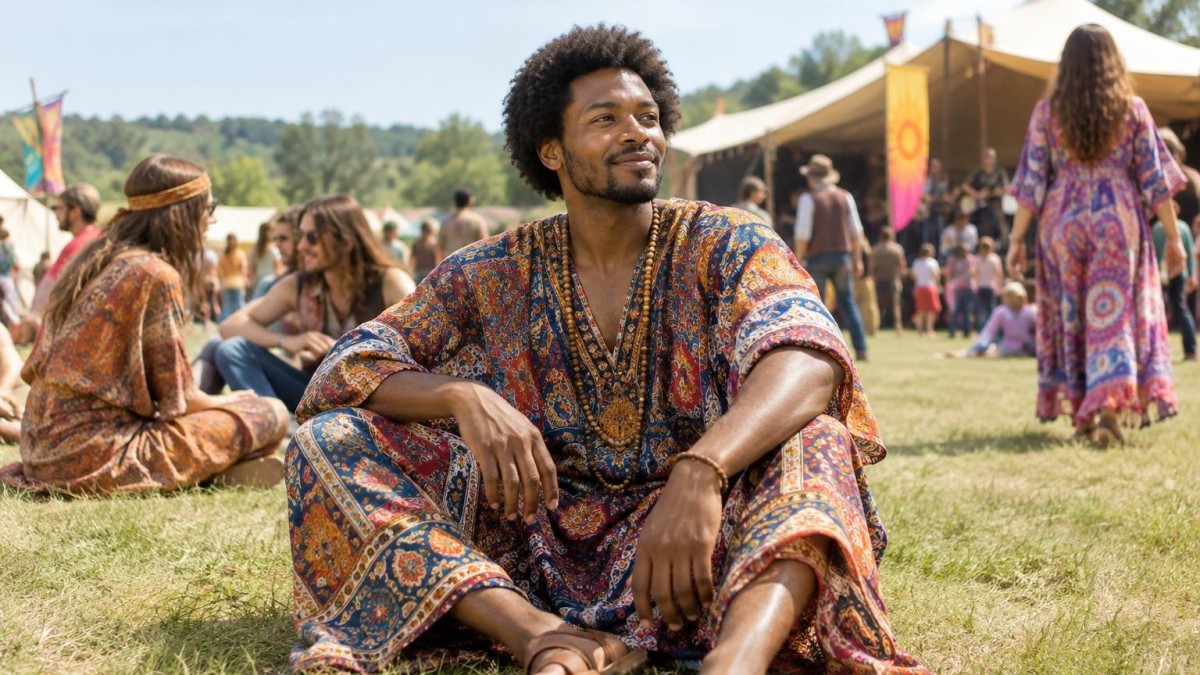
Picture a flowing, colorful garment draped effortlessly over the shoulders of young people gathered at a sunlit music festival in the late 1960s. The kaftan’s soft fabrics and loose silhouette offered comfort and an eye-catching alternative to mainstream fashion’s tight and structured styles.
The Revival of an Exotic Classic
Long before the 1960s, the kaftan had a rich history spanning centuries, originating in the Middle East and North Africa as a versatile robe worn by men and women. Its relaxed form and decorative designs spoke of tradition and artisanal craftsmanship. When hippies and other members of the counterculture movement sought clothing that symbolized freedom, cultural exploration, and nonconformity, the kaftan’s exotic appeal fit perfectly.
Unlike the stiff suits and conservative dresses that dominated earlier postwar fashion, the hippie movement embraced loose, flowing garments, which aligned with their ideals of natural living and rejection of societal constraints. The kaftan’s airy shape and vibrant ethnic prints made it both a practical garment for summer gatherings and a visual statement of cultural appreciation—or sometimes appropriation.
Beauty in Details: Accessories and Hairstyles
The kaftan was often paired with simple accessories like beaded necklaces, leather sandals, or headbands, enhancing its bohemian vibe. Hair tended to be worn long and natural, often parted in the middle or braided, emphasizing a carefree and earthy aesthetic. Makeup was minimal or deliberately earthy to complement the uncomplicated, natural look of the kaftan ensemble.
This garment’s accessibility also played a role: it could be made from lightweight cotton or silk and often featured bold patterns with geometric or floral motifs inspired by traditional designs. Its loose fit provided ease of movement, ideal for dancing at festivals or lounging in communal gatherings.
While the kaftan’s resurgence in the 1960s was part fashion statement and part cultural curiosity, it cemented a lasting legacy as a symbol of relaxed sophistication and a bridge between East and West style. Today, the kaftan continues to be celebrated for its timeless blend of comfort and elegance, carrying echoes of the daring spirit that once defined a generation.
Newsletter Station provides professionally written, ready-to-send newsletters customized for your market and brand.
EXPLORE NEWSLETTER OPTIONS