
| Period | 1940s |
|---|---|
| Place | Urban America, especially Los Angeles and Harlem |
| Worn By | Young African American, Mexican American, and Filipino American men |
| Typical Occasion | Streetwear, social gatherings, jazz clubs |
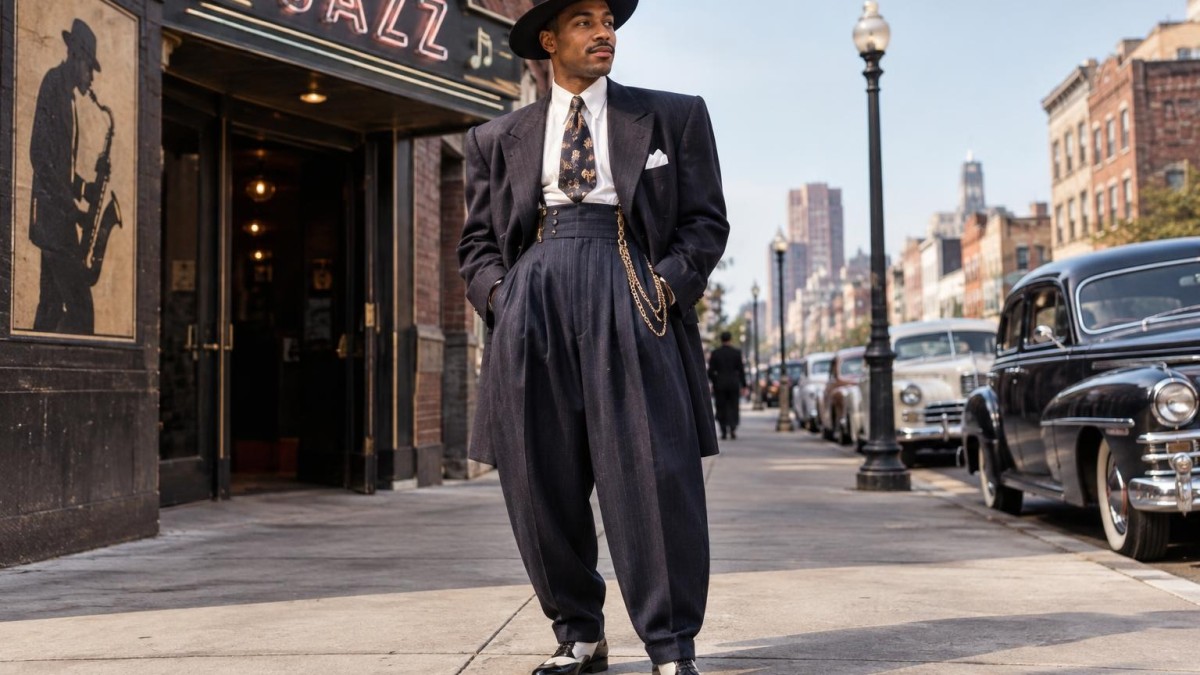
| Distinctive Details | High-waisted, wide-legged trousers, long jackets with padded shoulders, wide lapels, and often flashy accessories |
Bold Fashion in a Tense Era
The zoot suit immediately grabs attention with its oversized silhouette—a long jacket with broad shoulders, paired with baggy, high-waisted trousers that taper at the ankles. Imagine the slick sheen of wool or gabardine fabric, often in strong dark colors or bright patterns, worn with a flamboyant fedora tilted just so. It wasn’t just clothing; it was a statement of rebellion and identity during the 1940s in urban America.
A Symbol of Youth Culture and Resistance
Popular among African American, Mexican American, and Filipino American youths, the zoot suit emerged amid World War II and racial tensions in cities like Los Angeles and Harlem. Many young men adopted the style at jazz clubs or street corners, effortlessly blending style and swagger. The exaggerated proportions of the zoot suit were more than fashion—they were an expression of pride, individuality, and defiance against mainstream societal pressures, including wartime fabric rationing.
This style intersected with larger social issues: it was both embraced and maligned. Wartime fabric rationing made the use of such voluminous cloth a point of controversy, and some saw the zoot suiters as unpatriotic or rebellious. Racial prejudice intensified these views, culminating in events like the 1943 Zoot Suit Riots in Los Angeles, where servicemen clashed with zoot suit–wearing youth, highlighting the deep divides and challenges between race, class, and cultural expression.
Completing the Look
The zoot suit was more than just the jacket and pants. The look was often finished with a wide-brimmed hat, dangling chains, pointed shoes, and sometimes a pencil-thin mustache. Hairstyles ranged from slicked-back hair to pompadours, complementing the sophisticated yet bold vibe. In the face of adversity, this style gave communities a way to claim space and identity through fashion.
Though its popularity waned after the war, the zoot suit remains an enduring symbol of cultural pride, youth rebellion, and the complex social fabric of 1940s urban America.
Newsletter Station provides professionally written, ready-to-send newsletters customized for your market and brand.
EXPLORE NEWSLETTER OPTIONS