
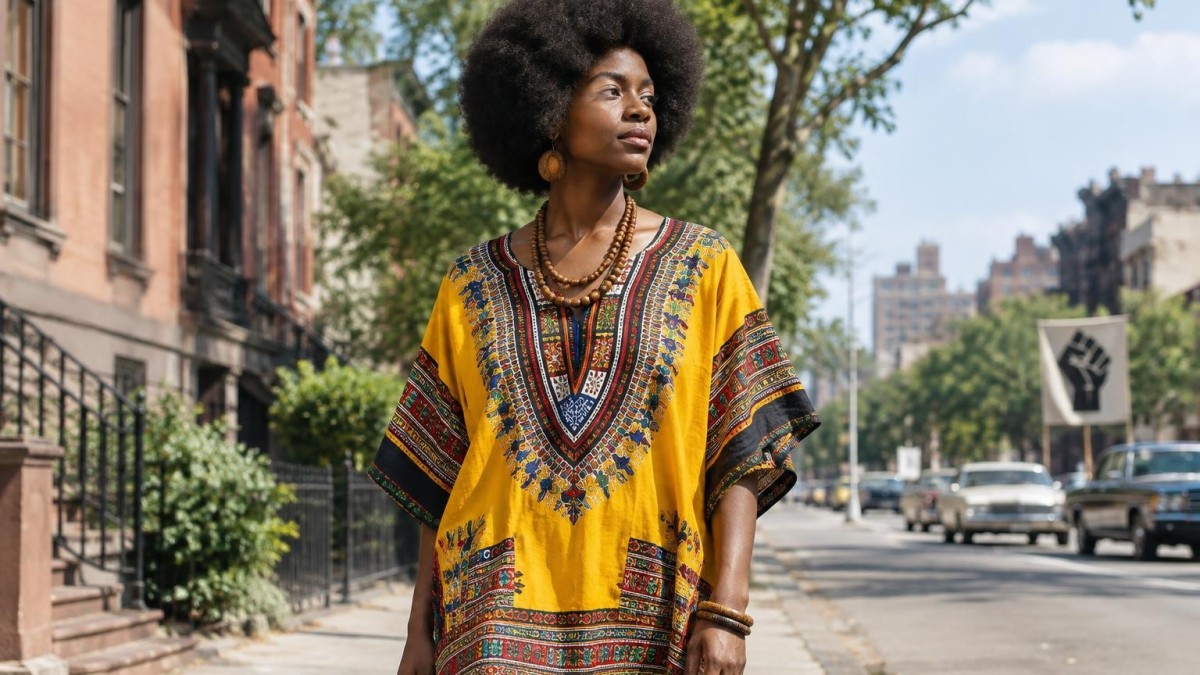
| Period | 1960s |
|---|---|
| Place | United States, primarily urban centers |
| Worn By | African American men and women |
| Typical Occasion | Casual wear, political rallies, cultural events |
| Distinctive Details | Bright colors, embroidered necklines, loose fit |
A Bold Symbol of Identity
The dashiki, with its vibrant colors and bold embroidered patterns, was more than just a garment in the 1960s African American community—it was a vivid declaration of cultural pride. The loose, flowing fabric felt comfortable against the skin, making it ideal for everyday wear yet striking enough for public gatherings and demonstrations. Its standout geometric patterns and V-shaped necklines caught the eye and set wearers apart in a crowd, speaking to a shared heritage.
Roots in African Heritage and Political Activism
Originating from West African traditional clothing, the dashiki gained popularity among African Americans during the civil rights and Black Power movements. Wearing the dashiki was a powerful political and cultural statement, symbolizing a rejection of assimilation and an embrace of African roots. It appeared frequently at rallies, protests, and cultural festivals, worn proudly by activists and artists alike.
Styling and Accompanying Accessories
A typical 1960s dashiki look was often paired with natural hairstyles like afros or braids, which complemented the garment’s emphasis on black identity and heritage. Minimal makeup and handcrafted jewelry, such as beaded necklaces or wooden accessories, further reinforced the connection to African aesthetics. Together, these elements created a coherent expression of both style and solidarity.
Newsletter Station provides professionally written, ready-to-send newsletters customized for your market and brand.
EXPLORE NEWSLETTER OPTIONS