
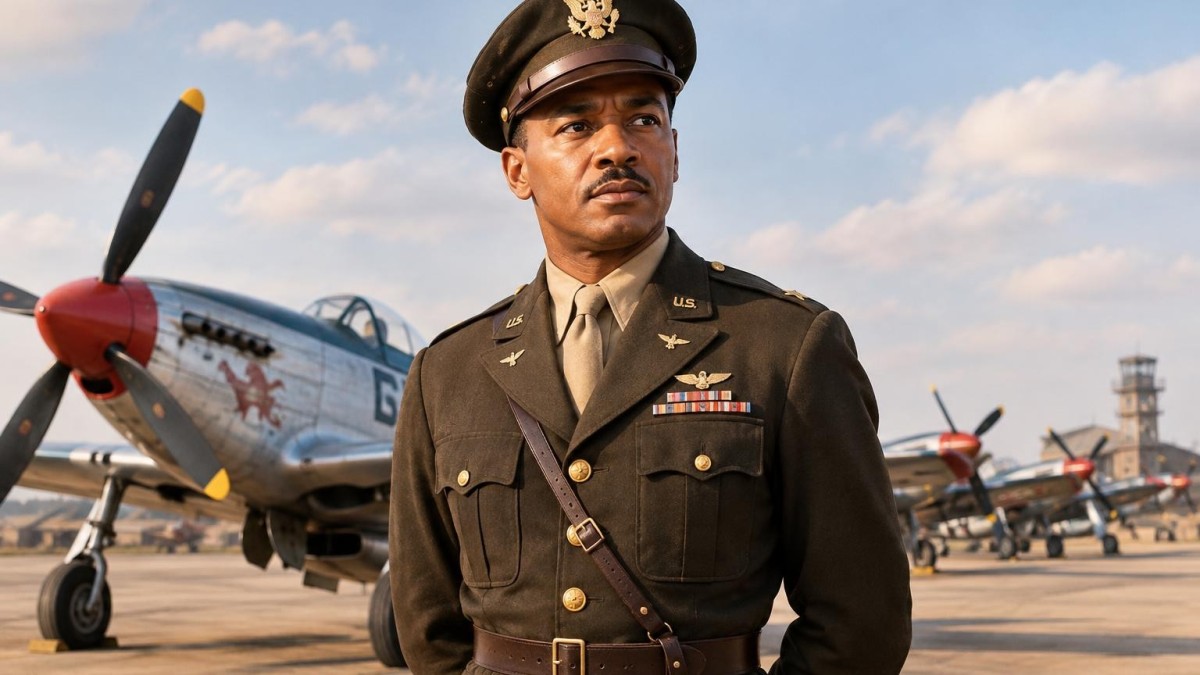
| Service Branch | United States Army Air Forces |
|---|---|
| Rank at the Time | Lieutenant Colonel |
| Role or Unit | Commander, 332nd Fighter Group (Tuskegee Airmen) |
| Conflict or Era | World War II |
| Notable Recognition | Distinguished Service Medal |
Breaking Barriers in the Skies
In the midst of World War II, Lieutenant Colonel Benjamin O. Davis Jr. faced a daunting challenge as he took command of the 332nd Fighter Group, better known as the Tuskegee Airmen. This pioneering group of African-American pilots was about to confront not only the enemy overseas but also entrenched racial discrimination within the U.S. military. Davis’s leadership came at a time when segregation and prejudice limited opportunities for Black servicemen, testing his resolve and belief in his aviators’ abilities.
Overcoming Discrimination Through Leadership
Davis’s role was crucial in transforming skepticism into respect. Despite doubts from higher command and the wider military establishment, he meticulously trained and motivated his pilots, emphasizing discipline, excellence, and teamwork. Under his command, the Tuskegee Airmen earned an enviable combat record, providing bomber escort missions with exceptional skill and bravery. Their success helped challenge the prevailing biases and demonstrated that African-American pilots could perform on equal footing in demanding combat situations.
Legacy Beyond the War
Following the war, Davis continued to break racial barriers, becoming the first African-American general in the U.S. Air Force. His wartime leadership left an enduring impact, both for the Tuskegee Airmen and the broader push toward integration and equality within the armed forces. Today, Davis’s story stands as a testament to resilience, courage, and the power of leadership to change perceptions and open doors in the face of adversity.
Newsletter Station provides professionally written, ready-to-send newsletters customized for your market and brand.
EXPLORE NEWSLETTER OPTIONS