
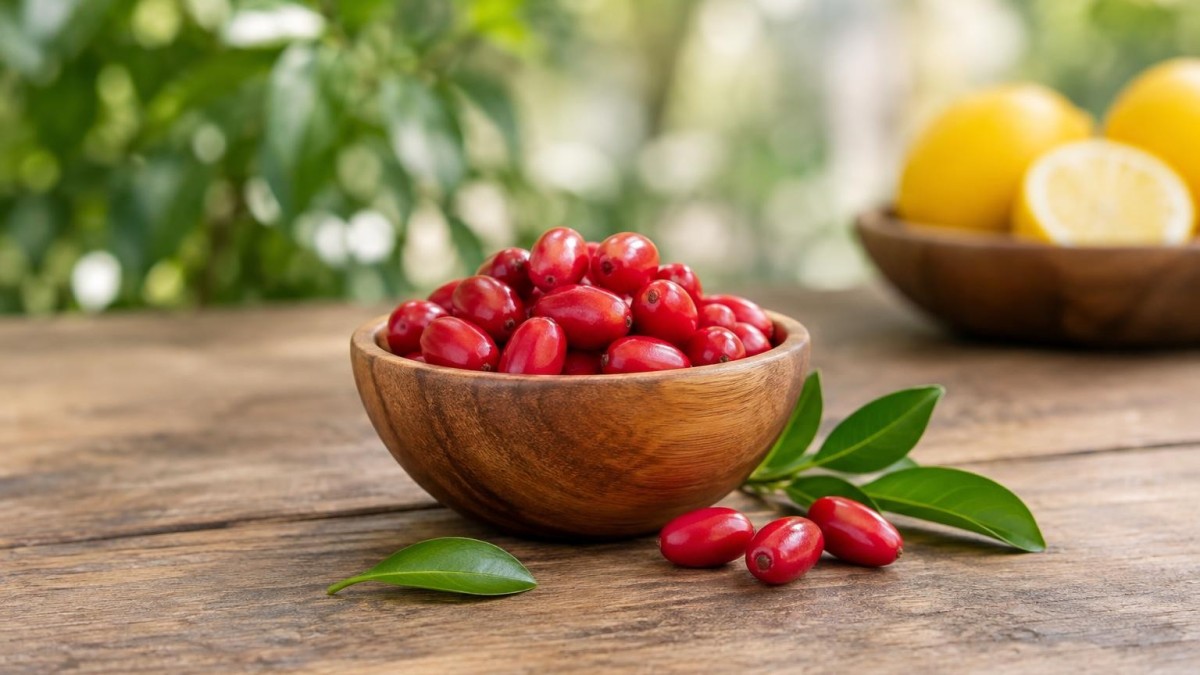
| Origin | West Africa |
|---|---|
| Where It’s Grown | West Africa, United States (specialty farms), and other tropical regions |
| Notable Varieties | Synsepalum dulcificum (the main species) |
| Flavor and Texture | Small red berry, mildly sweet; alters sour flavors to sweet |
| Common Uses | Flavor-altering novelty, enhanced sour/savory dishes |
A Berry That Changes Your Taste Buds
The miracle fruit, a small red berry native to West Africa, has fascinated taste explorers and chefs alike for decades. Its claim to fame isn’t in its own flavor, which is mildly sweet and somewhat unremarkable, but rather in its remarkable ability to transform sour or acidic tastes into sweet sensations instantly after tasting the berry.
From West African Roots to Global Curiosity
Originally found in the tropical forests of West Africa, the miracle fruit grows on the Synsepalum dulcificum shrub and was traditionally used by locals to improve the taste of sour foods. Today, it is cultivated in limited quantities outside its native region, including specialty farms in the United States and other tropical climates. The mildly sweet berries are best eaten fresh since their taste-altering effect lasts for about 30 minutes to an hour.
The Science Behind the Taste Transformation
The secret lies in a unique glycoprotein called miraculin present on the fruit's skin. When you eat the berry, miraculin binds to taste buds on your tongue. At a neutral or higher pH (which usually happens when you consume sour or acidic foods), miraculin tricks these buds into perceiving sour flavors as sweet. This means that something like a lemon or vinegar tastes sugary and pleasant rather than sharp and tart.
Culinary Uses and Emerging Trends
Though historically a novelty, miracle fruit is gaining attention from chefs and food enthusiasts looking to create innovative flavor experiences. It's used in “flavor-tripping” events where participants taste sour and bitter foods transformed to sweet, a truly unique dining adventure. Some are experimenting with pairing it with low-sugar cocktails or desserts to enhance flavor naturally without added sweeteners.
While miracle fruit’s effects are temporary and it isn’t widely grown commercially yet, its ability to reshape our perception of flavors hints at exciting possibilities for culinary creativity, especially as interest in natural and unusual ingredients continues to grow worldwide.
Next time you come across this unassuming red berry, give it a try and discover how it turns the sour into sweet with nothing but a touch of nature’s magic on your tongue.
Newsletter Station provides professionally written, ready-to-send newsletters customized for your market and brand.
EXPLORE NEWSLETTER OPTIONS