
| Origin | Ethiopian Highlands |
|---|---|
| Where It’s Grown | Primarily Ethiopia; parts of East Africa |
| Notable Varieties | Diverse landraces adapted to different altitudes |
| Flavor and Texture | Mildly sweet with starchy, fibrous texture |
| Common Uses | Fermented food staples such as kocho and bulla |
| Nutrition | High in carbohydrates and dietary fiber (raw, per 100 g) |
A Staple with Ancient Roots
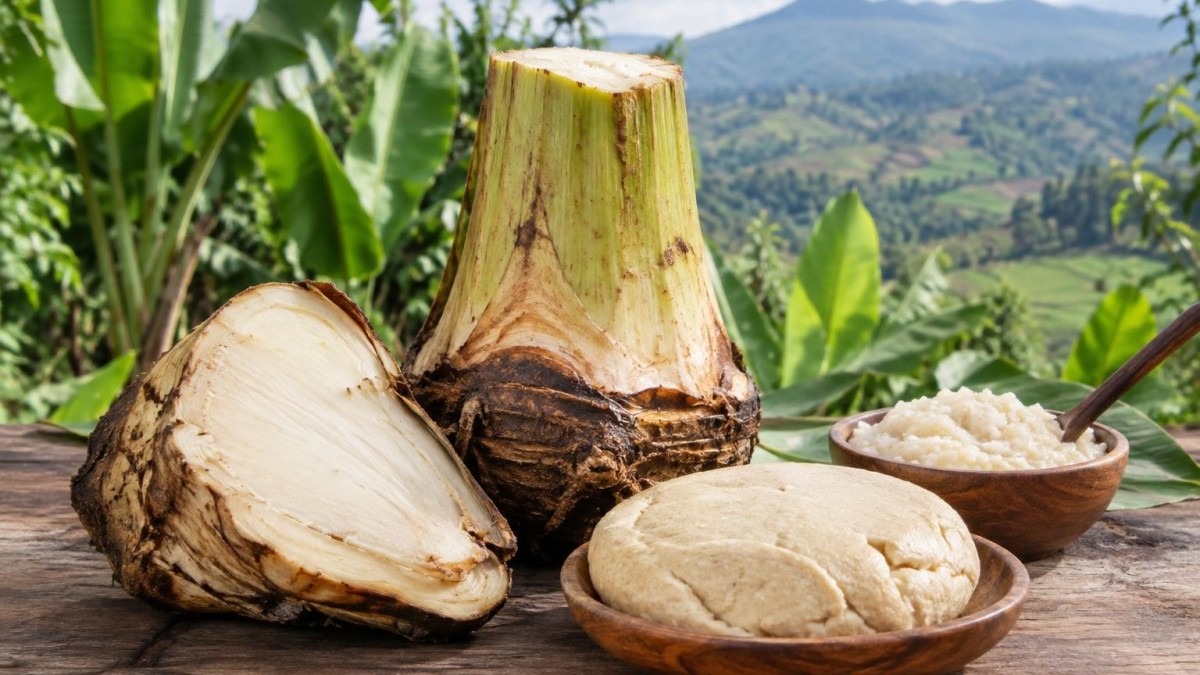
Enset, often called the false banana due to its large banana-like leaves and pseudostem, has been a vital food source in the Ethiopian highlands for thousands of years. Unlike its banana cousin, enset does not produce edible fruit; instead, it is cultivated for its starchy underground parts, which provide a reliable source of nutrition and resilience in a challenging landscape.
Where Tradition Meets Sustainability
Originating exclusively in Ethiopia, enset thrives primarily in the country's diverse highland regions, where a wide variety of local landraces have adapted to different elevations and climates. Ethiopian farmers practice intricate cultivation techniques, often harvesting only parts of the plant to allow for continuous growth and soil conservation. This makes enset a sustainable option well-suited for food security in areas vulnerable to drought or crop failure.
From Harvest to Table
The preparation of enset is a culturally rich process. After harvesting, the pseudostem and the underground corm are scraped and fermented to create staple foods such as kocho, a dense bread-like product, and bulla, a powder made into porridge or drinks. These foods have a distinct mildly sweet and tangy flavor, providing sustenance to millions and supporting local economies.
Because enset is high in carbohydrates and dietary fiber, it offers a filling energy source that supports day-to-day nutrition needs. Its ability to be stored for long periods after fermentation enhances its role in food security, especially in times when other crops might fail.
Though relatively unknown outside Ethiopia, enset’s role is foundational to many communities’ livelihoods. It stands as a remarkable example of how local crops tailored to their environment can sustain generations while promoting biodiversity and resilience.
Newsletter Station provides professionally written, ready-to-send newsletters customized for your market and brand.
EXPLORE NEWSLETTER OPTIONS