
| Inventor | Alexander Bain (early prototype), Xerox Corporation (commercial innovation) |
|---|---|
| Place of Development | United Kingdom (early concept), United States (mass adoption) |
| First Patent | 1843 by Alexander Bain |
| Commercial Introduction | 1964 by Xerox Corporation |
| Original Purpose | Transmit handwritten documents over telephone lines |
| Key Innovation | Combining electrical signals with telephone lines for rapid document transmission |
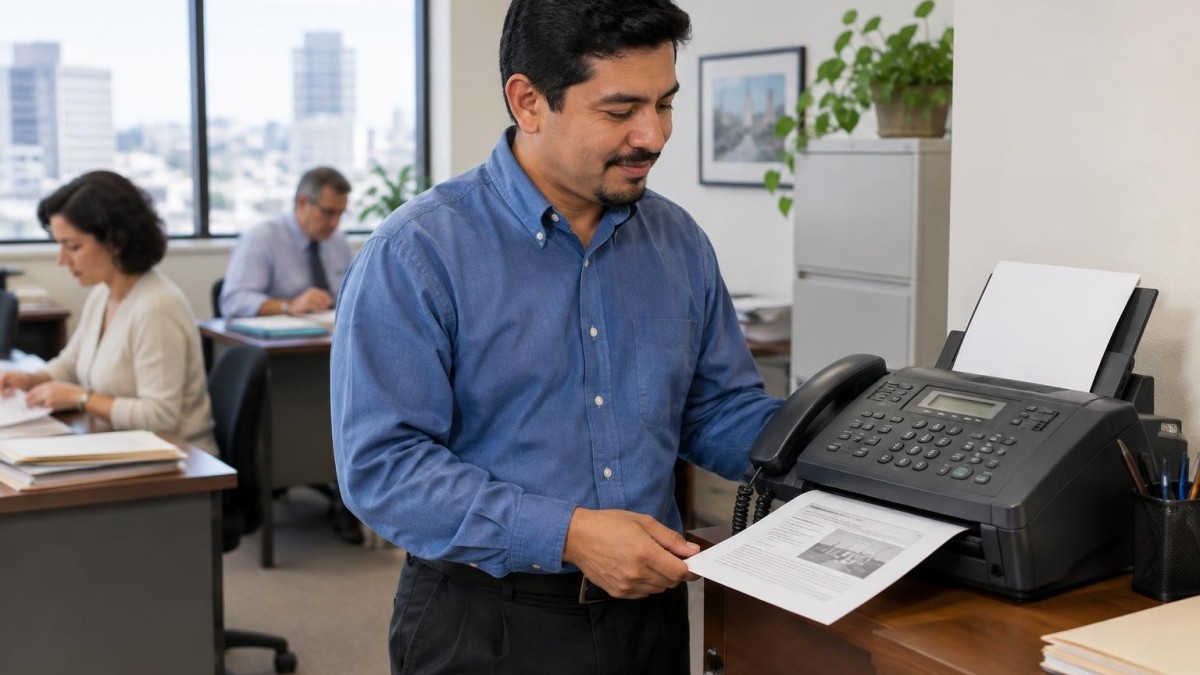
Before the fax machine became an office staple, sharing a signed contract or a hand-drawn diagram meant physically traveling to deliver the document or mailing it via postal service—both slow and unreliable methods. Businesses often waited days or even weeks to receive critical papers, delaying decisions and deals. This challenge sparked a search for faster ways to send exact copies of documents across distances.
The Evolution from Novelty to Necessity
The concept of transmitting images over wires dates back to Alexander Bain's 1843 patent in the UK for an "Electric Printing Telegraph." Early attempts struggled with speed, clarity, and practicality. It was not until the 1960s that the technology became commercially viable—Xerox introduced faxes capable of clear document transmission over standard telephone lines. This breakthrough coincided with booming office environments hungry for efficient communication tools to streamline their workflow.
Unlike earlier mechanical devices, these new fax machines translated image data into electrical signals efficiently, enabling copies of handwritten or typed pages to arrive in minutes. Businesses quickly saw the value in being able to send contracts, invoices, and reports without delay, allowing faster decision-making and improved coordination among distant teams.
Competing Technologies and the Fax's Staying Power
Fax machines faced competition from telex, email, and later digital scanners, but their simplicity gave them a unique advantage. They required no special training—just a document and a phone line—and produced a physical paper copy immediately, which was crucial in many legal and clerical settings. For decades, the fax balanced speed, accessibility, and reliability in a way that few technologies did, earning a dedicated place in offices worldwide.
Even today, some industries still rely on fax transmission for security and compliance reasons, a testament to the fax machine’s lasting impact. Its breakthrough lay in transforming a cumbersome, slow process into an almost instant exchange of vital information—an innovation that helped shape the modern office.
Newsletter Station provides professionally written, ready-to-send newsletters customized for your market and brand.
EXPLORE NEWSLETTER OPTIONS