
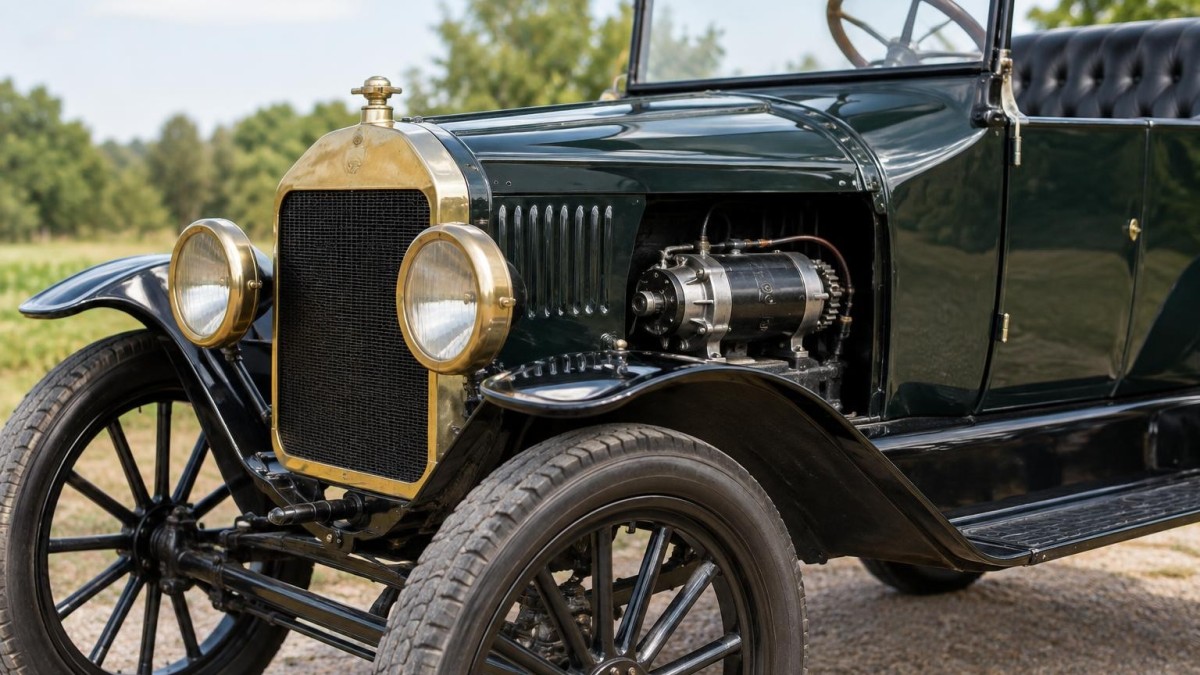
| Inventor | Charles F. Kettering |
|---|---|
| Place of Development | Dayton, Ohio, USA |
| First Patent | 1912 |
| Commercial Introduction | 1912 (Cadillac Model 30) |
| Key Innovation | Electric starter motor to replace hand cranking |
Picture a bright morning in the early 1900s: a driver wrestles with a wooden or metal crank at the front of their car, throwing their weight into it, hoping the engine roars to life. Before the invention of the automobile starter motor, this manual process was the only way to start most gasoline cars. It was not only strenuous but also risky; the crank could kick back suddenly, causing injuries like broken wrists or worse.
A Frustrating Start to Automobiles
Early cars required a hand crank, a simple mechanical lever attached directly to the engine’s crankshaft. Getting the engine to turn over meant physically rotating this crank, which demanded strength and technique. Many drivers found the process frustrating, especially in cold weather when engines resisted starting. Women drivers, in particular, faced challenges due to the physical effort involved. The crank method also posed safety hazards, contributing to a need for a better starting solution.
The Spark of Innovation: Electric Starters
Charles F. Kettering, an engineer working with the Dayton Engineering Laboratories Company (DELCO), recognized the problem. In 1911, he developed an electric starter motor powered by the vehicle’s battery. Instead of manual cranking, motorists could start the engine with a simple turn of a key or push of a button. Kettering's invention combined an electric motor with a pinion gear that engaged the engine's flywheel, turning it until ignition began.
Kettering patented the electric starter in 1912, addressing the safety risks and physical barriers of the hand crank. This breakthrough required a reliable electric motor compact enough for cars and an electrical system with sufficient power — challenges solved through advances in battery technology and electrical engineering at the time.
How the Starter Motor Changed Driving
The practical, safe, and user-friendly starter motor debuted commercially the same year on the 1912 Cadillac Model 30. Its impact was immediate, attracting drivers who preferred convenience and safety. Soon, automotive manufacturers adopted Kettering’s design as standard equipment, profoundly changing the driving experience.
The electric starter motor not only made automobiles accessible to a broader public but also helped popularize car ownership, fueling the American automotive boom. It removed a major obstacle for drivers and remains a fundamental component of motor vehicles today, symbolizing how engineering advances transform daily life in subtle, yet powerful ways.
Newsletter Station provides professionally written, ready-to-send newsletters customized for your market and brand.
EXPLORE NEWSLETTER OPTIONS