
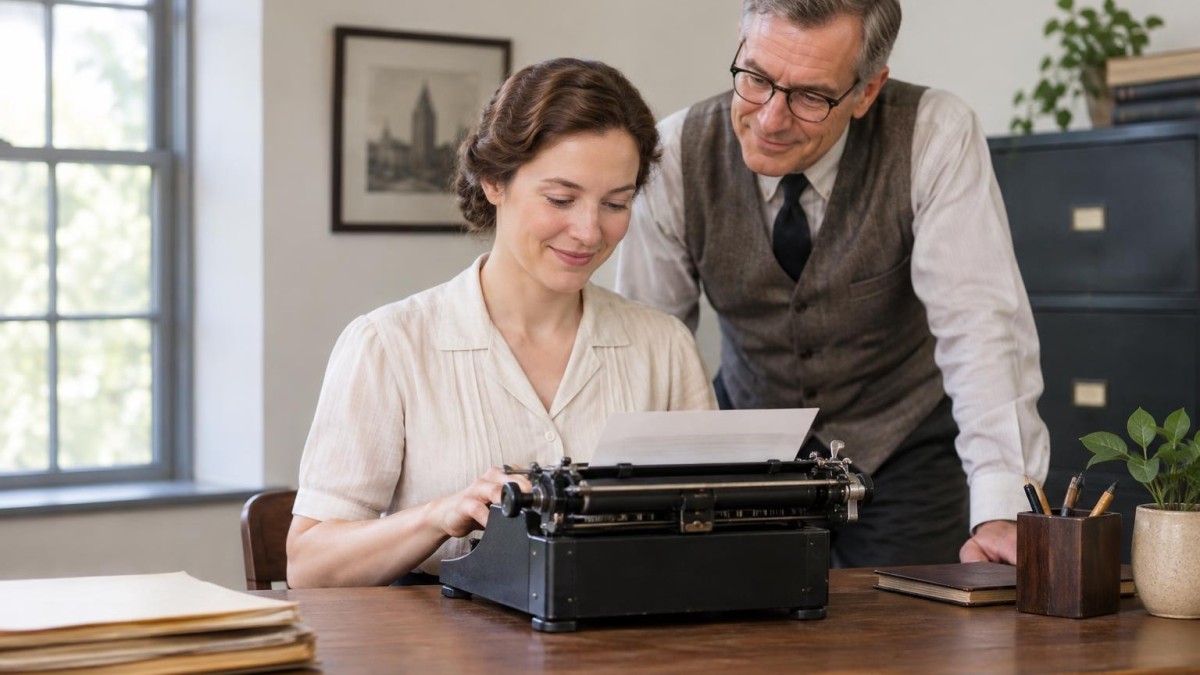
| Inventor | Christopher Latham Sholes |
|---|---|
| Place of Development | Milwaukee, Wisconsin, USA |
| First Patent | 1868 |
| Commercial Introduction | 1874 by Remington |
| Key Innovation | QWERTY keyboard design and mechanical typebars |
Before typewriters became a staple in offices, business correspondence and record-keeping were laboriously handwritten. Messy scripts, inconsistent handwriting styles, and slow production made everyday business communication a challenge. Clerks and secretaries spent long hours with pen and ink, mistakes were hard to correct, and producing multiple copies required time-consuming transcription.
The Demand Behind the Machine
As commerce expanded in the 19th century, businesses sought faster and more reliable ways to produce documents. Communication volume surged, and accuracy was critical to avoid costly errors. The manual pen no longer kept pace with the growing demands of offices, driving inventors to imagine a device that could standardize and speed up writing.
Christopher Latham Sholes is credited with developing the first practical typewriter, patenting it in 1868. However, early models revealed mechanical limitations. The typebars—which struck the paper when keys were pressed—could jam if neighboring arms collided during rapid typing. This constraint influenced Sholes to arrange the keys in the now-familiar QWERTY layout, designed to slow typists enough to reduce jams.
From Prototype to Office Essential
The typewriter’s journey from patent to practical tool took several years. In 1874, the Remington company purchased Sholes’ patent and introduced the first commercial typewriter model. Despite initial skepticism and the machine’s learning curve, the typewriter quickly caught on in offices because it dramatically improved document uniformity and typing speed compared to handwriting.
With the ability to produce neat, legible text and the promise of greater efficiency, the typewriter transformed office work. Secretaries could now churn out letters, invoices, and reports more consistently and rapidly. The machine also facilitated the growth of secretarial roles, further professionalizing office environments.
The typewriter’s invention answered a specific business challenge but also sparked broader cultural changes. Its QWERTY keyboard design remains the basis for contemporary keyboards, highlighting the lasting impact of Sholes’ solution to early mechanical limits and the pressing needs of expanding commerce.
Newsletter Station provides professionally written, ready-to-send newsletters customized for your market and brand.
EXPLORE NEWSLETTER OPTIONS