
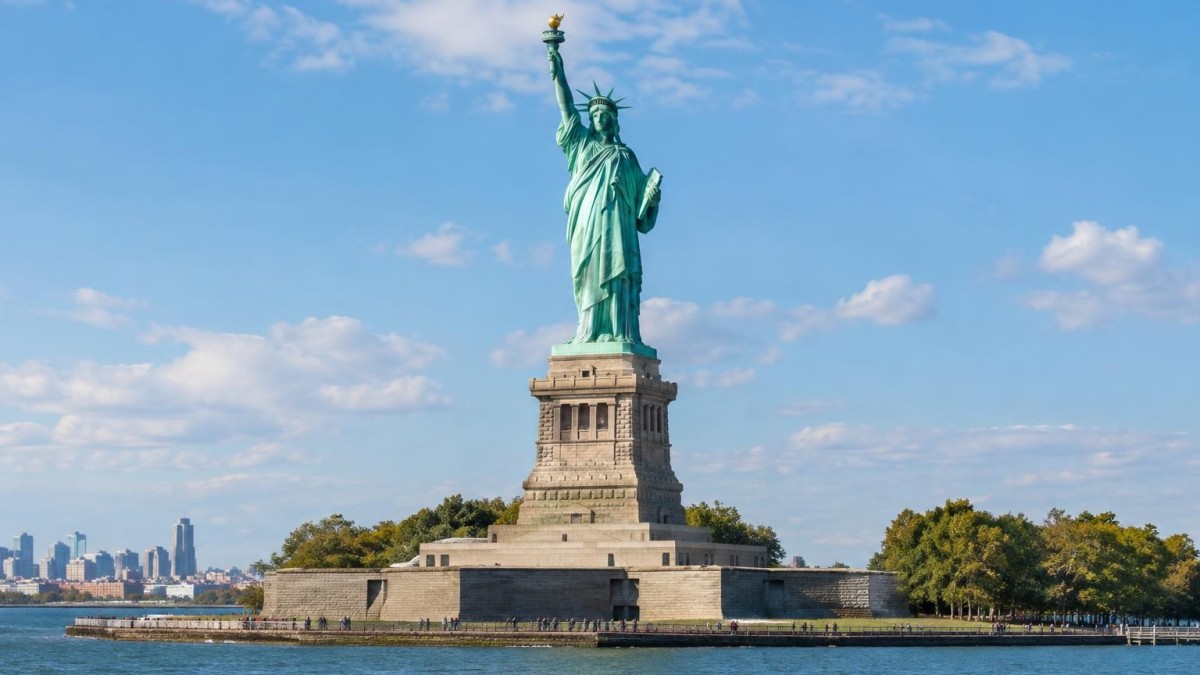
| Location | Liberty Island, New York Harbor, New York |
|---|---|
| Site Type | National Monument and Iconic Sculpture |
| Known For | Symbol of Freedom and Democracy |
| Dedicated | October 28, 1886 |
| Height | 305 feet (93 meters) from ground to torch |
The Copper Skin: More Than Just a Glow
The Statue of Liberty’s glowing green appearance, familiar to millions, owes itself to the thin sheets of copper that cover its surface. Originally a brilliant copper color, the statue’s skin has transformed over more than a century due to a natural chemical process called patination. This verdigris layer, while changing its color, actually protects the metal underneath from further corrosion, contributing significantly to the statue’s longevity. Crafted from copper sheets just 2.4 millimeters thick, Lady Liberty’s outer layer was meticulously hammered into shape to create her detailed robes and features, showcasing an impressive craftsmanship achievement of the late 19th century.
Innovative Engineering Behind the Icon
The knowledge of structural design hidden beneath the copper skin is crucial to understanding this towering figure’s resilience. French engineer Gustave Eiffel, famed for the Eiffel Tower, devised an internal iron framework that supports the copper exterior. This framework was designed to allow the copper skin to move independently in response to thermal expansion and wind forces, a necessity for such a tall and exposed structure. Despite initial challenges, such as iron corrosion and joints that required carefully engineered flexibility, the design effectively balanced strength and flexibility, allowing the statue to withstand harsh weather and the test of time.
Ongoing Preservation and Challenges
Over the years, the statue has faced continuous challenges from weather, pollution, and visitor impact. Restoration efforts have included replacing corroded iron armatures with stainless steel, improving drainage to prevent water damage, and maintaining the delicate copper exterior. The copper’s patina, though protective, is a reminder of the statue’s exposure to New York’s climate. These conservation efforts ensure that the Statue of Liberty remains not only a symbol of freedom and hope but also a marvel of engineering and material science preserved for generations to come.
Newsletter Station provides professionally written, ready-to-send newsletters customized for your market and brand.
EXPLORE NEWSLETTER OPTIONS