
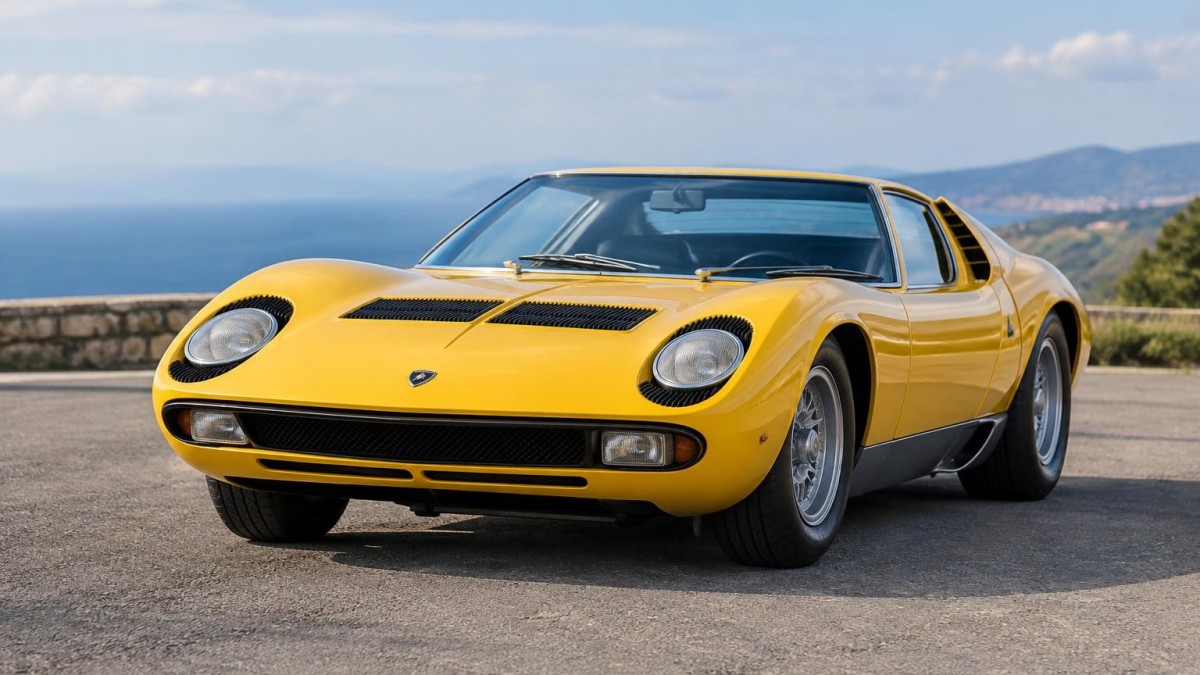
| Specification | Detail |
|---|---|
| Make and Model | Lamborghini Miura SV |
| Years Produced | 1968–1971 |
| Engine | 3.9-liter V12, 385 hp |
| Curb Weight | 1,350 kg (2,976 lbs) |
| Top Speed | 179 mph (288 km/h) |
| Production Total | 765 units (all Miura variants) |
The 1969 Lamborghini Miura SV didn't just set the stage for the supercar era — it practically wrote the rulebook. With its revolutionary mid-engine layout and bold, aggressive styling, it was a car that made enthusiasts rethink what a road car could be.
A Design Ahead of Its Time
Before the Miura, performance cars typically stowed their engines up front. Lamborghini's daring move to place a V12 mid-mounted behind the driver reshaped vehicle dynamics, offering superior balance and agility. The "SV" variant, which stands for "Super Veloce" or "super fast," arrived with power and refinement upgrades that made it not just a fast car, but a thrilling driver's car.
Design-wise, the Miura SV balanced sleek curves with a muscular stance, complete with distinctive air scoops and captivating pop-up headlights. It wasn’t just a vehicle — it was automotive art that screamed speed and sophistication.
Why the Miura SV Earned 'Supercar' Status
This model's combination of cutting-edge technology and stunning design was so impressive it set new standards for what a high-performance car could look and perform like. The Miura’s ability to hit nearly 180 mph with thrilling acceleration made it a fantasy realized, especially in the late 1960s.
While today’s supercars boast even more extreme numbers, the Miura SV earned its place as the first hyperbolic
Newsletter Station provides professionally written, ready-to-send newsletters customized for your market and brand.
EXPLORE NEWSLETTER OPTIONS