
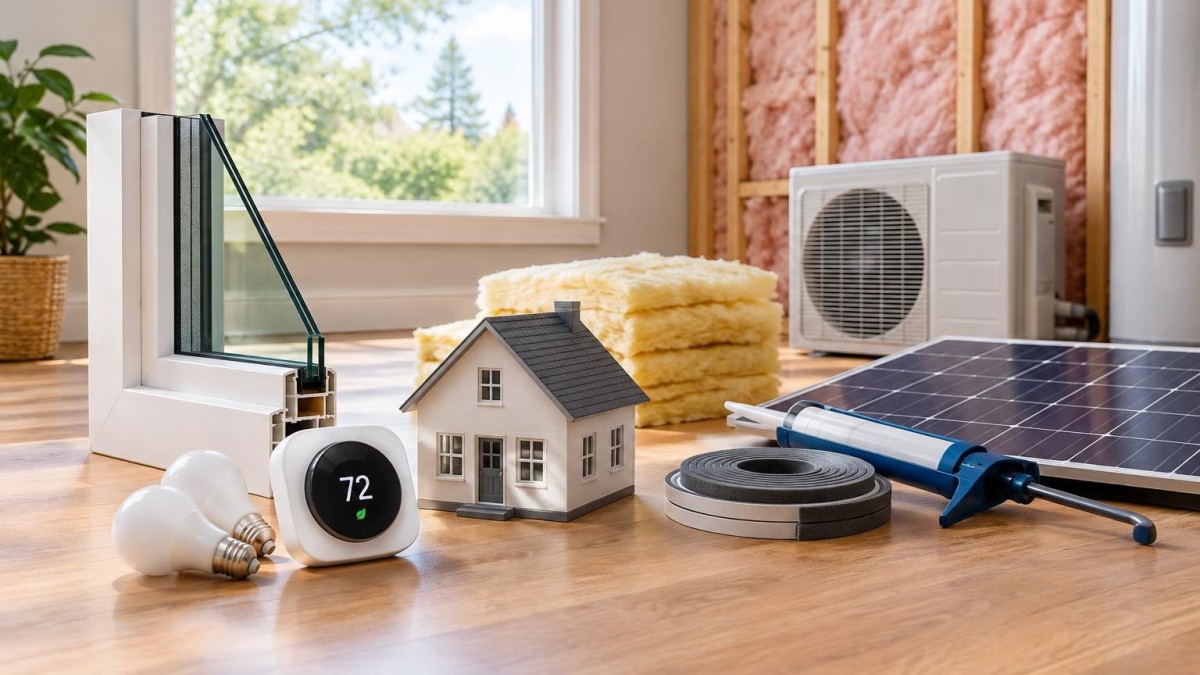
Enhance Your Home’s Insulation
Boosting insulation is one of the most impactful steps in cutting energy waste. It helps keep your home's temperature steady year-round by limiting heat exchange with the outdoors. Areas like attics, basements, walls, and crawl spaces often need extra attention. Materials range from fiberglass and cellulose to spray foam. Proper installation is key, so hiring a skilled professional for larger jobs can make a big difference.
Seal Drafts and Upgrade Windows and Doors
Drafty openings make your heating and cooling systems work harder, inflating energy bills. Replacing old, inefficient windows and doors with models featuring double or triple panes, low-E coatings, and insulated frames improves comfort and cuts costs. If full replacement isn’t feasible, weatherstripping, caulking, and storm windows can seal leaks and reduce drafts effectively.
Switch to LED Lighting and Smart Controls
Changing from incandescent to LED bulbs is a quick, affordable way to lower electricity use since LEDs consume less power and last longer. Pair them with dimmers, motion sensors, or smart lighting systems to minimize energy waste when rooms are empty. These small tweaks add up to noticeable savings over time.
Choose High-Efficiency Appliances
When upgrading appliances like refrigerators, dishwashers, or washers and dryers, opt for ENERGY STAR® rated models. They use less energy and water, reducing your utility bills and environmental footprint. Consider both upfront costs and ongoing operating expenses to find the best value over time, especially during remodels when appliance replacement fits naturally into your plan.
Invest in Efficient Heating and Cooling
Heating and cooling often make up the largest part of a household energy bill. Modern high-efficiency furnaces, air conditioners, heat pumps, or ductless mini-splits can cut energy use significantly. Before upgrading, check your home’s insulation and seal air leaks to ensure your investment performs optimally.
Add a Smart Thermostat
Smart or programmable thermostats help tailor indoor temperatures to your daily schedule, avoiding energy waste when you’re away or asleep. Features like remote control, adaptive learning, and energy reports encourage smarter heating and cooling habits that relieve your bills and carbon footprint.
Explore Solar Power and Water Heating Options
Solar panels offer a longer-term way to reduce reliance on grid electricity. Installing them after improving overall home efficiency allows for a smaller, more cost-effective system. Likewise, upgrading to a high-efficiency or tankless water heater can lower energy use for hot water—another important factor in your energy budget.
Begin with a Professional Energy Assessment
If you're unsure where to focus your efforts, an energy audit can pinpoint leaks, insulation gaps, and inefficient equipment. Tackling the biggest issues first ensures your remodeling dollars have the most impact. Often, affordable fixes like sealing drafts and adding insulation provide quick wins without major expenses.
Energy Efficiency Is a Gradual Process with Lasting Benefits
Improving your home's energy profile doesn’t need to happen all at once. Small steps like swapping bulbs and sealing leaks build a foundation for bigger upgrades like window replacement or HVAC improvements. Taking energy efficiency into account during remodeling can create a more comfortable, cost-effective home that benefits you and the environment year after year.
Newsletter Station provides professionally written, ready-to-send newsletters customized for your market and brand.
EXPLORE NEWSLETTER OPTIONS