
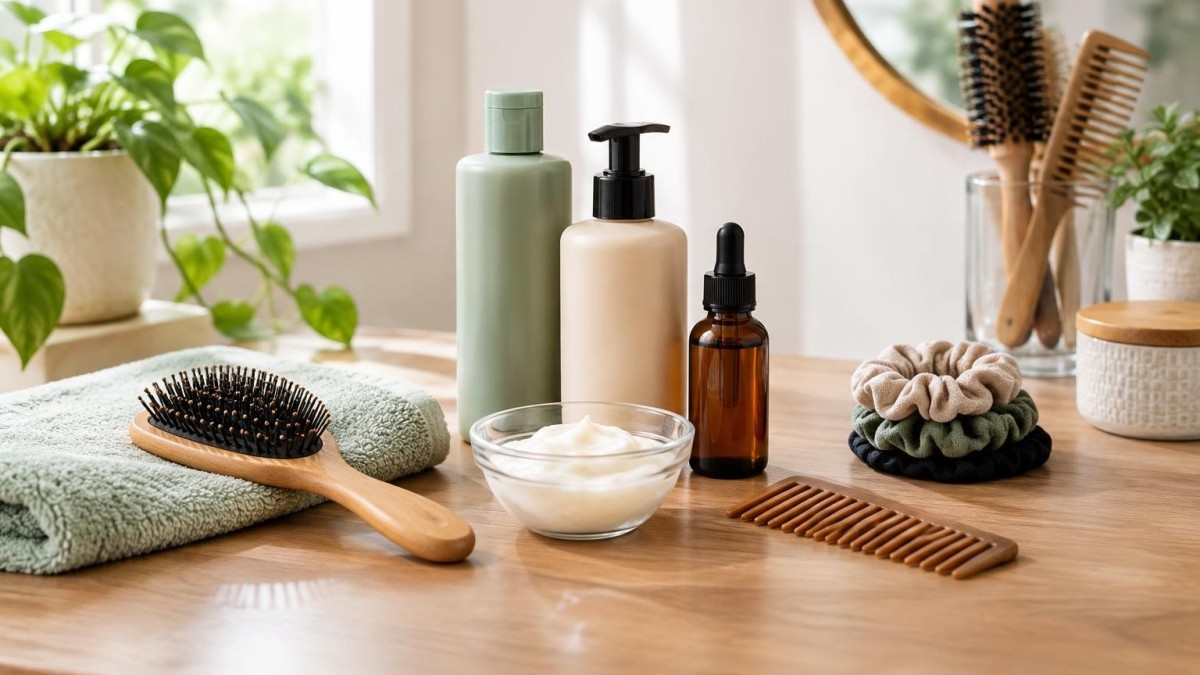
Understanding Your Hair's Unique Traits
Ever notice how a product that works wonders for your friend leaves your hair feeling flat or frizzy? That's because hair isn’t one-size-fits-all. Hair differs in texture, curl pattern, porosity, and density—key features that determine how it responds to products and styling.
Texture relates to the thickness of each hair strand—categorized as fine, medium, or coarse. Fine hair may get weighed down easily, while coarse hair often benefits from richer conditioners. Medium texture falls somewhere in between.
Your curl pattern defines the natural shape of your hair, ranging from straight (Type 1) to coily (Type 4), with variations in between. Knowing your curl type helps you select styles and products that enhance your natural look.
Porosity indicates how well your hair absorbs and retains moisture, classified as low, medium, or high. Lower porosity hair resists moisture and can build up product easily, while higher porosity hair soaks up moisture but dries out faster.
Density is about how many strands you have overall, which affects how full your hair looks and how much product you need. You can have fine strands with high density or coarse strands with low density—the combination influences your styling approach.
Why It Matters When Choosing Products and Routines
Knowing your hair's characteristics lets you tailor your hair care routine to support its health and appearance. For instance, lightweight products suit fine, straight hair, preventing greasiness and limpness, whereas curly or coily hair often benefits from moisturizing treatments to keep curls defined and hydrated.
It's also important to consider your scalp’s condition separately, as a healthy scalp supports hair growth and overall hair health.
When shopping for products, look beyond marketing labels. A "curly hair" product may not fit your exact curl type or texture. Observing how your hair reacts to products and adjusting quantities or application methods can make a significant difference.
Practical Steps to Identify and Care for Your Hair
Start by letting your hair air dry naturally after washing to observe its natural pattern. Check the thickness of individual strands and notice if your hair feels weighed down or dry after using certain products. Part your hair to see how much scalp is visible—this helps gauge density.
Remember, hair can change over time due to age, hormones, styling, and environmental factors, so stay flexible with your routine. If you’re unsure, a professional stylist can help assess your hair’s traits and recommend suitable care.
Ultimately, the best hair care comes from understanding and responding to your hair’s unique needs. With patience and attentive care, you’ll be able to maintain healthy, vibrant hair and achieve the style you desire.
Newsletter Station provides professionally written, ready-to-send newsletters customized for your market and brand.
EXPLORE NEWSLETTER OPTIONS