
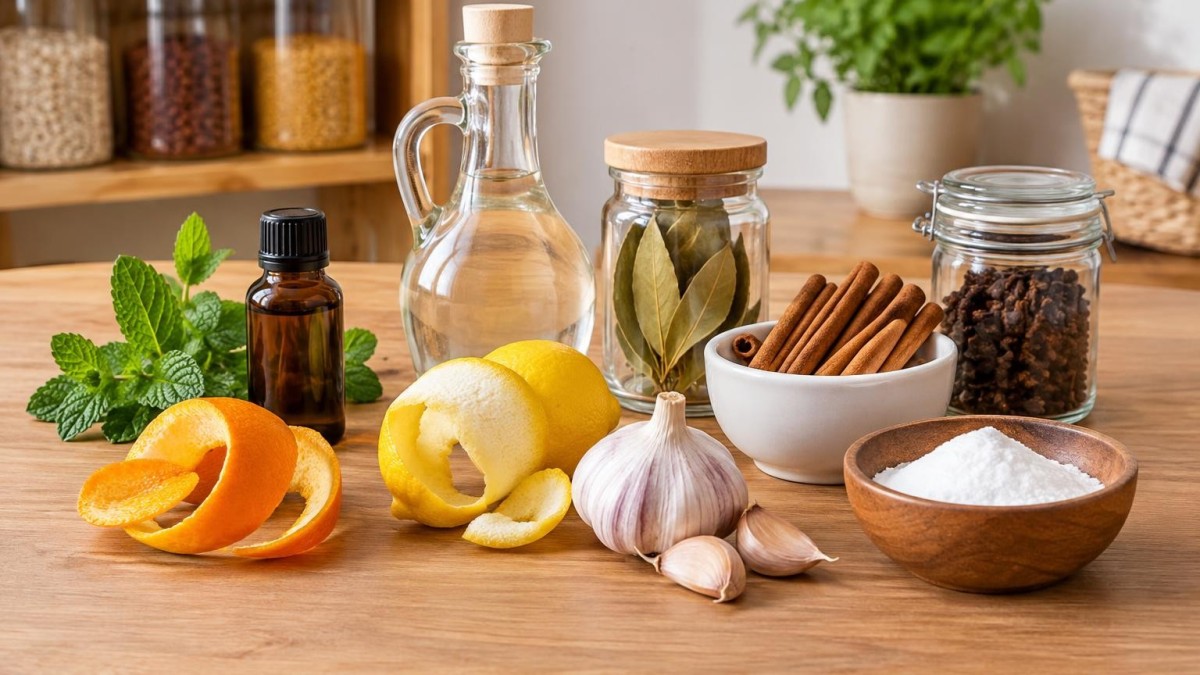
Natural Pantry Ingredients to Help Keep Pests Away
Finding insects or pests in your home can be frustrating, and while commercial products work well, many people look for natural solutions using items in their kitchen. Several common pantry ingredients have scents or properties that may discourage certain bugs, making them handy for supplemental pest control.
Eight Pantry Staples to Try
Peppermint Oil: Known for its sharp smell that some insects dislike, peppermint oil may help deter ants, spiders, and others. Dilute carefully as instructed and apply near windows, doors, or other entry points. Be cautious around pets and children as essential oils can be irritating or harmful.
Vinegar: White vinegar is great for cleaning and can erase ant scent trails which they use to navigate. A vinegar-water mix applied to hard surfaces can disrupt their paths, though it won’t eliminate infestations and should be avoided on sensitive flooring or surfaces.
Bay Leaves: Often used to discourage pantry moths, bay leaves have limited proven effectiveness. Preventing pests by storing food in sealed containers and cleaning up promptly is far more effective than relying on bay leaves alone.
Cinnamon: This warm spice has compounds shown to repel some insects. Sprinkling small amounts near potential pest entry areas might help, but it won’t solve a full infestation. Use with care around pets and on surfaces to avoid inhalation or residue concerns.
Citrus Peels: Orange, lemon, or other citrus peels have fragrant oils that some bugs avoid. Placing fresh peels near windows or doors can provide short-term deterrence, but they must be replaced often to prevent mold and attracting other pests like fruit flies.
Garlic: Containing strong sulfur compounds, garlic is used in garden sprays to keep insects away. Homemade sprays should be tested cautiously as some plants or surfaces may not tolerate them well. Knowing the pest type can help you choose suitable treatments.
Cloves: With a potent aroma due to eugenol, cloves are occasionally used against flies and pantry insects. Whole cloves can be placed in problem areas, but their repellent effect varies and should not replace proper sealing and cleaning routines.
Baking Soda: Popular in DIY advice for cockroach control, baking soda alone isn’t a proven solution. Its best use is as a general household cleaner. Effective cockroach management involves removing food/water sources, sealing cracks, and using appropriate pest-control products or expert services if necessary.
Core Preventive Measures
Beyond using pantry items, prevention is key to reducing pest problems. Store food in sealed containers, clean up crumbs and spills promptly, take out garbage regularly, fix leaks, seal cracks and openings, maintain screens, and reduce clutter. These steps make your home less inviting to pests.
When to Seek Professional Help
If you face a significant infestation, repeatedly spot pests, or discover wood-damaging insects, it’s wise to consult a pest control professional. Experts can identify the pest species, their entry points, and recommend tailored treatments that go beyond simple deterrents.
Realistic Expectations for Natural Remedies
Pantry items like peppermint oil, vinegar, cinnamon, citrus peels, garlic, cloves, and baking soda might help discourage pests in some scenarios but aren’t guaranteed pest eliminators. Combining good cleaning habits, sealing entry points, and using appropriate treatments ensures better protection against unwanted guests.
Newsletter Station provides professionally written, ready-to-send newsletters customized for your market and brand.
EXPLORE NEWSLETTER OPTIONS