
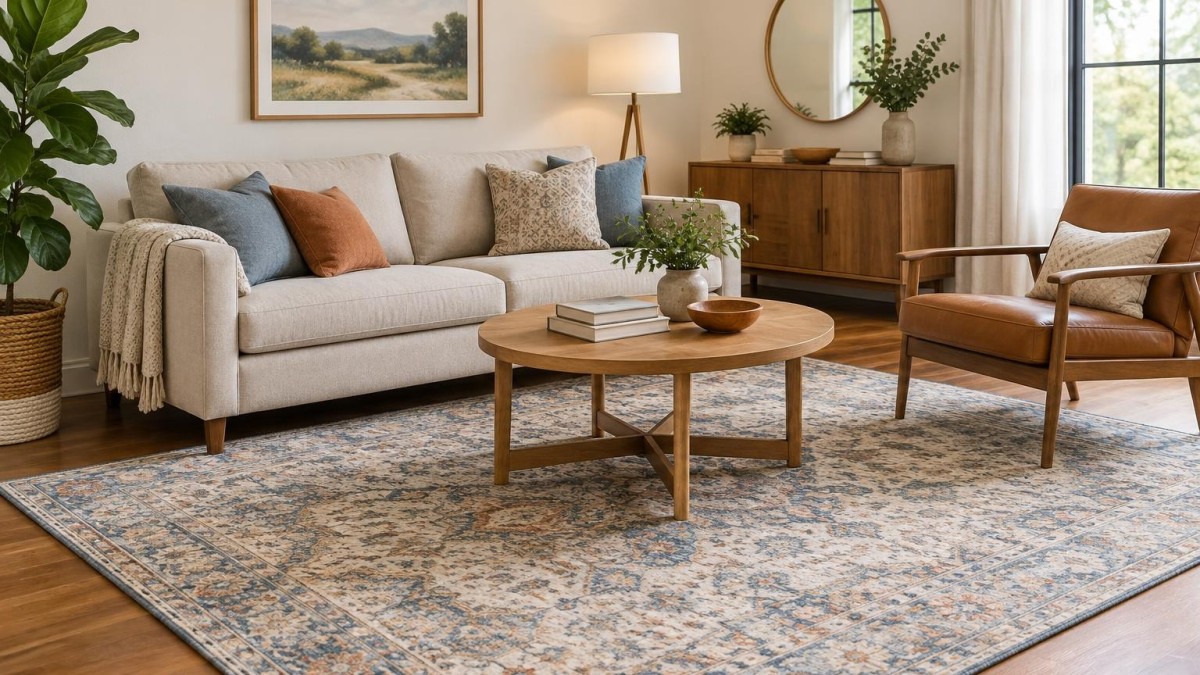
Define Spaces with Style
Area rugs can subtly divide open floor plans by marking distinct functional areas. For example, placing a rug under the living room seating clusters the furniture visually, while another under the dining table delineates that space. Even in bedrooms, a small rug paired with a chair can create a cozy reading nook. When using multiple rugs, aim for visual harmony through complementary colors, shared textures, or related patterns to keep the design intentional and cohesive.
Choose the Right Size and Shape
The size of your rug dramatically affects a room’s flow. Too small, and furniture can look disconnected; a rug that fits under at least the front legs of sofas and chairs often works well. In dining areas, make sure the rug extends far enough to accommodate chairs when pulled out—typically about 24 inches beyond the table's edges. Don't overlook other shapes beyond rectangles—a round or oval rug might better suit certain spaces or furniture arrangements and add visual interest.
Consider Material, Comfort, and Care
Pick a rug material that suits your lifestyle. Wool rugs offer durability and a soft feel but can be pricier. Cotton rugs are casual and often easy to clean, while synthetic fibers provide stain resistance and practicality for busy homes or pet owners. Natural fibers like jute or sisal bring texture but might be harder to clean. Think about pile height too; plush rugs add comfort in bedrooms but may be impractical under a dining table or office chair. Maintenance is key, so check cleaning instructions beforehand and plan to vacuum regularly and treat spills gently to keep your rug looking great.
Add Layers and Protect Your Floors
Layering rugs can enhance texture and style if done thoughtfully. Start with a large neutral base rug and add a smaller patterned or colorful rug on top, ensuring thickness doesn’t cause tripping hazards. Also, use a quality rug pad to secure rugs, cushion underfoot, and protect your flooring from everyday wear—especially in high-traffic areas like entryways and hallways.
Periodic checks under your rugs for moisture or damage can preserve both your flooring and the rug itself. Rotating rugs occasionally also helps distribute sunlight exposure evenly, preventing uneven fading.
By focusing on size, placement, material, and maintenance, you can select area rugs that not only elevate your home’s style but also fit your everyday needs perfectly. Thoughtful choices make rugs more than just floor coverings—they become elements that pull rooms together, add warmth, and enrich your living spaces without any major remodeling.
Newsletter Station provides professionally written, ready-to-send newsletters customized for your market and brand.
EXPLORE NEWSLETTER OPTIONS