
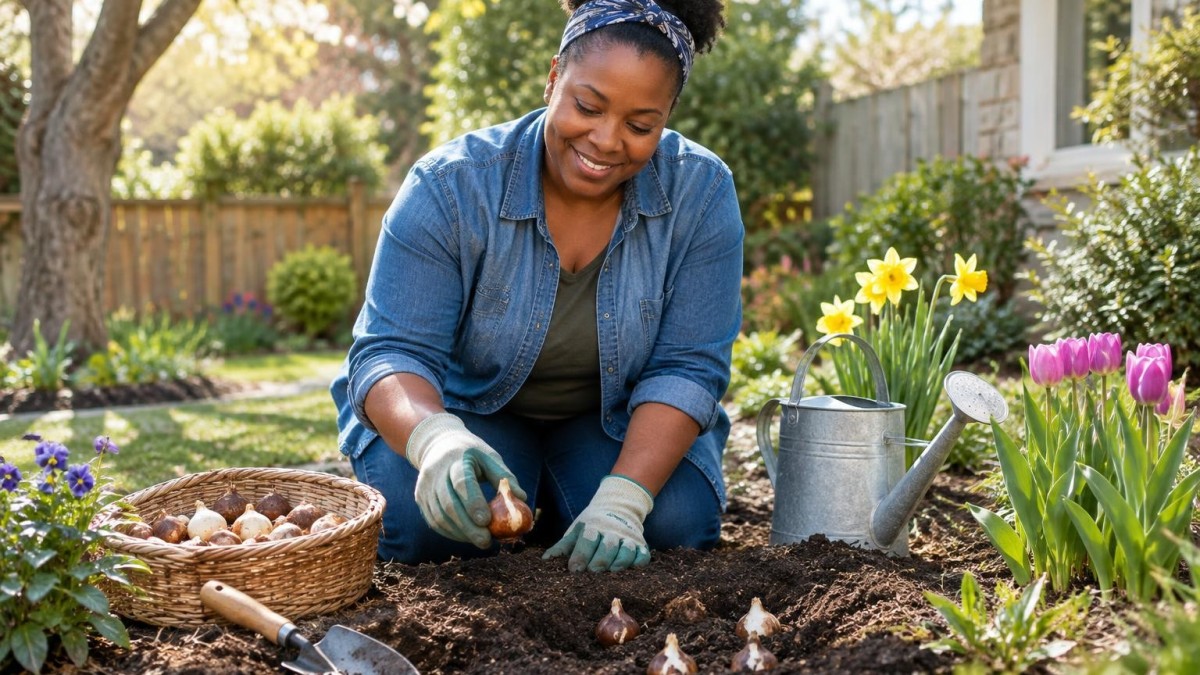
Choose Healthy Bulbs for the Best Start
Begin your bulb planting with good-quality bulbs. Look for ones that feel firm and heavy, without soft spots, mold, or damage. Bigger bulbs usually produce better flowers in their first season. Buy from trusted garden centers or reliable online sources and plant your bulbs promptly to give them the best chance at thriving.
Plant at the Right Depth and Location
Plant bulbs about three times as deep as the bulb’s height to protect against temperature changes and help roots develop well. Smaller bulbs like crocuses need shallower planting, while larger ones like tulips and daffodils require deeper soil. Choose a spot that gets at least six hours of sunlight daily and has well-drained soil. Avoid areas where water tends to pool, as too much moisture can cause bulbs to rot.
Prepare the Soil and Group Your Bulbs
Good soil is the foundation of a healthy garden. Loosen compacted soil and blend in compost or organic material to improve drainage and nutrient levels. For heavy clay soils, adding coarse sand can help. Plant bulbs in clusters rather than straight lines for a natural, eye-catching look. Mixing varieties with different bloom times extends your flowering season, adding color from early spring to late summer.
Time Your Planting and Water Wisely
Timing is important. Fall is great for spring-flowering bulbs like tulips and daffodils, planted before the ground freezes. Summer or fall-blooming bulbs should be planted in spring after frost risk passes. Water your bulbs well after planting to settle the soil and start root growth, but be careful not to overwater. Once established, many bulbs only need extra water during dry spells to prevent rot.
Use Mulch, Fertilize Carefully, and Let Leaves Die Back
A light layer of organic mulch like shredded bark or pine needles helps keep soil moist, cool, and weed-free, especially in colder climates. Use a balanced bulb fertilizer at planting and a light feeding as shoots appear each year, avoiding excessive nitrogen which favors leaves over flowers. After blooming, don’t cut back leaves too soon—let them yellow and wither naturally to allow bulbs to store energy for next year’s growth.
Planting flower bulbs can brighten your garden with vibrant, recurring blooms and requires just a bit of planning and care. By choosing quality bulbs, planting them properly, and caring for them seasonally, your landscape will flourish with colorful flowers that come back year after year.
Newsletter Station provides professionally written, ready-to-send newsletters customized for your market and brand.
EXPLORE NEWSLETTER OPTIONS