
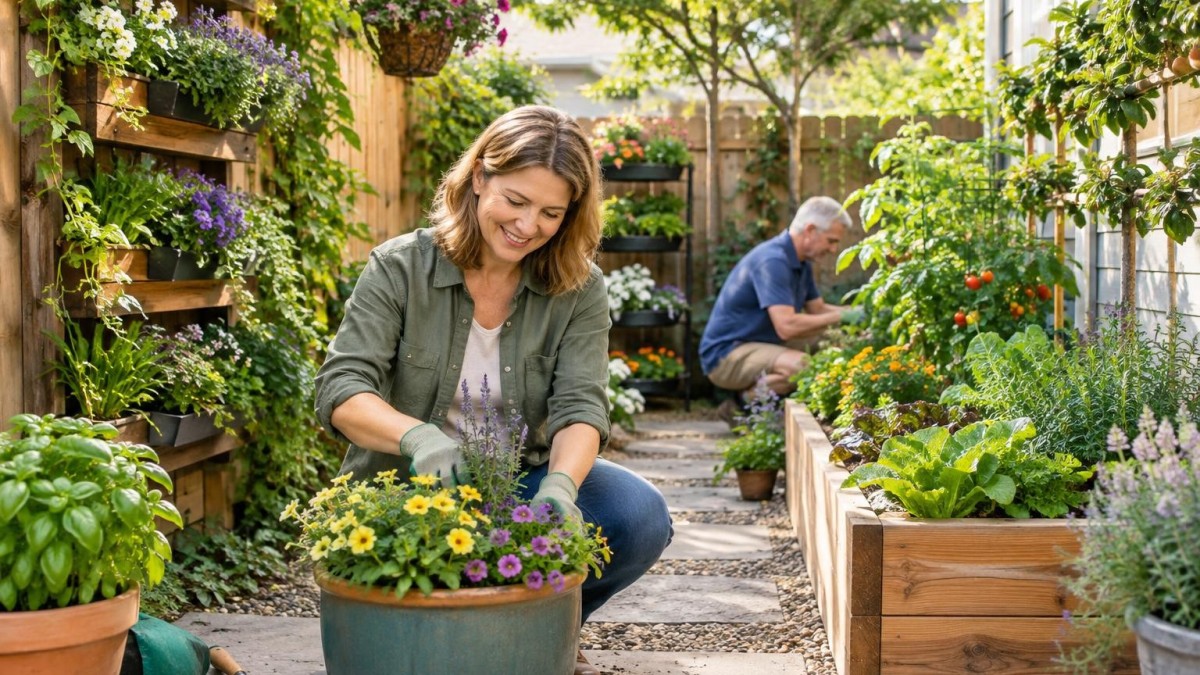
Maximize Vertical Space
Limited ground area in a small garden calls for creative use of vertical space. Vertical gardening is a practical way to add lush greenery while freeing up floor space. Options include trellises for climbing plants, wall-mounted planters, hanging pockets, decorative garden screens, and even living walls. Plants like clematis, jasmine, climbing roses, and pole beans flourish vertically, adding layers of greenery and privacy, while giving your garden a sense of spaciousness.
Flexible Container and Tiered Planting
Containers offer enormous versatility for small garden planting. You can grow herbs, colorful annuals, dwarf fruit trees, vegetables such as tomatoes and peppers, succulents, and grasses. Using containers of various sizes and materials adds aesthetic depth. Complement containers with tiered planters to multiply your growing area vertically and visually. Multi-level planters are especially handy for herbs, strawberries, succulents, annual flowers, and leafy greens, making harvesting easier.
Creative Miniature and Hanging Gardens
Miniature or fairy gardens bring charm and personality to small spaces, creating tiny landscapes with miniature plants, pathways, and garden ornaments. They're a delightful way to engage family and add whimsy. Additionally, hanging baskets and suspended planters let you capitalize on overhead space. Ideal hanging plants include petunias, ferns, spider plants, lobelia, ivy, and sweet potato vines. These bring color and soften the lines of hard surfaces at eye level.
Raised Beds and Edible Landscaping
Raised beds improve soil quality, drainage, and weed control, while making gardening more accessible and organized. They are perfect for vegetables, herbs, and pollinator-friendly flowers. Incorporate edible landscaping by blending ornamental plants with food-bearing ones such as blueberry bushes, strawberries, dwarf apple trees, lavender, rosemary, kale, and lettuces. Espalier fruit trees trained along fences are an elegant space-saving option that adds both beauty and productivity.
Year-Round Interest and Pollinator Support
Design your garden for continuous visual appeal by selecting plants that thrive at different times of the year, including evergreens, ornamental grasses, perennials, spring bulbs, fall foliage, and winter-interest shrubs. Also, support pollinators like bees and butterflies by planting coneflowers, salvia, black-eyed Susans, milkweed, and bee balm. This not only aids local ecosystems but also encourages more vibrant flowering and fruiting in your garden.
Layering for Depth and Dimension
Creating layers is a simple yet effective way to make your small garden appear larger. Place taller plants at the back, medium-height plants in the middle, and low-growing flowers or groundcovers at the front. This layering adds depth, texture, and movement, transforming a compact space into a dynamic and inviting garden.
Ultimately, a small garden can be a beautiful, productive sanctuary by combining creative vertical solutions, container and raised-bed planting, edible landscaping, and layered design. Thoughtful plant choice and imaginative planning turn limited space into an outdoor haven that delights throughout the seasons.
Newsletter Station provides professionally written, ready-to-send newsletters customized for your market and brand.
EXPLORE NEWSLETTER OPTIONS