
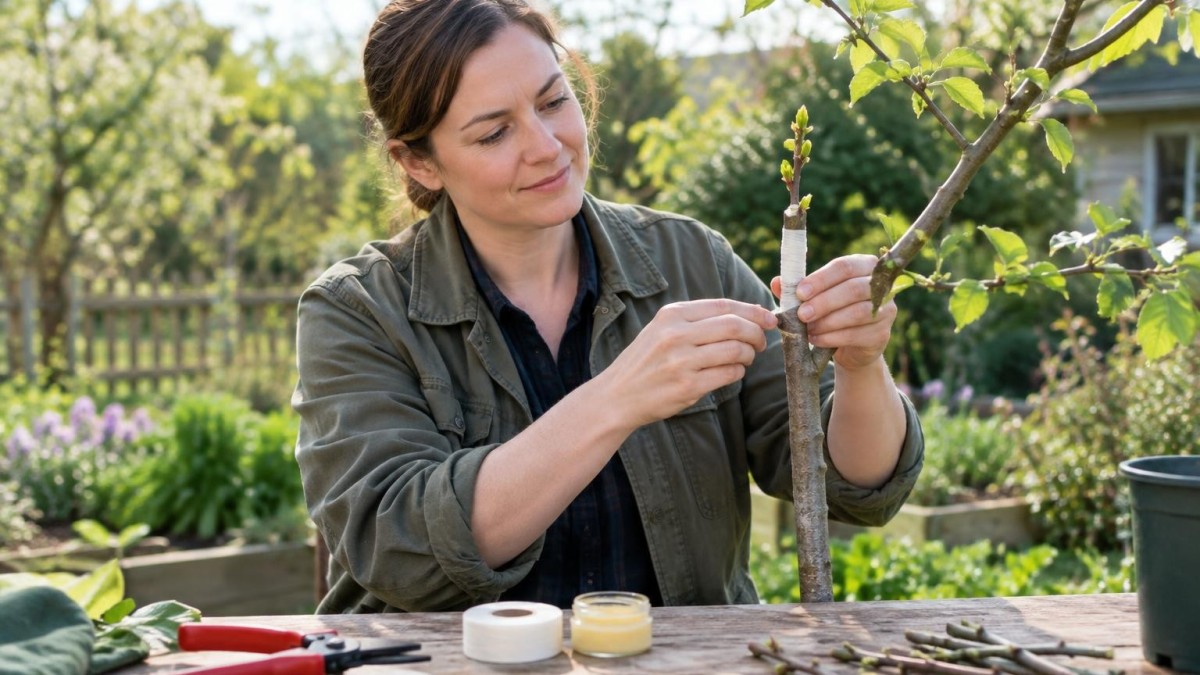
Why Grafting Enhances Your Garden
Grafting is a time-honored technique that lets gardeners combine the best features of different trees to create healthier, more versatile plants. Whether you want to grow rare varieties, boost disease resistance, or enjoy several fruit types on a single tree, grafting makes these possibilities a reality. It also helps speed up fruit production since grafted wood comes from mature, productive trees.
Key Grafting Methods and Components
To get started, it’s important to know the two main parts: the scion, which is the cutting from the desired tree variety, and the rootstock, which provides the roots and vigor. Matching compatible scions and rootstocks and aligning their cambium layers—the thin growth tissue under the bark—is critical for success. Popular grafting techniques include whip and tongue grafting, perfect for young trees, and cleft grafting, which is great for adding new varieties to established trees. Bud grafting and side veneer grafting are also common, especially in commercial settings or with ornamentals.
Step-by-Step Guide to Successful Grafting
Start by selecting healthy, disease-free scion wood and vigorous rootstock. Use sharp, sterilized tools to make clean, slanted cuts on both parts. Align the cambium layers carefully when joining the scion to the rootstock and secure the graft tightly with tape or rubber bands. Apply grafting wax to seal the union and protect it from drying out and infection. Place the grafted tree in a sheltered area with good sunlight and moisture, and remove any growth below the graft that could steal nutrients. The best time for most grafting is late winter to early spring when growth resumes, though bud grafting often happens in summer.
Common Pitfalls and Tips for Success
Many grafting failures come from using dull or dirty tools, poor cambium alignment, grafting in unfavorable weather, or leaving tape on too long. Labeling your grafts will help you keep track of varieties. Remember, grafting is a skill that improves with practice and patience. Even experienced growers lose grafts occasionally, but persistence pays off.
By mastering the art of grafting, you can create unique, resilient trees customized for your garden's needs while making efficient use of limited space. It’s a rewarding way to expand your gardening skills and enjoy diverse, fruitful harvests year after year.
Newsletter Station provides professionally written, ready-to-send newsletters customized for your market and brand.
EXPLORE NEWSLETTER OPTIONS