
Understanding Your Yard’s Drainage
Good yard drainage is key to protecting your home’s foundation and keeping your outdoor space healthy and attractive. Water that doesn’t drain properly can cause standing pools, erode soil, damage plants, and even threaten your property’s structure. Before diving into fixes, start by watching how water flows and settles in your yard after rain or watering. Identify areas where water lingers or soils stay soggy—especially near your house, walkways, and garden beds. This observation will help you target the most effective drainage improvements.
Adjusting Yard Grading for Natural Water Flow
One of the simplest yet most effective solutions is grading—shaping the land so water naturally drains away from important areas. Ideally, your yard should have a gentle slope directing water away from your home’s foundation and into areas where it can safely absorb or collect. Even small adjustments to the land’s slope can make a big difference in preventing pools of water and reducing foundation risks.
Installing Drainage Features to Manage Excess Water
For spots where grading isn’t enough, consider drainage systems like French drains, which use a perforated pipe surrounded by gravel under the surface to channel water away from problem spots. These are especially good for low-lying, persistently wet areas. Surface options such as swales—shallow, grass-lined channels—shade water safely across your yard, while berms (raised soil ridges) and catch basins collect and redirect runoff. Combining these methods can effectively control heavy rainfall and protect your landscape from erosion.
Handling Roof and Surface Runoff
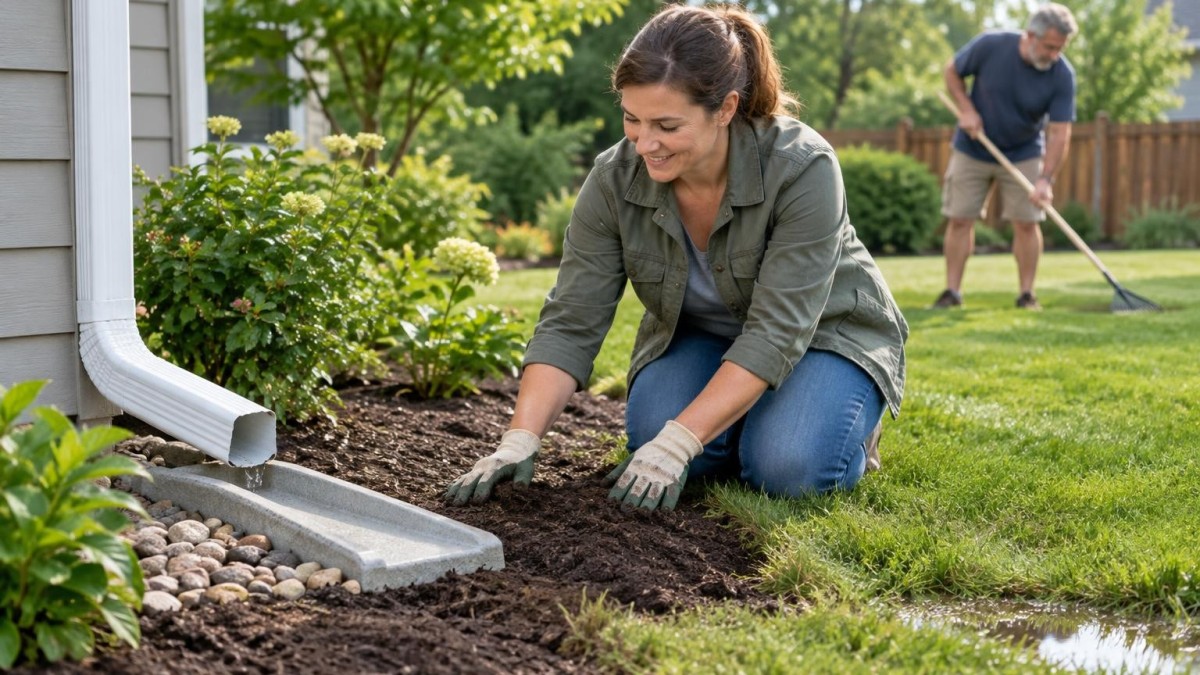
Roof runoff plays a big role in yard drainage problems if downspouts aren’t directing water far enough away from your home. Make sure gutter downspouts extend well beyond your foundation, or add extensions and splash blocks to prevent water from pooling near your house. Managing this runoff helps keep your yard drier and reduces pressure on your drainage system.
Improving Soil for Better Water Absorption
The type of soil in your yard influences how well water drains. Heavy clay tends to hold moisture, while sandy soils let water pass quickly but may lack nutrients. Adding organic materials like compost improves soil texture and permeability, allowing water to soak in more evenly. Healthier soil supports stronger grass and plants, making your yard more resilient.
Maintaining Drainage Systems for Long-Term Success
Even effective drainage setups need regular upkeep. Keep gutters and downspouts clean, clear debris from drains and catch basins, and check for blockages after storms. Keep an eye on areas prone to pooling so you can address problems early. These simple maintenance steps prevent small issues from turning into costly repairs.
By combining good grading, practical drainage features, proper roof runoff management, soil improvement, and consistent maintenance, you can create a yard that stays dry, healthy, and beautiful through every season. These steps not only protect your landscape but also safeguard your home.
Newsletter Station provides professionally written, ready-to-send newsletters customized for your market and brand.
EXPLORE NEWSLETTER OPTIONS