
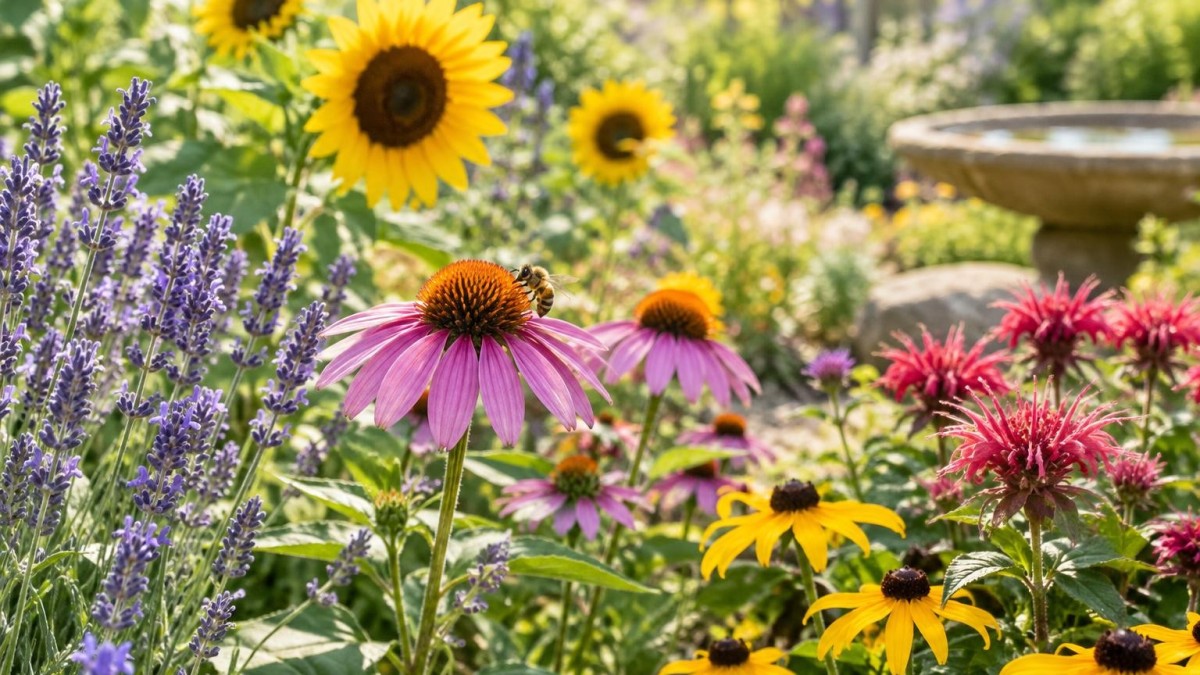
Why Bees Matter in Your Garden
Bees are crucial for pollinating many of the fruits, vegetables, and nuts that brighten our tables. Without these busy pollinators, staples like apples, almonds, and blueberries would be much harder to come by.
Choosing the Right Flowers
Building a garden that invites bees means planting flowers that offer plenty of nectar and are easy for them to access. Here are some top choices that not only support bee populations but also add charm and color to your outdoor space.
Lavender
This fragrant plant is a bee magnet with its purple, nectar-rich flowers. Lavender thrives in sunny spots with well-drained soil, and it’s drought-resistant, making it a low-maintenance addition to your garden.
Sunflowers
Sunflowers feature large, open blossoms full of pollen and nectar, making them irresistible to bees. They grow quickly and can bring cheerful brightness to any garden, big or small.
Coneflowers
These dependable perennials bloom for months, providing a steady food source for bees well into fall. Their central cones are nectar hubs and require little upkeep once planted.
Bee Balm
As the name suggests, bee balm is a favorite for pollinators. Its tubular flowers come in various vibrant colors and also attract butterflies and hummingbirds, supporting garden biodiversity.
Salvia
Salvia plants draw bees with their upright flower spikes loaded with nectar. They’re tough, drought-tolerant, and come in a spectrum of colors to fit many garden styles.
Native Wildflowers
Local wildflowers adapt naturally to your area's pollinators. Species like black-eyed Susans, milkweed, asters, and coreopsis can be found at native plant nurseries and are excellent for supporting local bees.
Marigolds
These easy-growing annuals attract bees and can help keep garden pests at bay, making them especially useful alongside vegetables.
Butterfly Bush
Blooming throughout the season, butterfly bushes offer fragrant flower clusters that attract a range of pollinators, including bees and butterflies.
Tips for a Thriving Pollinator Garden
To make your garden as inviting as possible for bees, plant flowers in groups to help them find food easily. Include a variety of plants that bloom at different times so food is always available. Minimize pesticide use to keep your garden safe for pollinators, provide shallow water sources, and whenever you can, choose native and drought-tolerant plants.
By cultivating a garden rich with bee-friendly flowers, you’ll not only support the health of vital pollinators but also enjoy a more colorful, lively, and productive outdoor space for years to come.
Newsletter Station provides professionally written, ready-to-send newsletters customized for your market and brand.
EXPLORE NEWSLETTER OPTIONS