
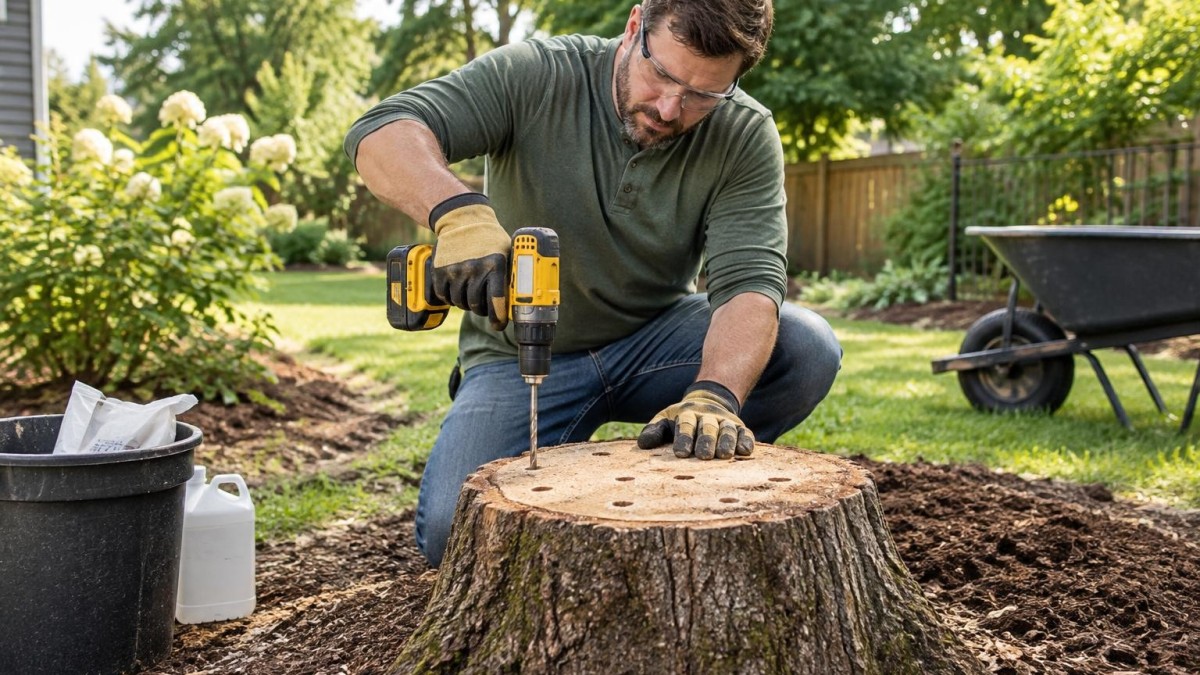
Preparing the Stump
After felling a tree, the leftover stump often proves to be both an eyesore and a potential hazard, interfering with landscaping plans or outdoor activities. The best way to tackle this is by starting with manual reduction. Use a chainsaw or handsaw to cut the stump as close to ground level as possible, creating a flat surface that improves the efficiency of any subsequent treatment. When handling tools, always remember to wear protective gloves, boots, and eye protection for safety. For larger stumps, carefully trimming surrounding roots will also help speed up the removal or natural decay process.
Methods to Kill and Remove the Stump
One proven approach to accelerate stump decay involves drilling holes into the stump’s top and sides. Angle the holes downward to give treatment solutions deeper penetration. Filling these holes with a nitrogen-rich chemical like potassium nitrate or a commercial stump remover stimulates fungal and bacterial growth that gradually breaks down the wood. Follow product instructions diligently and avoid applying these chemicals near vegetable gardens, pets, or water sources for safety.
If you prefer a more environmentally gentle option, using Epsom salt can be effective. Drill holes as above, fill them with Epsom salt, and moisten the stump lightly. Over weeks or months, the salt draws moisture from the wood, causing it to dry out and decompose more rapidly. This method is especially favored by homeowners wanting to avoid harsh chemicals, though it requires regular reapplication and patience.
Where regulations and safety allow, burning the stump is another method. By saturating drilled holes with a slow-burning accelerant like kerosene (never gasoline), you can ignite the stump to burn internally. However, this technique demands constant supervision, proper fire safety precautions, and compliance with local laws. Due to increased fire risks in many areas, it's less commonly recommended today.
Natural Decay and Professional Help
If you’re not in a rush, letting nature take its course is a viable approach. Cover the stump with mulch, compost, and soil to encourage microbes, fungi, and insects that will naturally break down the wood. Regularly moistening the area and adding nitrogen-rich materials like grass clippings can speed the process. Keep in mind this might take several months or even years depending on stump size.
For those seeking a quicker, more straightforward solution, professional stump grinding services are highly efficient. These experts use powerful grinders to reduce stumps and major roots to wood chips swiftly and with minimal disruption. This option is ideal when planning new landscaping, fencing, or construction projects and ensures no damage to surrounding utilities or landscaping elements.
Safety and Common Misconceptions
Beware of myths such as driving copper nails into your stump, which has no real effect on decomposition. Additionally, always handle chemicals responsibly to prevent soil contamination. Before using fire or treatments, consult local regulations and consider how the stump removal fits into your yard’s long-term plan.
While getting rid of a tree stump takes time and effort, the right method restores the beauty, safety, and usability of your outdoor space. Whether you choose chemical treatments, natural decay, burning, grinding, or professional removal, prioritize safety and environmental care to enjoy a cleaner and more inviting yard.
Newsletter Station provides professionally written, ready-to-send newsletters customized for your market and brand.
EXPLORE NEWSLETTER OPTIONS