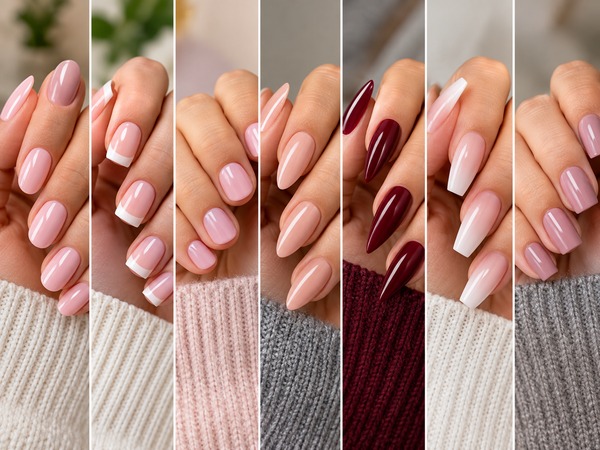
Changing your nail shape can have almost as much impact as changing your polish color. A slightly tapered nail can make fingers appear longer, a short rounded shape can make everyday maintenance easier, and a squared or pointed tip can completely change the character of a manicure.
But choosing the best fingernail shape isn't just about following nail trends. Your natural nail width, nail length, lifestyle and the strength of your nails all matter. A shape that looks great in a photo may be frustrating if you type all day, work with your hands or have nails that tend to split at the corners.
Here's a practical look at today's most popular nail shapes and how to decide which one will work for you.
- Oval Nails
Oval nails have gently tapered sides that curve into a rounded tip. The result is soft and classic without looking overly conservative.
Because the sides narrow slightly toward the tip, oval nails can create the visual impression of longer, more slender fingers. They work on natural nails as well as enhancements and can be worn at moderate lengths without becoming impractical.
Best for:
Creating the appearance of longer fingers
Medium-length nails
Classic or understated manicures
Someone who wants a softer alternative to square nails
Keep in mind: Creating an oval requires filing some width from the sides. If your natural nails are very short, you may need a little additional length before the shape becomes noticeable.
- Square Nails
Square nails have relatively straight sides and a flat edge across the top. They're crisp, geometric and particularly striking with French manicures, solid colors and minimalist nail art.
The shape works especially well when the natural nail bed is fairly long or narrow. It can also provide a little more visual width to slender fingers.
Square nails are often described as particularly strong, but that isn't automatically true for everyone. Sharp corners can catch on clothing or other objects, and that can contribute to chips or breaks.
Best for:
Short to medium-length nails
A clean, structured look
French manicures
People who prefer a clearly defined shape
Tip: If the corners constantly snag, don't keep filing the entire nail shorter. Softening just the corners may solve the problem while preserving the square appearance.
- Round Nails
Round nails follow the natural curve of the fingertip and are usually worn relatively short. They're one of the most practical options for anyone who doesn't want nail maintenance to become a project.
Because there are no pronounced corners or long tapered tips, round nails tend to work well for people who type frequently, play sports, care for young children or simply prefer shorter natural nails.
They're also a good choice when you're trying to grow out damaged or weakened nails and don't want to maintain additional length.
Best for:
Short natural nails
Active lifestyles
Lower-maintenance manicures
A simple, natural appearance
Round doesn't have to mean boring. Dark polish, bright colors and detailed nail art can look especially sharp on neatly shaped short nails.
- Almond Nails
Almond nails have tapered sides and a softly rounded point, resembling the shape of an almond. They've become a manicure staple because they provide some of the drama of a pointed nail without the extremely sharp tip of a stiletto.
The tapered silhouette can make both the nails and fingers appear longer.
Almond nails generally require some free edge beyond the fingertip to create the taper. If your natural nails aren't long or strong enough, a nail professional may suggest an enhancement rather than aggressively filing the sides of the natural nail.
Best for:
Medium to long nails
An elongated, elegant appearance
Neutral manicures and detailed nail art
Someone who wants a softer alternative to stiletto nails
Keep in mind: The more material removed from the sides of a natural nail, the less support the tip may have. Avoid over-filing just to achieve a narrower almond.
- Stiletto Nails
Stiletto nails are long, dramatically tapered and pointed at the tip. They're intentionally bold and provide plenty of room for elaborate nail art, embellishments and statement manicures.
This isn't usually the most practical shape for short natural nails. Stiletto styles are commonly created with enhancements that provide the necessary length and structure.
They're also a higher-maintenance choice. Long pointed nails can make some everyday activities more difficult, and the additional length creates more leverage if a nail gets caught or bumped.
Best for:
Dramatic manicures
Nail art and embellishments
Special events
People comfortable maintaining longer enhancements
Before committing to a long stiletto set, consider your daily routine. Typing, fastening jewelry, handling contact lenses and other ordinary tasks can feel surprisingly different with dramatically longer nails.
- Coffin or Ballerina Nails
Coffin and ballerina nails are closely related shapes characterized by tapered sides and a straight tip. The silhouette resembles either a coffin or a ballerina slipper, depending on your preferred description.
This shape needs enough length to create a visible taper before reaching the squared tip. On very short nails, there simply isn't enough space for the shape to develop.
Coffin nails are particularly popular for nail art because the relatively broad surface provides plenty of room for designs, gradients and embellishments.
Best for:
Longer nails and extensions
Statement manicures
Detailed nail art
Someone who likes a defined, contemporary shape
Keep in mind: Length affects practicality. A shorter coffin shape can be much easier to live with than an extra-long version while still providing the distinctive tapered appearance.
- Squoval Nails
Squoval nails combine features of square and oval shapes. The sides remain fairly straight, but the corners are softened rather than left sharp.
It's one of the most versatile fingernail shapes because it doesn't require extreme length or dramatic tapering. The softened corners can also be less prone to snagging than the corners of a sharply squared nail.
If you're unsure which shape to request at a salon, squoval is a practical place to start.
Best for:
Short to medium-length nails
Everyday manicures
Natural nails
People who like square nails but dislike sharp corners
Professional or understated styles
How to Choose the Right Nail Shape
There's no formula that says a certain finger shape must be paired with a particular nail shape. Instead, think about the result you want and what you actually do with your hands every day.
Look at Your Natural Nail Beds
Notice the width and length of your nail beds and the natural curve near your cuticles.
You don't have to match that shape exactly, but working with your natural nail structure often makes shaping easier and requires less aggressive filing.
If your nails naturally have relatively straight sides, square or squoval may be easy to maintain. If they're naturally rounded, oval and round shapes may require less work.
Consider Your Nail Length
Some shapes need length.
Round, square and squoval nails work well when kept short. Almond nails generally need more length to establish their tapered shape, while coffin and stiletto nails usually require considerably more.
Trying to force a long-nail shape onto very short natural nails can result in excessive filing without achieving the look you wanted.
Be Realistic About Your Lifestyle
Think about your hands between manicures.
If you're constantly typing, gardening, working with tools, opening packages or doing other hands-on activities, shorter round or squoval nails may be easier to maintain.
If you're comfortable adapting to longer nails and enjoy frequent appointments, almond, coffin or stiletto shapes give you more dramatic options.
Neither approach is better. The right manicure is one you can comfortably live with.
Pay Attention to Nail Condition
If your nails peel, split or break easily, don't assume that adding a strengthening product will automatically solve the problem.
Keeping nails somewhat shorter and avoiding excessive filing may be more helpful while damaged areas grow out. Repeated exposure to water and chemicals can also be hard on nails, so gloves can be useful during cleaning, dishwashing and other wet work.
Persistent changes in nail color, texture, thickness or shape can sometimes have causes unrelated to cosmetic nail care. If you notice a significant or unexplained change, consider discussing it with a healthcare professional.
Nail Care Tips That Apply to Every Shape
No matter which nail shape you choose, good maintenance helps the manicure look better and reduces unnecessary damage.
File carefully rather than aggressively sawing back and forth at the nail edge. Keep nails at a length you can comfortably manage, and moisturize the hands, nails and surrounding skin regularly.
Try not to use your nails as substitutes for tools. Prying open a container, scraping off a label or picking at a tight seal can turn a perfectly good manicure into a broken nail very quickly.
If you wear gel polish, acrylics or other enhancements, proper application and removal matter. Peeling or forcing product off can remove layers from the natural nail plate along with it.
It's also worth clearing up a common misconception: natural nails don't need to "breathe." Nails are made of keratin and receive what they need through the body's blood supply rather than from exposure to air. Taking a break from polish or enhancements can still be useful if your nails or surrounding skin are irritated or damaged, but they don't require polish-free periods simply to breathe.
Bring a Reference Photo to Your Nail Appointment
Names aren't always enough when describing nail shapes. One person's "almond" may be another person's "soft stiletto," and coffin nails can range from subtly tapered to extremely narrow.
If you have a specific result in mind, save a photo and show it to your nail technician. Point out what you like about the shape—not just the color or design.
Also discuss length before shaping begins. It's much easier to take additional length off than to put it back.
The best nail shape is ultimately a combination of appearance, comfort and maintenance. Oval and almond nails can create a more elongated look, square and coffin nails provide sharper structure, while round and squoval nails are practical choices for shorter everyday manicures.
Trends will continue to change, but you don't need to change your nails every time they do. Choose the shape that works with your natural nails, fits your daily routine and gives you the look you actually enjoy wearing.