
Choose Plants That Fit Your Climate
Start by selecting native plants that are naturally adapted to your local environment. These plants are tough, need less water, and resist pests better than non-natives. You can also add drought-tolerant species that handle dry spells well, helping your garden stay healthy with less effort.
Prioritize Perennials and Evergreens
Perennials come back every year, which means you won’t have to replant seasonally. Choose varieties that bloom for a long time to keep your yard colorful. Adding evergreen shrubs or ornamental grasses provides structure and greenery year-round without extra care.
Group Plants by Water and Sunlight Needs
Planting areas based on similar water and light requirements makes watering more efficient and reduces waste. This method helps keep plants healthy by giving each group exactly what it needs without extra fuss.
Use Mulch to Save Time and Water
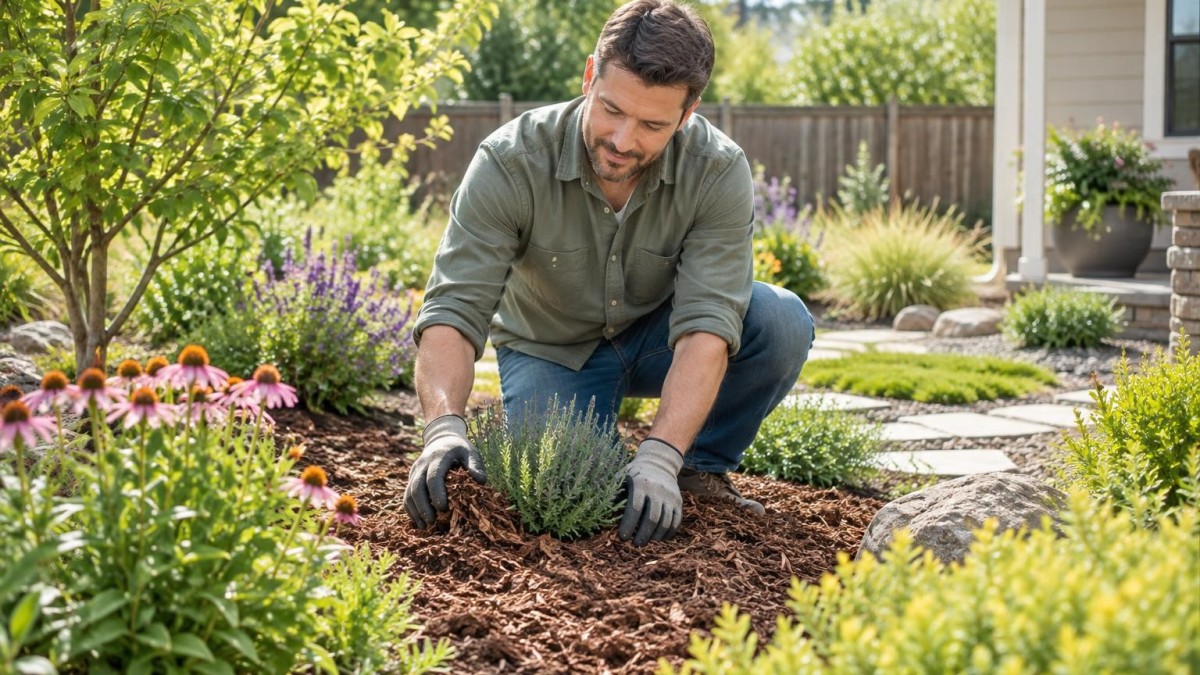
Applying a thick layer of mulch around plants helps keep soil moist, cuts down on weeds, and regulates soil temperature. Organic mulches like bark or wood chips also improve soil quality as they break down over time, creating a better environment for plants.
Opt for Durable, Low-Upkeep Hardscaping
Choose long-lasting materials such as natural stone, pavers, or gravel for walkways, patios, and borders. These surfaces need less maintenance than grass and help keep your yard looking neat. Permeable pavers can also improve drainage while being eco-friendly.
Reduce Lawn Size or Replace It Altogether
Lawn care can be time-consuming. Shrinking your lawn or exchanging it for ground covers like creeping thyme or clover, native grasses, or decorative stones lowers the need for mowing and watering, saving you effort and resources.
Invest in Smart Irrigation Systems
Modern irrigation tools use sensors and weather info to water plants precisely when and where needed. This reduces water use and prevents overwatering, which benefits both your plants and your utility bills.
Plan for Easy Maintenance
Design your yard with wide pathways and adequate spacing between plants for easy access. Position any plants that require extra attention near the house, so upkeep feels less like a chore.
Keep Designs Simple and Purposeful
Adopting a minimalist approach with fewer plant types and clear spacing creates a calm and attractive look that's easier to manage. Focus on quality elements that serve a function and enhance your outdoor space.
Incorporate Sustainable Practices
Think about adding rain gardens, composting areas, or xeriscaping features to reduce your footprint and maintenance demands. These eco-friendly ideas promote a healthy, sustainable yard.
Designing a low-maintenance landscape means letting nature do much of the work for you. With thoughtful plant choices, smart layouts, and efficient systems, you can enjoy a lovely garden all year with minimal upkeep—freeing up your time to relax and appreciate your outdoor space.
Newsletter Station provides professionally written, ready-to-send newsletters customized for your market and brand.
EXPLORE NEWSLETTER OPTIONS