
Know What Your Lawn Needs
Every lawn has unique watering needs based on factors like grass type, soil composition, climate, and local regulations. Warm-season grasses such as Bermuda and Zoysia need different watering schedules compared to cool-season grasses like Kentucky Bluegrass. Sandy soils drain quickly and might require more frequent watering, while clay soils hold moisture longer. Aim to provide about 1 to 1.5 inches of water per week, combining rainfall and irrigation, to keep your lawn healthy.
Water at the Best Times
Timing makes a big difference in watering efficiency. Early mornings, generally between 6 a.m. and 10 a.m., are ideal because temperatures are cooler and winds calmer, allowing water to soak into the soil instead of evaporating. Morning watering also helps grass dry throughout the day, reducing disease risks. Avoid watering late in the evening since prolonged moisture overnight fosters fungal problems.
Deep, Infrequent Watering Builds Strong Roots
Frequent light watering may keep grass green briefly but encourages shallow roots that struggle during droughts. Instead, water deeply once or twice a week to moisten soil 6 to 8 inches deep. This encourages roots to grow deeper, making your lawn more resilient to heat and dry spells. Use a small container like a tuna can during watering to measure how much water your sprinkler applies and adjust accordingly.
Use the Right Tools for Efficient Irrigation
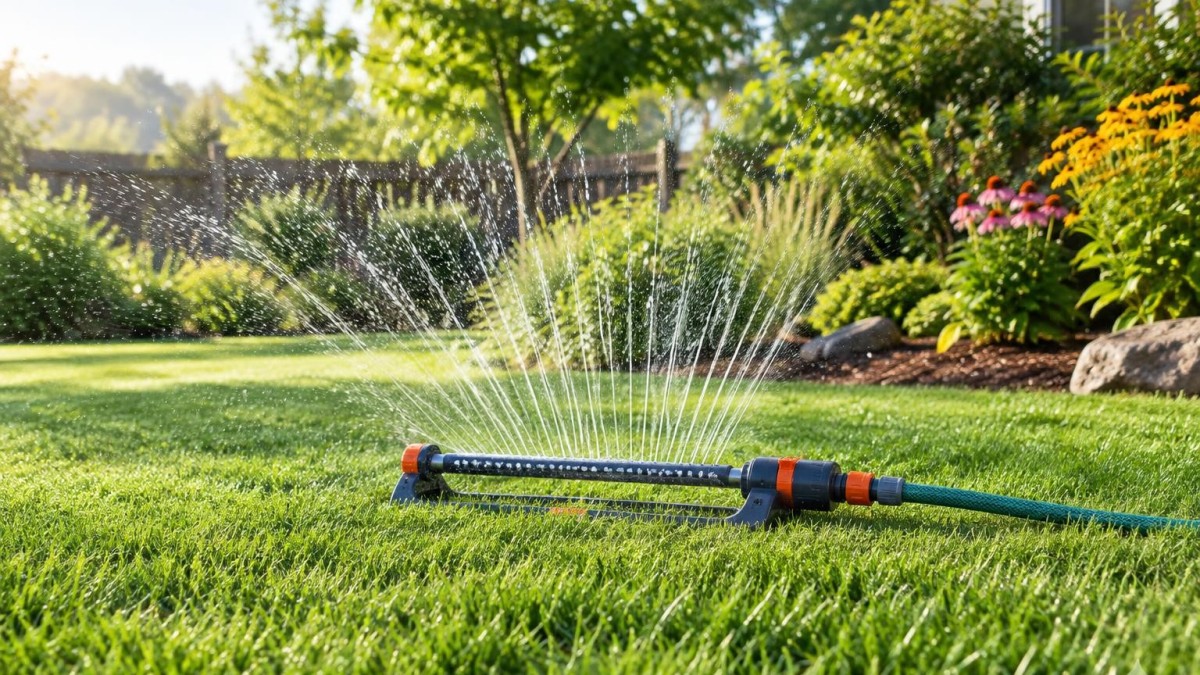
Choosing suitable watering equipment helps you cover your lawn evenly without waste. Oscillating or rotating sprinklers work well for medium lawns, while in-ground systems provide automated, consistent watering. For garden beds, consider soaker hoses or drip irrigation. Smart irrigation controllers can adjust watering based on weather, conserving water and keeping your lawn healthy. Regularly check that your system’s spray reaches all areas equally to avoid dry spots or puddles.
Monitor Soil Moisture to Know When to Water
Instead of sticking strictly to schedules, check soil moisture to avoid over- or underwatering. Try the screwdriver test: if a screwdriver or similar tool inserts easily several inches into the soil, moisture is sufficient. If it’s hard to push in, your lawn likely needs water. For precise readings, soil moisture meters provide quick measurements below the surface.
Adapt to Seasonal and Weather Changes
Lawn watering needs shift with the seasons and rainfall. Hot, dry summers demand more watering, while cooler or rainy periods often allow you to water less or pause irrigation entirely. Adjust your watering schedule based on weather forecasts and seasonal trends to conserve water without compromising lawn health.
Watch for Signs Your Lawn Needs Water
Pay attention to your grass’s signals. Wilted or folding blades, footprints that remain visible after walking, and a dull or blue-gray color all indicate water stress. Acting early helps prevent damage and keeps your turf thriving.
By combining proper timing, deep watering, the right tools, and attentive care, you can maintain a beautiful, healthy lawn that withstands drought and keeps your outdoor space inviting year-round.
Newsletter Station provides professionally written, ready-to-send newsletters customized for your market and brand.
EXPLORE NEWSLETTER OPTIONS