
Choosing the Ideal Spot for Azaleas
Azaleas flourish best in environments with partial shade or filtered sunlight. They particularly appreciate protection from intense afternoon sun, making spots beneath deciduous trees or along east-facing borders excellent choices. Ensure the soil is well-drained to prevent water accumulation, which can cause root problems. Remember, azaleas have shallow roots, so avoid planting them too deeply.
Combining Plants for a Stylish Look
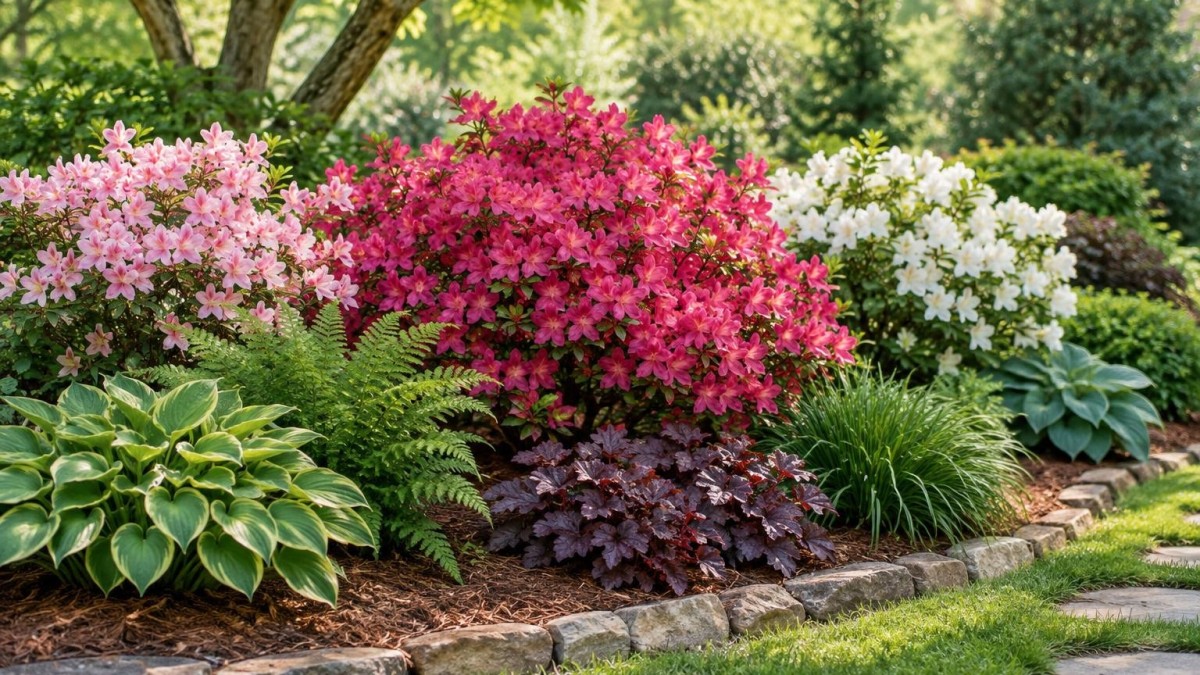
To create a visually appealing azalea bed, pair these shrubs with companions like hostas, ferns, heucheras, and shade-tolerant grasses. Select plants that share similar needs for moisture and acidic soil to promote harmony and healthy growth in your garden.
Extending the Blooming Season
Maximize the garden’s color by mixing azalea varieties that bloom at different times — early, mid, and late season — allowing you to enjoy flowers from early spring through early summer. Encore azaleas are a bonus, as they offer a beautiful second bloom in the fall.
Maintaining Soil Health and Proper Mulching
Good soil is key to vibrant blooms. Enrich your garden with compost or leaf mold to enhance nutrients and drainage. Azaleas thrive in acidic soils (pH 4.5–6.0). If your soil tends to be alkaline, amend it with elemental sulfur or acidic mulches like pine needles. Apply a 2–3 inch layer of organic mulch such as pine straw or shredded bark to retain moisture, but keep it a few inches away from the shrub’s base to prevent disease and pests.
Smart Pruning and Thoughtful Color Planning
Prune azaleas after they finish blooming in spring to maintain shape and promote healthy growth. Remove dead branches and old flowers but avoid heavy cutting late in the season since next year’s buds may already be forming. When planning colors, coordinate your palette thoughtfully: soft pinks work well with silvery foliage, vivid reds pop against dark evergreens, and whites look lovely with textured ferns, all creating a harmonious garden.
Creating Depth and Adding Hardscape Features
Design your flower bed with layered plant heights — taller shrubs at the back, medium in the center, and compact types near paths or borders — to build interest and guide the eye. Adding stone edging, stepping stones, garden lighting, or decorative pots can frame your azaleas, providing structure and focal points, especially in the off-season.
Year-Round Appeal
Although azaleas shine in spring, maintaining visual interest year-round is possible by including evergreen azaleas alongside plants that offer fall color, winter berries, or interesting foliage textures. Camellias, Japanese forest grass, and dwarf conifers are excellent partners that enhance your garden through all seasons.
Designing azalea flower beds allows you to combine color, texture, and structure for a striking and enduring garden space. With attention to placement, soil, and thoughtful plant choices, your azaleas will bring vibrant beauty and charm to your landscape year after year.
Newsletter Station provides professionally written, ready-to-send newsletters customized for your market and brand.
EXPLORE NEWSLETTER OPTIONS