
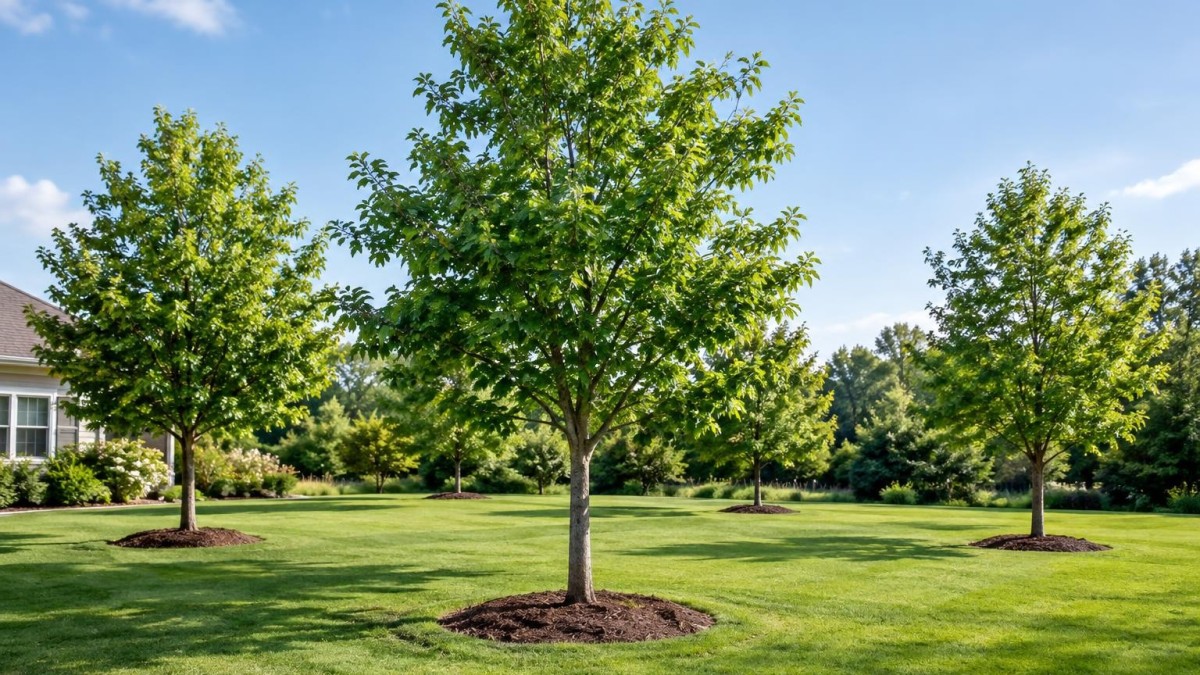
The Importance of Proper Tree Spacing
Planting trees enhances your property’s beauty, improves air quality, and supports the environment. While the excitement to plant many trees is understandable, giving each tree enough space is essential for their long-term health and vitality.
How Crowding Affects Tree Health
Trees placed too close compete for sunlight, water, and soil nutrients. Their roots intertwine and fight for limited resources, while their canopies crowd each other, reducing photosynthesis and stunting growth. This competition weakens trees, making them more prone to pests and diseases.
Additionally, overcrowded trees limit airflow around branches and leaves, creating a humid environment that favors fungal infections like powdery mildew and leaf spots. Proper spacing improves circulation, helping trees stay healthy and disease-resistant.
Risks of Disease and Maintenance Challenges
Disease can spread rapidly among tightly packed trees, as roots and branches touch, allowing pathogens to travel easily. Correct spacing acts as a natural barrier to slow infections, protecting the overall landscape.
Dense trees also complicate maintenance efforts. Pruning, watering, and inspecting become difficult when access is tight, and thick canopies block sunlight and rain from reaching the ground, harming grass and other plants.
Structural Stability and Aesthetic Benefits
When crowded, trees develop weak, shallow roots that can’t anchor them securely, increasing the risk of falling during storms. Adequate spacing allows roots to spread and strengthens stability, enhancing safety around your property.
Aesthetically, crowded trees grow tall and spindly or develop awkward shapes, detracting from your landscape’s appearance. Providing room to grow leads to full, balanced canopies and a visually pleasing layout that adds curb appeal.
Planning Your Tree Layout
Before planting, research how far apart each species should go based on mature size. Small ornamental trees might need 10 to 15 feet of separation, while larger shade trees often require 30 to 50 feet or more. Also consider nearby buildings, utilities, and underground systems. Consulting with an arborist or local experts can ensure your design supports tree health and your landscaping goals.
By planning ahead and planting with proper spacing, you foster a sustainable, healthy landscape where each tree thrives and your property flourishes with beauty and safety for years to come.
Newsletter Station provides professionally written, ready-to-send newsletters customized for your market and brand.
EXPLORE NEWSLETTER OPTIONS