
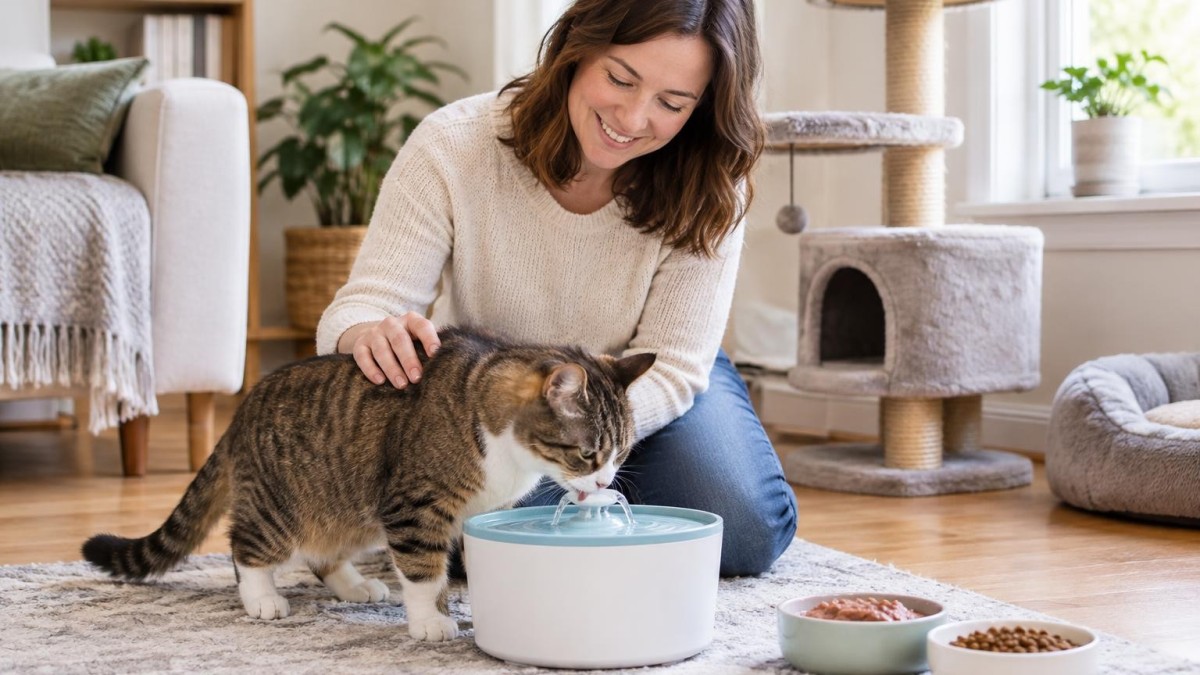
Keep Your Cat Well Hydrated
One of the most effective ways to prevent bladder stones in cats is ensuring they drink plenty of water. Cats often have a low thirst drive, especially if they primarily eat dry food. Without enough hydration, minerals in their urine can concentrate and form crystals that develop into stones.
Make fresh water available in several places around your home, and consider using a cat fountain if your pet prefers running water. Including wet food in their diet also increases moisture intake, helping to flush the urinary tract naturally and support kidney health.
Feed a Diet That Supports Urinary Health
Your cat’s diet plays a crucial role in reducing the risk of bladder stones. A balanced diet keeps urine at a healthy pH level and limits minerals like magnesium, phosphorus, and calcium that contribute to stone formation.
Work with your veterinarian to select a high-quality food tailored for urinary health. Wet food is generally preferred over dry kibble to boost hydration. If your cat has a history of urinary issues, your vet might recommend a prescription diet designed to prevent stones.
Promote Regular Urination and Monitor Stress
Encourage your cat to urinate regularly by providing clean, easily accessible litter boxes—ideally one per cat plus an extra. Ensure boxes are in quiet areas and scoop litter daily to maintain comfort. Cats may hold urine if stressed or uncomfortable with their litter box setup, increasing bladder stone risk.
Stress can also affect urinary health by causing inflammation and irregular urination. Create a calm environment with hiding places, vertical spaces like cat trees, and daily playtime to keep your cat relaxed and happy. Avoid abrupt changes in their routine or environment to reduce anxiety.
Regular Vet Visits Are Key
Routine veterinary check-ups help detect urinary issues early. Your vet can test urine pH levels and look for crystals or stones before symptoms appear. If needed, they might suggest diet changes or supplements to balance urine chemistry and prevent stone formation.
Early intervention is especially important for male cats, who are more prone to dangerous urinary blockages.
By staying attentive to your cat’s hydration, diet, stress levels, and overall urinary health, you can effectively reduce the risk of bladder stones and help your feline friend enjoy a comfortable, healthy life.
Newsletter Station provides professionally written, ready-to-send newsletters customized for your market and brand.
EXPLORE NEWSLETTER OPTIONS