
Understanding Your Slope
Gardening on a slope brings challenges, but also unique opportunities to craft a striking and dynamic landscape. Before breaking ground, study your slope’s sunlight exposure, wind patterns, and how water flows across it. South- or west-facing slopes dry faster and get more sun, while north-facing areas tend to stay cooler and moister.
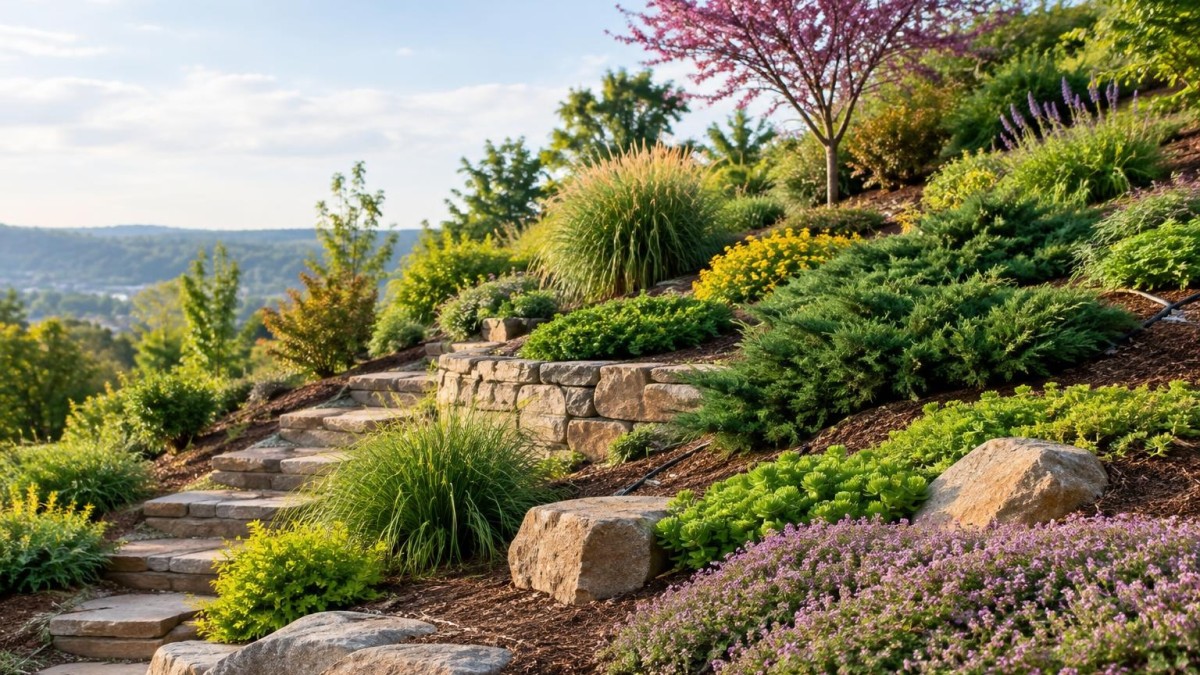
To manage these conditions, consider creating terraces or retaining walls. These structures offer flat planting spaces that slow erosion, improve water absorption, and add structure and visual appeal. Materials like stone or timber not only last but provide clear boundaries that keep soil in place.
Select Plants That Work With the Terrain
Choosing plants with strong root systems is key to stabilizing soil on a slope. Groundcovers such as creeping thyme, sedum, or ajuga form dense mats that help protect against runoff. Native species are especially valuable because they thrive in your local climate with less care.
Adding shrubs and ornamental grasses, like dwarf juniper or switchgrass, injects texture and height, while small trees such as redbud can offer shade and focal points without overpowering the incline. Group plants based on their sunlight and water needs for healthier, more manageable growth.
Manage Water Wisely
Watering on a slope requires careful planning since rain and irrigation water tend to rush downhill. Drip irrigation or soaker hoses are excellent choices as they deliver water slowly and directly to roots, reducing runoff. Lay lines following the slope’s contours and consider watering during cooler parts of the day to conserve moisture. Tools like timers or moisture sensors help tailor watering to your plants’ actual needs.
Use Mulch to Protect and Nourish
A thick layer of organic mulch (2–3 inches) serves multiple purposes: it holds moisture in the soil, helps moderate temperature extremes, prevents weeds, and shields the soil from heavy rain impact. Mulch also fosters healthy soil biology that improves structure over time. Check and replenish mulch regularly, especially after storms, to keep it effective.
Care and Safety on the Slope
Regular upkeep keeps your slope garden safe and thriving. Prune plants to maintain healthy shapes and remove weeds that may compete for resources. After rain, inspect for areas where soil might be washing away or roots are exposed and reinforce those spots with plants or soil as needed. For your safety, wear sturdy, slip-resistant footwear and consider adding stone steps or pathways to navigate the slope more easily.
Embrace the Challenge
While slope gardening requires thoughtful effort, the result can be a beautiful, sustainable landscape feature that enhances your property. By respecting the terrain, choosing the right plants, and managing water and soil wisely, you’ll turn a challenging hillside into a lush, eye-catching garden that stands up to the test of time.
Newsletter Station provides professionally written, ready-to-send newsletters customized for your market and brand.
EXPLORE NEWSLETTER OPTIONS