
Know Your Weeds
Weeds are persistent plants growing where they're not wanted, often competing for nutrients, sunlight, and water with your prized lawn and garden plants. They reproduce through seeds, roots, and rhizomes, coming back year after year if not properly managed. Identifying whether you're dealing with broadleaf weeds like dandelions or grassy weeds like crabgrass is essential, as this informs your control approach.
Prevention: Your First Line of Defense
Stopping weeds before they take hold makes yard care easier in the long run. Mulching your garden beds with 2–3 inches of organic material like wood chips or straw blocks light from weed seeds and improves soil health as it breaks down.
A robust, healthy lawn naturally crowds out weeds. Regular mowing at the correct height, deep watering, and appropriate fertilization encourage thick grass growth that leaves less space for weeds to grow. Avoid cutting grass too short, as taller blades help shade soil and inhibit weed seed germination.
If you want extra protection in beds and pathways, installing breathable landscape fabric under mulch or decorative gravel can greatly reduce weed emergence. Physical barriers such as edging or shallow trenches along borders help prevent invasive weeds from creeping into your flower beds.
Strategically planting ground covers, perennials, or native species in empty spots helps fill space quickly, limiting areas for weeds to establish.
Targeted Control When Weeds Appear
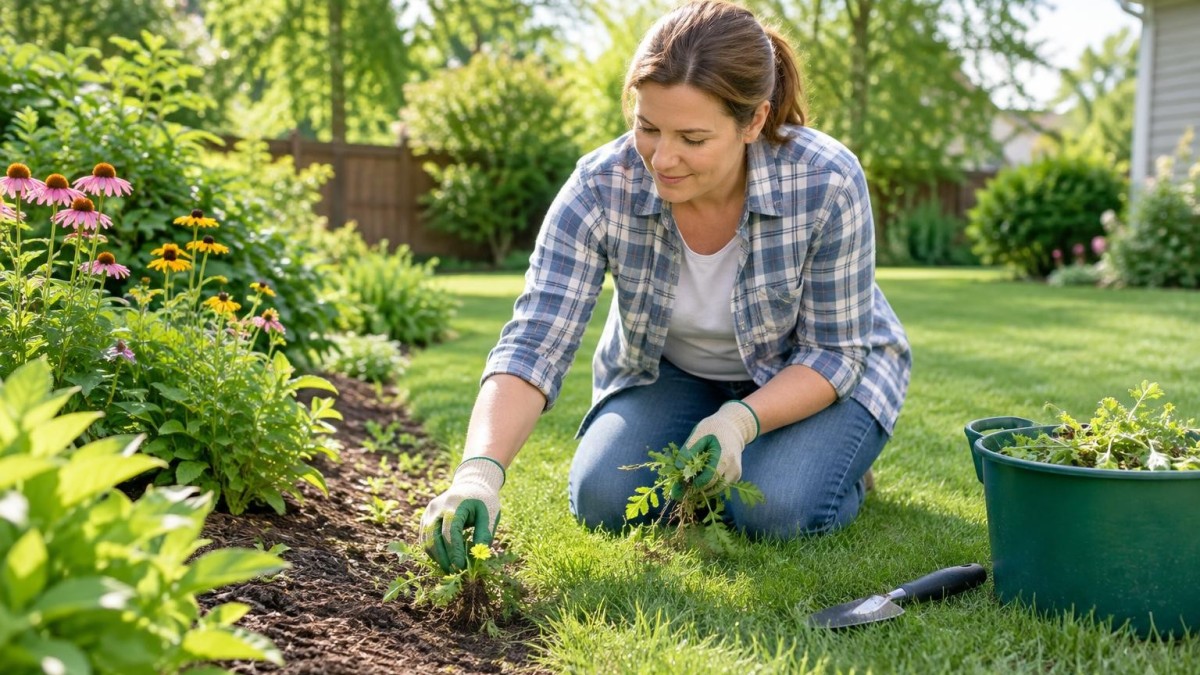
Despite best efforts, weeds sometimes invade. Hand pulling remains effective for small patches, especially when the soil is moist—make sure to remove roots to prevent regrowth.
Herbicides can help but should be used carefully. Selective herbicides target specific weeds without harming your grass, while non-selective types eliminate all plants they contact and are best reserved for driveways or walkways. Always follow instructions, wear protection, and avoid applying before rain to reduce runoff.
For hard surfaces, a flame weeder or propane torch uses heat to kill weeds safely. Exercise caution in dry or flammable areas. Natural remedies like vinegar sprays or boiling water offer chemical-free options, though they may need repeated use and careful application to protect pets and pollinators.
Keep Your Yard Weed-Free Long-Term
Maintaining a weed-free landscape is ongoing. Annual soil aeration helps grass roots grow deep and strong, while balanced fertilization supports healthy lawn without encouraging weeds. Inspect your yard regularly, especially after heavy rains, which can bring new weed seeds to the surface. Staying consistent and patient with these practices pays off in a vibrant, weed-managed yard.
If weeds seem overwhelming or out of control, a local lawn care professional can offer advice tailored to your region and needs.
Newsletter Station provides professionally written, ready-to-send newsletters customized for your market and brand.
EXPLORE NEWSLETTER OPTIONS