
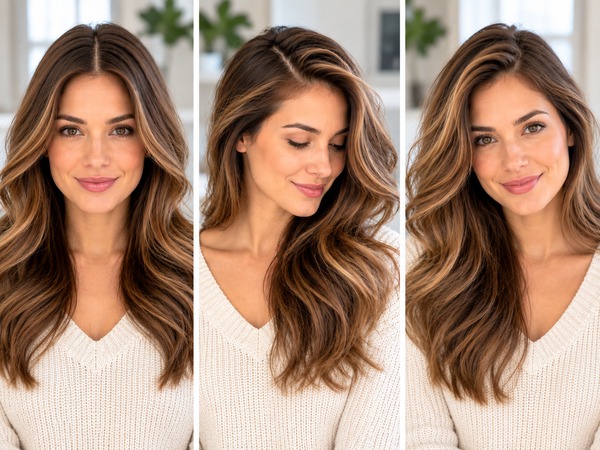
Changing your hair part is one of the quickest ways to make a familiar haircut look different without cutting or coloring a thing. Moving a part an inch to one side can create more volume, emphasize your cheekbones or change how layers fall around your face. A center part can make the same haircut feel more balanced and polished.
There isn't one universally "correct" way to part your hair, though. Face shape can provide a useful starting point, but your natural growth pattern, hair density, texture, haircut and personal preference matter just as much.
Whether you have long layers, a bob, curls or a pixie cut, a little experimentation can help you find the placement that works best.
Step 1: Use Your Face Shape as a Starting Point
Face-shape guidelines aren't rules. Think of them as suggestions for creating different visual effects.
Oval faces: An oval face generally works well with center, side and off-center parts. Try moving your part around to see how different placements change the emphasis on your eyes and cheekbones.
Round faces: A deeper side part can create asymmetry and add visual height, while a center part can provide a balanced, modern look. If you're trying to create the appearance of additional volume at the crown, a side part paired with root lift can be especially effective.
Square faces: A slightly off-center or soft side part can provide contrast to a strong jawline. A center part can work beautifully too, particularly with waves, curls or face-framing layers that add softness around the face.
Heart-shaped faces: Side and off-center parts can help balance a wider forehead and narrower chin. A center part can also be flattering, especially when paired with curtain bangs or layers around the cheekbones and jaw.
If you can't decide what your face shape is, don't worry about labeling it. Take a few photos with your hair parted in different places. Seeing the entire hairstyle in a photo is often more helpful than studying your face shape in a mirror.
Step 2: Pay Attention to Your Hair Texture and Growth Pattern
Texture has a major influence on how a hair part behaves.
Straight hair tends to show a part clearly, making both precise center parts and defined side parts easy to see. If your hair is fine or tends to lie flat, moving the part away from its usual position can temporarily create additional root lift.
Wavy hair often looks good with a less rigid part. An off-center or slightly imperfect part can work with the hair's natural movement instead of making every wave fall symmetrically.
Curly and coily hair doesn't necessarily need a perfectly straight part. Depending on the cut and curl pattern, a side, center or intentionally irregular part can help distribute volume. Some curly styles look best with very little visible part at all.
Before deciding where your part "should" go, notice where your hair naturally separates after washing. Cowlicks and growth patterns around the hairline and crown can make one placement much easier to maintain than another.
Working with those patterns usually means less heat, less product and less effort each morning.
Step 3: Start With Hair That's Easy to Reposition
You don't necessarily need freshly washed hair to change your part, but slightly damp hair is often easier to redirect than completely dry hair that has been sitting in the same position all day.
Use a wide-tooth comb or detangling brush as appropriate for your texture. If your hair is prone to frizz, a small amount of leave-in conditioner or styling product can make it more manageable.
If you're using a blow dryer or another heated styling tool, apply an appropriate heat protectant first.
One common mistake is using too much styling product before establishing the part. Heavy creams, oils and gels can weigh down the roots, making it harder to create volume. Start lightly; you can always add more product later.
Step 4: Choose Your Hair Part
Center Part
A center part creates symmetry and can give a haircut a clean, contemporary appearance.
To create one, place the end of a tail comb near the center of your forehead and gently trace a line toward the crown. Separate the hair on either side and adjust until the placement looks balanced.
Don't get too concerned about mathematical precision. Hairlines aren't perfectly symmetrical, and moving the part slightly left or right may actually look more natural.
Center parts can work particularly well with bobs, long layers, curtain bangs and styles with movement around the face.
Side Part
A side part can change the balance of a hairstyle and is an easy way to create the appearance of more volume.
For a moderate side part, try beginning around the area above the arch of your eyebrow. For a more dramatic look, move the part farther toward the temple.
If you've worn the same part for years, your hair may initially resist the change. Dampen the roots and use a blow dryer to direct the hair into its new position. You may need to repeat this for several styling sessions before the new placement becomes easier to maintain.
Off-Center Part
Can't decide between a center and side part? Move the part just slightly away from center.
An off-center part provides some of the symmetry of a middle part while being a little softer. It's also useful when a cowlick or uneven hairline makes a perfectly centered part difficult.
Sometimes a shift of less than an inch is enough to make a hairstyle sit better.
Diagonal or Zigzag Part
A diagonal part runs backward at an angle rather than following a straight line toward the crown. It can alter how hair is distributed and make a style appear fuller in certain areas.
A zigzag part creates an intentionally less-defined line. Instead of drawing the comb straight back, move the tail gently from side to side as you create the part.
These techniques can also be useful when you don't want a prominent scalp line. If you're concerned about noticeable hair thinning, however, changing the part can camouflage an area but won't address the underlying cause of hair loss.
Step 5: Style the Roots, Not Just the Length
Once you've chosen your part, focus on the roots. That's where you'll have the most influence over whether the part stays in place and whether the finished style looks flat or full.
For additional volume, lift the roots while blow-drying rather than directing them flat against the scalp. You can also dry the roots briefly in the opposite direction and then move them back into the desired position once they're dry.
For a sleeker result, direct the hair into place while drying and smooth the surface carefully. Use a small amount of styling cream, gel, mousse or another product suited to your hair texture if additional control is needed.
Pay attention to the amount of heat you're using. More heat isn't necessarily more effective. Follow the directions for your styling tools and products, and avoid repeatedly concentrating high heat on the same area.
Step 6: Look at the Entire Haircut
The best part isn't determined by your face shape alone. Your haircut can completely change which placement works best.
For example, a bob cut specifically for a side part may sit differently when divided down the middle. Face-framing layers may fall exactly where you want them with one part and disappear into the rest of the haircut with another. Bangs, extensions and shorter pieces around the hairline can also influence your options.
If changing your part creates awkward pieces or makes one side noticeably heavier, the problem may not be your styling technique. Your haircut may have been designed around your previous part.
When getting a haircut, tell your stylist where you normally part your hair—and mention it if you'd like the flexibility to wear it more than one way.
Can Changing Your Part Make Hair Look Fuller?
It can.
Hair that has been trained to lie in the same direction for a long time may appear flatter at the roots. Flipping your part to the opposite side can provide immediate lift because the roots aren't naturally lying in that direction.
Changing a part can also redistribute hair over areas where the scalp is more visible, which may create the appearance of greater fullness.
What changing your part doesn't do is make hair grow faster or increase the number of hair follicles. If you're experiencing new, unexplained or significant thinning or hair loss, changing your hairstyle may help camouflage it, but the underlying issue is worth discussing with an appropriate healthcare professional.
Give a New Part a Little Time
Don't dismiss a new hair part after looking in the mirror for 30 seconds. If you've worn your hair the same way for years, almost any change can look strange simply because you aren't accustomed to seeing yourself that way.
Style it completely, look at it from different angles and take a photo. Try it again on another day before deciding.
Also remember that you don't have to commit to one part permanently. You might prefer a center part with loose waves, a side part when wearing your hair straight and no defined part when wearing your natural curls.
The most flattering hair part is ultimately the one that works with your haircut, texture and natural growth pattern while giving you the look you want. Face-shape guidelines can point you in a direction, but they're a starting point—not a rulebook.
Newsletter Station provides professionally written, ready-to-send newsletters customized for your market and brand.
EXPLORE NEWSLETTER OPTIONS