
How Sitting Impacts Your Spine
Today, many of us spend long hours sitting—whether working at a desk, studying, or relaxing with devices. While sitting itself feels natural, keeping the same position for extended periods can negatively affect your spine and overall health.
Constant sitting often leads to slouching, which creates uneven pressure on your spine and strains your neck, shoulders, and lower back. Over time, this poor posture can cause muscle tightness, fatigue, and discomfort that may even trigger tension headaches.
Additionally, the discs between your vertebrae act like cushions, but prolonged sitting compresses them unevenly. This reduces blood flow and nutrient supply, raising the chance of disc wear, stiffness, and issues like herniated discs or nerve pinching.
The muscles around your hips and core can also become imbalanced from too much sitting. Hip flexors and hamstrings tighten, while core and glute muscles weaken, disrupting your body's natural alignment and making your spine less stable. This can increase lower back pain and limit mobility in daily activities.
Simple Ways to Support Spinal Health
You don’t have to change your job to protect your spine. By making a few adjustments, you can reduce strain and keep your back comfortable throughout the day.
Start with an ergonomic chair that offers good lumbar support and allows your feet to rest flat on the floor with knees at or slightly below hip level. Consider a desk that adjusts for sitting or standing, so you can switch positions regularly.
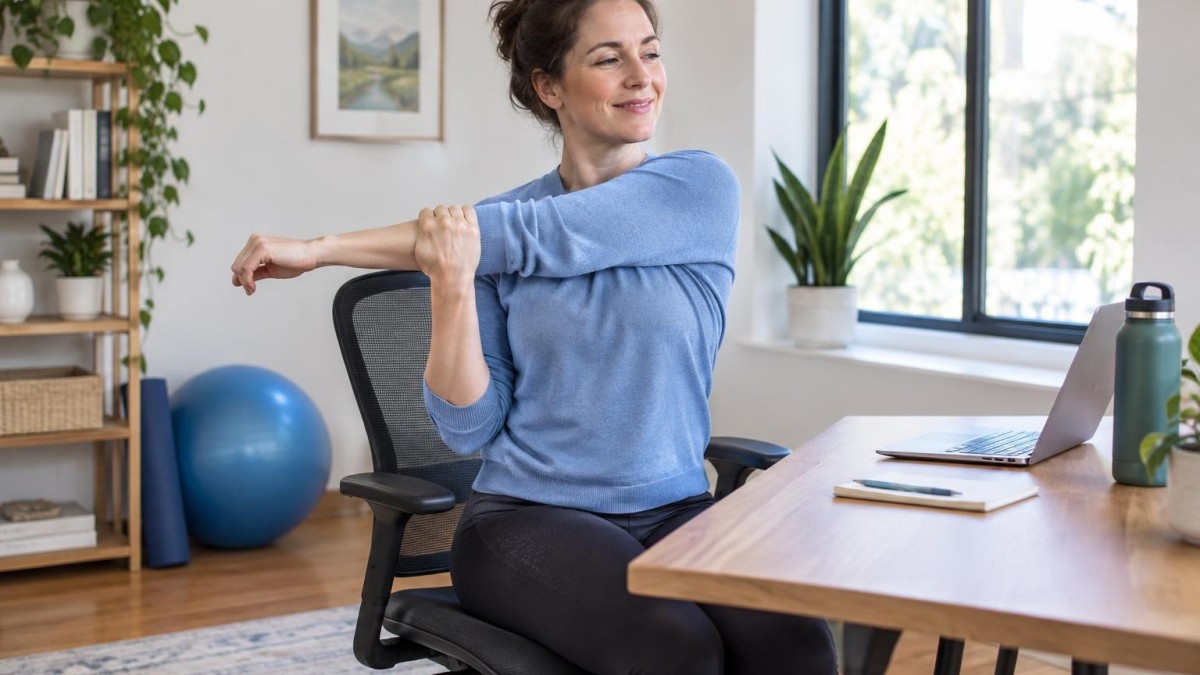
Taking short breaks every 30 to 45 minutes to stand, stretch, or move around can greatly relieve tension. Try gentle stretches for your shoulders, hips, and hamstrings or quick walks—even small movements improve circulation and reduce stiffness.
Strengthening your core and stretching tight muscles also help maintain good posture and spinal support. Exercises like planks, bridges, and yoga are effective without needing special equipment.
Being mindful of how you sit matters too. Keep your ears, shoulders, and hips aligned and position your computer screen so the top is at eye level. This helps avoid leaning forward or tilting your head down.
For some, using an active sitting tool like a stability ball or cushioned stool can engage core muscles and promote subtle motion, which encourages better posture and blood flow.
Finally, look for little chances to stand or move, such as taking calls standing up or stretching between tasks. Regular movement keeps your spine joints flexible and muscles active, preventing stiffness and discomfort.
Though sitting is common in modern life, it doesn’t have to mean chronic back issues. By understanding how sitting affects your spine and adopting habits to reduce strain, you can feel more comfortable, maintain posture, and protect your back for the long haul.
Small steps each day—like being posture-aware, moving regularly, and investing in ergonomic furniture—can make a big difference for your spinal health and overall well-being.
Newsletter Station provides professionally written, ready-to-send newsletters customized for your market and brand.
EXPLORE NEWSLETTER OPTIONS