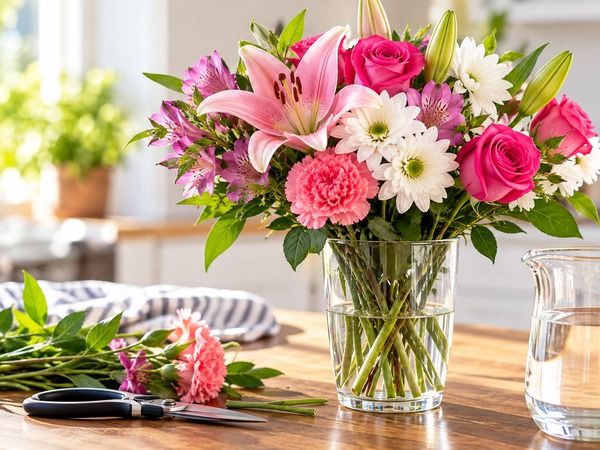
Fresh flowers can transform a room, but it can be disappointing when an arrangement begins drooping only a few days after you bring it home. Fortunately, how long cut flowers last isn't entirely determined by the flowers themselves. What you do with them after they arrive can make a noticeable difference.
Clean water, freshly cut stems and the right location are particularly important. Just as useful is knowing which popular flower-care tricks aren't necessary—and which can actually make matters worse.
Whether you've received a bouquet, picked flowers from your garden or brought home an arrangement from a florist, these practical steps can help keep cut flowers fresh longer.
- Start With Fresh, Long-Lasting Flowers
Some cut flowers naturally have a longer vase life than others.
Carnations, chrysanthemums and alstroemeria are known for being relatively long-lasting choices. Certain varieties of orchids can also perform well as cut flowers. Roses and lilies can provide a beautiful display, although their vase life varies depending on variety, freshness and care.
Whatever type you choose, inspect the flowers before buying them.
Look for firm stems and healthy foliage rather than yellowing leaves, damaged petals or slimy stems. For many varieties, choosing flowers that haven't fully opened gives you more time to enjoy the blooms as they develop.
That doesn't mean every flower should be purchased as a tightly closed bud. Some flowers don't continue opening well if harvested too early. A knowledgeable florist can help you choose flowers at the right stage.
Freshness matters at least as much as variety.
- Give the Stems a Fresh Cut
Before putting flowers into a vase, trim the bottom of each stem with clean, sharp floral shears or a knife.
An angled cut is commonly recommended because it keeps the cut end from sitting completely flat against the vase bottom and provides a clean surface for water uptake.
The quality of the cut matters too.
Avoid crushing stems with dull scissors. Damaged stem tissue can interfere with water movement and provide more material for microorganisms to grow on.
If your flowers have been sitting out of water during transportation, trim them shortly before putting them into the vase.
When changing the water a few days later, inspect the stem ends. If they're becoming discolored or soft, another small trim can expose fresher tissue.
- Clean the Vase Before You Add Water
A vase may look clean while still containing residue and microorganisms from a previous arrangement.
Wash it thoroughly with dish soap and water and rinse it well before adding your new flowers.
This is one of the easiest ways to extend the life of cut flowers because bacteria and other microorganisms in vase water can interfere with the stems' ability to take up water.
Don't simply pour fresh water into a vase that has developed cloudy water or residue along the sides. Remove the flowers, wash the vase and refill it.
Clear glass vases make it particularly easy to see when water is becoming cloudy.
- Use Fresh Water—and Don't Assume Warmer Is Always Better
The original advice to always use lukewarm water is too broad. Different flowers can respond differently, and very warm water isn't necessary for an everyday mixed bouquet.
For most home arrangements, clean water at a moderate temperature is a sensible choice unless your florist provides specific instructions for the flowers you've purchased.
More important than obsessing over the exact water temperature is keeping the water clean.
Check it daily and replace it regularly. If the water becomes cloudy, develops an odor or contains visible debris, change it immediately rather than waiting for a scheduled day.
Flowers drink more than many people expect, particularly during the first day or two. Check the water level as well as its appearance so stems don't accidentally end up above the waterline.
- Use the Flower Food That Comes With the Bouquet
That little packet attached to a bouquet isn't an unnecessary extra.
Commercial cut-flower food is formulated to help support the flowers while also managing the vase-water environment. Use it according to the package directions and mix it with the recommended amount of water.
More isn't necessarily better.
Making the solution too concentrated can be counterproductive, so don't pour an entire packet into a tiny vase unless that's the amount of water the instructions specify.
What if you've run out?
There are plenty of homemade flower-food recipes online involving sugar, vinegar, lemon juice, bleach, aspirin, soda and even coins. The problem is that getting the proportions wrong can harm flowers or encourage microbial growth rather than prevent it.
Sugar alone, for example, can also feed microorganisms in the vase.
For predictable results, commercial flower food used as directed is generally preferable to experimenting with household ingredients.
- Remove Every Leaf Below the Waterline
Before arranging the flowers, look at where the water will reach and remove any leaves that would be submerged.
Leaves sitting underwater begin deteriorating and contribute organic material to the vase water, creating conditions that can shorten the useful life of the arrangement.
Don't strip away every leaf unnecessarily. Healthy foliage above the waterline can remain unless you're removing it for the design of the arrangement.
The important rule is simple: stems go in the water; leaves stay above it.
Check again after rearranging the bouquet. A leaf that was originally above the water may end up submerged when a stem shifts.
- Keep the Arrangement Cool and Out of Direct Sun
The sunny windowsill may be the place where your bouquet looks best, but it isn't necessarily where it will last longest.
Heat and direct sunlight can increase water loss and accelerate flower development.
Keep arrangements away from:
Direct, strong sunlight
Heating vents
Radiators
Fireplaces
Hot appliances
Other sources of excessive heat
A relatively cool location away from intense sun is usually better for vase life.
Also be cautious about extreme drafts. The goal isn't to find the coldest place in the house; it's to avoid unnecessary heat and environmental stress.
If you move an arrangement overnight, choose a safe, cooler location where it won't be exposed to freezing temperatures.
- Keep Cut Flowers Away From Ripening Fruit
This is an easy flower-care tip to miss.
Many fruits produce ethylene, a natural plant hormone involved in ripening and aging. Cut flowers vary in their sensitivity to ethylene, but susceptible varieties can age more quickly when exposed to it.
That beautiful arrangement beside a bowl of ripening bananas or apples may therefore not be the best combination.
If you're trying to maximize vase life, keep fresh-cut flowers some distance from ripening produce.
It's a small adjustment that requires virtually no effort.
- Be Careful With Misting
Misting is frequently recommended as a universal way to keep flowers hydrated, but it isn't necessary for every arrangement.
Cut flowers obtain most of the water they need through their stems. Regularly soaking petals and foliage can create problems for certain flowers, particularly when moisture remains on delicate petals in a humid or poorly ventilated room.
Some specialty flowers and foliage may benefit from particular humidity or misting practices, but don't assume every bouquet needs to be sprayed once or twice a day.
If a florist gives you care instructions for a particular variety, follow those.
Otherwise, concentrate on keeping the stems properly hydrated and the vase water clean.
- Give Dehydrated Flowers Time to Rehydrate
Flowers that have spent time out of water may benefit from a fresh stem cut followed by time in clean water before they're arranged.
Florists often refer to preparation of cut flowers as conditioning.
The exact process varies by flower type, so a universal two-to-four-hour soak isn't necessary for every bouquet. Some stems need specialized handling, while others can simply be trimmed and placed into prepared vase water.
If you've purchased flowers from a florist, ask whether any of the varieties need special conditioning.
This is especially useful with unfamiliar or more delicate flowers.
- Don't Automatically Throw Away a Drooping Flower
A drooping bloom isn't always dead.
Sometimes a stem simply isn't taking up enough water.
First check the water level and examine the stem. Give it a fresh cut with clean tools, place it back into fresh prepared water and allow it some time to rehydrate.
Some varieties have their own peculiarities. Hydrangeas, for example, are notorious for wilting dramatically, and florists may use variety-specific techniques to revive them.
If one type of flower repeatedly wilts before everything else in your arrangement, ask your florist how that particular flower should be handled rather than applying a generic internet remedy to the entire bouquet.
- Remove Flowers as They Fade
Mixed bouquets rarely age at exactly the same rate.
A carnation may still look excellent when a more delicate flower has reached the end of its vase life.
Remove flowers that are badly wilted, decaying or developing mold instead of leaving them in the arrangement. Also remove fallen petals and deteriorating leaves from the vase and surrounding water.
Then take another look at what's left.
You may be surprised how much life remains in an arrangement after the first few flowers are removed.
As the bouquet gets smaller, transfer the remaining stems into a smaller vase rather than leaving a handful of flowers spread awkwardly through a large one.
A bouquet that originally served as a dining-room centerpiece might eventually become a small arrangement for a desk, bathroom or bedside table.
- Check Your Flowers Every Day
You don't need an elaborate flower-care routine.
A quick daily check takes less than a minute.
Look at the water level. Remove anything that has fallen into the vase. Check for cloudy water. Pull out badly fading flowers and make sure no foliage has slipped below the waterline.
Then every few days—or sooner if the water needs it—give the vase a more thorough refresh.
This small amount of maintenance is generally much more useful than relying on a one-time "flower hack" when the bouquet first arrives.
A Few Common Flower-Care Mistakes to Avoid
Many bouquets fade early because of simple mistakes rather than a lack of special products.
Putting freshly cut flowers into a dirty vase, allowing leaves to sit underwater, forgetting to refill the water and displaying the arrangement in a hot sunny window can all work against you.
Another mistake is trying too many home remedies at once.
Adding sugar, aspirin, vinegar, bleach or other ingredients without knowing the correct formulation isn't necessarily better than using plain clean water. If professional flower food is available, use it according to its directions.
And remember that flowers aren't all alike. Care that works beautifully for roses may not be appropriate for tulips, hydrangeas, orchids or another specialty bloom.
Simple Care Can Make a Noticeable Difference
Keeping fresh flowers beautiful doesn't require constant attention.
Start with healthy flowers and a spotless vase. Give stems a clean cut, keep foliage out of the water and use flower food as directed when it's available. Place the arrangement away from strong heat, direct sunlight and ripening fruit, and refresh the water before it becomes cloudy.
Most importantly, pay attention to the bouquet.
Flowers usually show you when something needs attention—a dropping water level, cloudy vase water, a soft stem or one bloom fading ahead of the others.
A few minutes of care along the way can help you enjoy your arrangement longer and get more from every bouquet you bring home.