
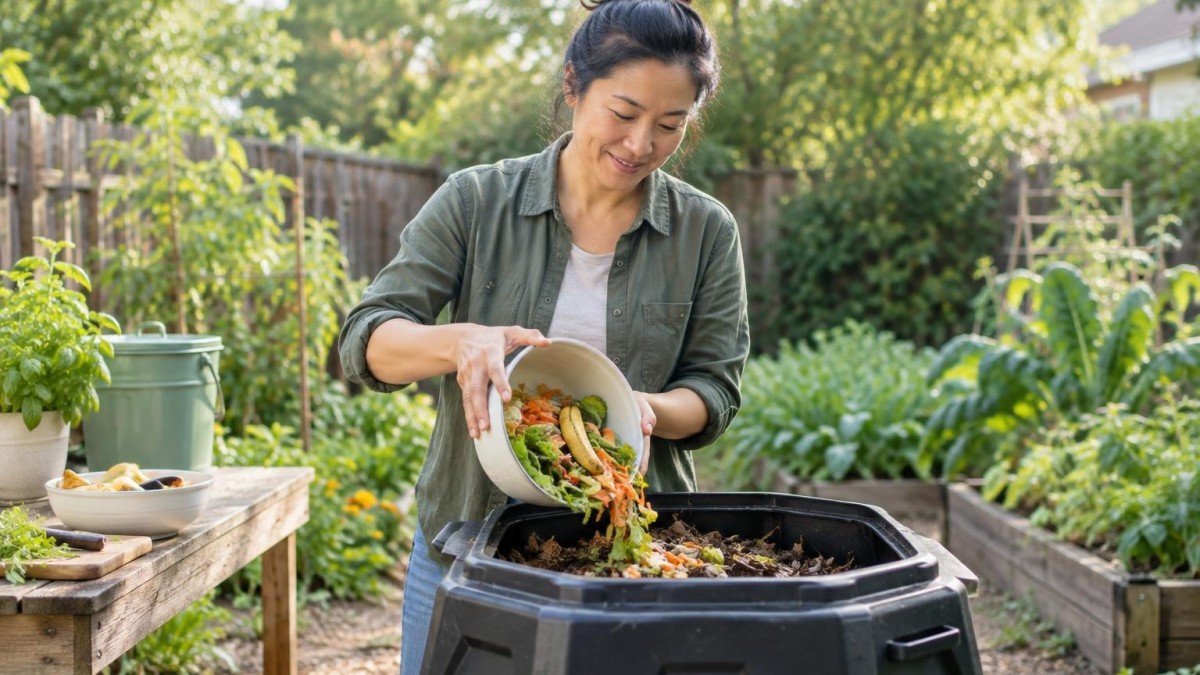
Turning Kitchen Waste into Garden Treasure
Banana peels, coffee grounds, vegetable scraps and wilted lettuce don’t need to be tossed in the trash. With a little planning, these everyday kitchen leftovers can become part of a compost pile that enriches garden soil.
But composting isn’t as simple as burying scraps beside your plants. Some common advice—like spreading coffee grounds directly around acid-loving plants or relying on eggshells for calcium—misses how organic materials truly break down.
A better approach is to use a well-managed compost pile to do the work for you.
How Composting Benefits Your Garden and Environment
Composting is the controlled breakdown of organic waste by microorganisms, moisture, oxygen and time. The result is a dark, crumbly substance that improves soil structure, moisture retention, and supports beneficial soil life. It also adds valuable organic matter and nutrients.
Environmentally, composting helps keep food scraps out of landfills, where they can produce methane, a potent greenhouse gas. Instead, composting recycles these materials back into the soil, supporting sustainable gardening.
Getting started is easy: use a backyard bin, enclosed tumbler, managed pile, or join a local compost collection program to keep your kitchen scraps out of the trash.
Best Kitchen Scraps for Composting
Fruit and vegetable scraps like apple cores, banana peels, carrot tops, potato skins and melon rinds compost well, especially when chopped into smaller pieces for faster breakdown.
Keep a container or bag handy in the kitchen to collect scraps, then empty it regularly to avoid fruit flies.
Used coffee grounds add nitrogen and are a helpful compost ingredient, but avoid piling them directly around acid-loving plants, as this won’t reliably acidify soil. Also, don’t overload your compost with coffee grounds—they can compact the pile.
Eggshells provide calcium, especially if rinsed and crushed, but they break down slowly and don’t offer quick fixes for problems like blossom-end rot.
Tea leaves are easy to compost, but check tea bags for plastic components before adding them.
Citrus peels can be composted in moderate amounts; chopping them helps speed decomposition.
Small amounts of stale bread or plain cooked grains can go in compost, but be mindful they may attract pests if not buried properly.
Crushed nut shells compost slowly; black walnut shells contain juglone, which breaks down with proper composting but may affect sensitive plants if not fully processed.
Herb stems and garden trimmings break down faster when cut into smaller pieces.
Avocado skins are compostable, but pits take a long time, so chopping helps—but be careful handling them.
Tips for Successful Backyard Composting
Balance "greens" (nitrogen-rich scraps like fruit and veggies) with "browns" (carbon-rich materials such as dry leaves, shredded cardboard or straw) to avoid odors and promote decomposition. Adjust moisture to feel like a damp sponge—not too wet or dry—and turn the pile occasionally to add air.
A foul smell usually means the pile is too wet, compacted or overloaded, so add dry material and mix it in.
Don’t use compost before it’s fully mature. Finished compost should be dark, crumbly, earthy and mostly unrecognizable from the original scraps. Using unfinished compost around plants can cause issues.
Avoid composting meat, dairy, pet waste, diseased plants, and weeds with seeds as they can cause odors, pests, or spread problems in your garden.
For those with limited outdoor space, look into community compost programs or vermicomposting with worms as alternatives.
Starting is simple: save easy scraps, combine with dry materials, maintain moisture and air, and watch those kitchen leftovers turn into valuable garden gold.
Newsletter Station provides professionally written, ready-to-send newsletters customized for your market and brand.
EXPLORE NEWSLETTER OPTIONS