
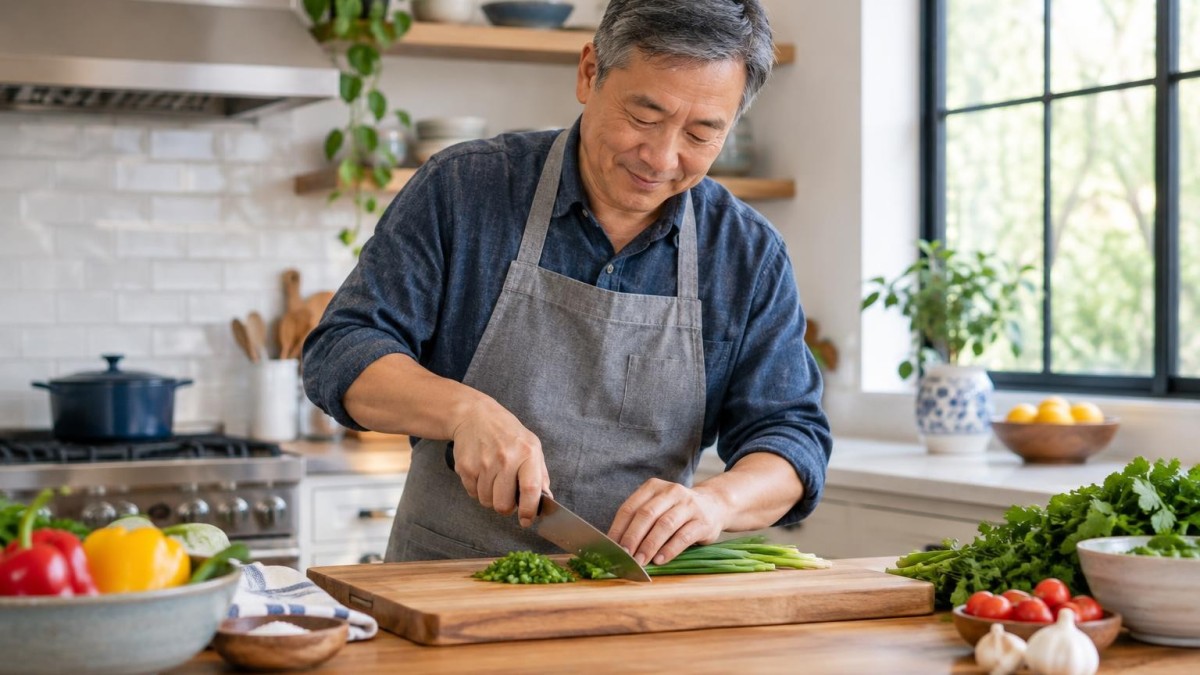
Watching a professional chef expertly wield a knife can be impressive, showcasing not just speed but remarkable skill. That finesse is built on mastering basic knife skills, which form the cornerstone of good cooking in any kitchen.
Choosing the Right Knife
Before you start chopping or slicing, it’s important to use the right knife for the job. While a chef's knife is an all-around essential, having a variety suited to specific tasks makes cooking easier and safer. Key knives to consider include:
• Chef's Knife: Versatile for chopping, slicing, and mincing.
• Paring Knife: Perfect for peeling and detailed work on small fruits and vegetables.
• Serrated Knife: Best for breads, tomatoes, and anything with a tough exterior and soft inside.
• Utility Knife: A smaller option great for intermediate tasks or for those preferring a lighter tool.
Quality knives that stay sharp contribute to both safety and efficiency in the kitchen.
Mastering Grip and Position
How you hold your knife matters. A secure grip involves pinching the blade near the handle with your thumb and index finger, while the remaining fingers wrap comfortably around the handle. This grip enhances control and reduces fatigue.
Your stance is equally important. Stand with feet set shoulder-width apart and knees slightly bent. Use your non-dominant hand to hold the food steadily, curling your fingers inward to keep them safe from the blade.
Key Cutting Techniques to Know
Getting comfortable with fundamental cuts can lift your cooking skill quickly:
• Rock Chop: Keep the knife tip on the board and rock the blade to chop herbs or vegetables swiftly.
• Slicing: Push the knife forward and down in a smooth motion for even slices—ideal for meats and large veggies.
• Julienne: Cut food into thin matchstick-sized strips by first slicing into thin planks and then into sticks.
• Dicing: Starting with julienne cuts, stack the strips and slice perpendicular to form uniform cubes.
Safety First
Knife safety is vital to avoid injuries. Follow these basic precautions:
• Keep fingertips tucked away from the blade.
• Use a non-slip cutting board.
• Maintain sharp knives to decrease the chance of slips.
• Never try to catch a falling knife—let it drop safely.
• Stay focused and avoid distractions while cutting.
Knife skills improve with consistent practice, so start slow and build your confidence step by step. By understanding and applying these basics, you’ll prepare food with greater ease, precision, and enjoyment.
Newsletter Station provides professionally written, ready-to-send newsletters customized for your market and brand.
EXPLORE NEWSLETTER OPTIONS