
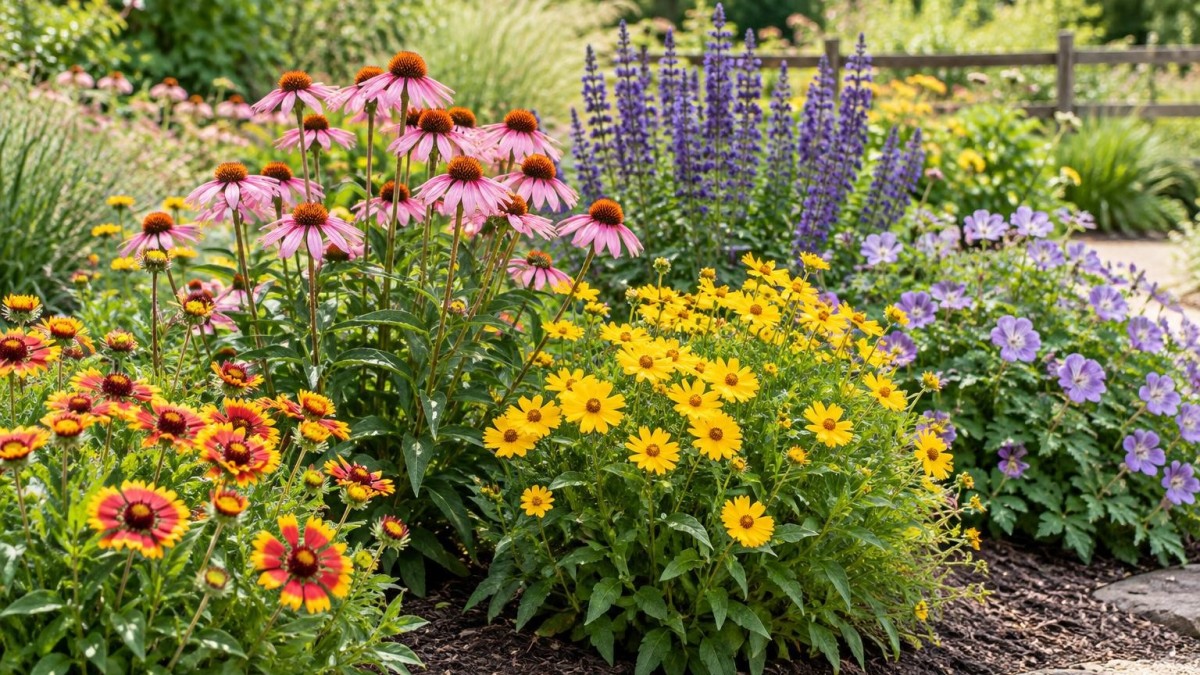
Perennials That Keep Your Garden Vibrant
A garden bursting with color for months is achievable without constant replanting. By selecting the right long-blooming perennials, you can enjoy vibrant flowers throughout spring, summer, and into fall, year after year.
Keep in mind that "long-blooming" doesn’t mean year-round flowering. Bloom times depend on factors like climate, sunlight, soil, and care. A plant thriving from May to September in one region might have a shorter season elsewhere.
Combining several perennials with staggered bloom periods creates a continuous wave of color instead of relying on one plant. Here are five standout perennials to consider for extended garden beauty.
1. Coneflowers (Echinacea)
These favorites are easily recognized by their raised central cones and radiating petals. Purple coneflower is the classic, but cultivars come in a spectrum from pink to red and even green. Plant them in sunny, well-drained spots for best results. Once established, they tolerate drought well, though young plants need regular watering. Deadheading spent flowers can encourage more blooms, but leaving seed heads provides winter interest and feeds birds. Plus, they attract beneficial pollinators.
2. Blanket Flowers (Gaillardia)
Ideal for hot, sunny locations, these cheerful blooms usually mix reds, oranges, and yellows. They thrive in well-drained soil and appreciate full sun. Deadheading helps maintain their showy appearance and can prolong blooming. Be sure to check species hardiness for your area since performance varies. Their warm colors blend beautifully with ornamental grasses and drought-tolerant plants.
3. Salvias
This large group offers spiky flowers ranging from blues and purples to reds and whites, attracting bees, butterflies, and hummingbirds. Many salvias enjoy full sun and well-drained soil and tolerate heat once established. Some can bloom twice if you prune them after their first flush—just follow care guidelines for your variety. These plants add vertical interest and complement rounded blooms.
4. Coreopsis (Tickseed)
With sun-bright yellow and gold flowers, along with pinks and burgundies in some cultivars, coreopsis brings cheerful lightness to gardens. They generally prefer full sun and well-drained soil. Deadheading may extend blooming, though newer types often flower continuously. Coreopsis fits well in mixed borders, complementing coneflowers and grasses without overpowering them. Remember to read labels carefully, as coreopsis traits vary widely.
5. Hardy Geraniums (Cranesbill)
Often confused with bedding plants called geraniums, hardy geraniums or cranesbill are tough perennials with different habits and bloom times. An example is 'Rozanne,' famous for its long, violet-blue flowering season. They’re versatile in borders, as ground cover, or beneath taller plants. Depending on the variety, they thrive in sun or partial shade. Trimming after heavy bloom encourages fresh growth and sometimes additional flowers.
Tips for Extending Flowering Seasons
Selecting the right perennials is just the start. Placement impacts bloom duration, with most long-bloomers needing full sun and well-drained soil. New plants require consistent watering until established, even if drought tolerant later. Deadheading helps some perennials but isn’t always necessary. Avoid overfertilizing, which can lead to lush growth with fewer flowers.
The secret to a long-flowering garden is pairing plants with overlapping bloom times. Early bloomers hand off to summer stars like coreopsis and blanket flower, followed by late-season performers. Also, consider non-flowering interest like foliage and seed heads to keep your garden attractive all season.
Check plant labels for hardiness zones, mature size, sunlight, soil, and bloom period suited to your location. With thoughtful selection and care, these five perennials can provide months of color without the need to replant annually.
Newsletter Station provides professionally written, ready-to-send newsletters customized for your market and brand.
EXPLORE NEWSLETTER OPTIONS