
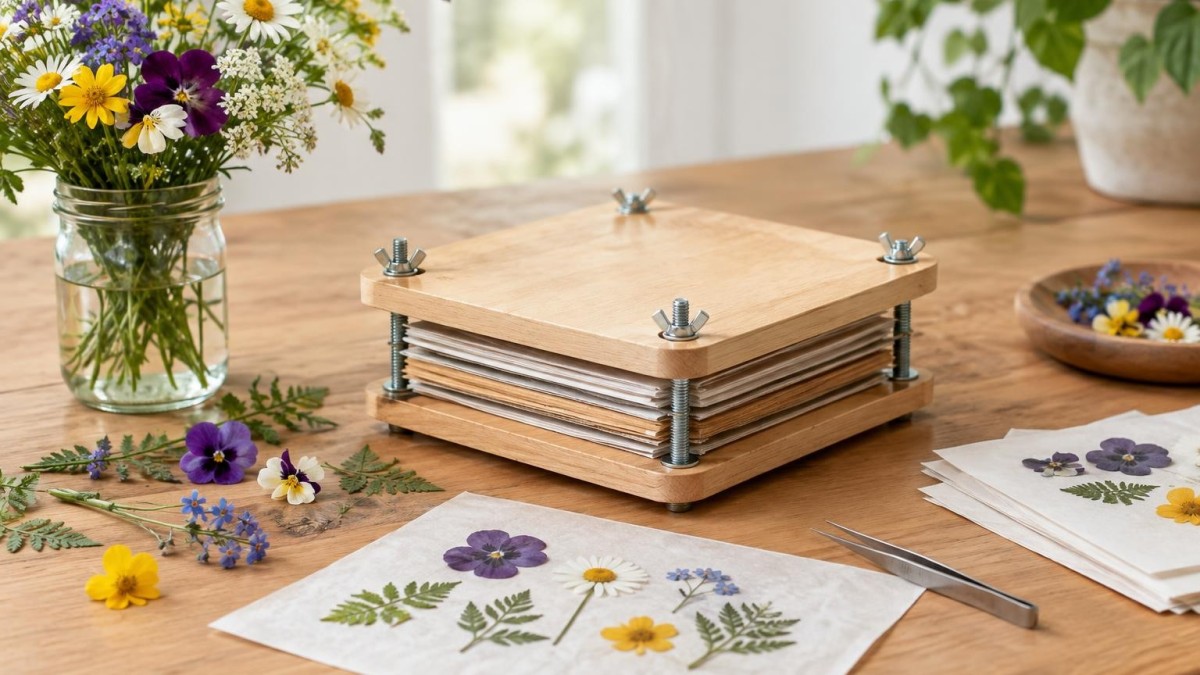
Choosing Flowers That Press Well
Pressing flowers is a charming way to preserve your favorite blooms beyond their season. For the best results, pick fresh flowers with relatively flat petals and low moisture content. Varieties like pansies, daisies, cosmos, forget-me-nots, ferns, and Queen Anne’s lace offer great color and shape that press nicely. While thick-petaled flowers like roses or tulips can be trickier, pressing individual petals often works well. Always select healthy flowers free from damage and dry any surface moisture to prevent mold.
Preparing and Pressing Your Blooms
Prepare your flowers as soon as possible after picking to maintain their color and shape. Gently clean them, trim excess stems or leaves, and separate thick petals to encourage even drying. Position each flower exactly as you want it pressed, as dried petals are fragile.
There are three common pressing methods:
1. Book Pressing: Place flowers between absorbent paper inside a heavy book, add weight on top, and store in a dry place for 2–4 weeks. Avoid wax or parchment paper as they don’t absorb moisture well.
2. DIY Flower Press: Construct a press using wooden boards, cardboard, and absorbent paper, secured with straps or bolts. This allows pressing multiple flowers simultaneously with controlled pressure.
3. Microwave Pressing: For faster results, use a microwave-safe flower press and heat in short intervals on low power. This method suits smaller, flatter flowers but requires careful monitoring to avoid scorching.
Handling and Using Pressed Flowers
Ensure flowers are completely dry before removing them; they should feel papery, not damp. Use tweezers to gently lift them to avoid tearing. Note that some color changes are normal, especially with reds and purples. Store pressed flowers away from sunlight and humidity to preserve their appearance.
Pressed flowers make beautiful additions to framed artwork, greeting cards, bookmarks, scrapbooks, and crafts like decoupage or resin projects. Use acid-free materials and UV-filtering glass when framing to extend longevity. Saving extra pressed flowers from important occasions is a smart idea in case some get damaged.
Tips to Avoid Common Mistakes
Prevent mold and browning by ensuring flowers are dry before pressing and by checking absorbent papers regularly. Avoid overlapping petals and apply consistent, gentle pressure. Begin with easy flowers to build your skills and find which varieties work best for you.
Pressing flowers is an enjoyable and affordable way to capture the spirit of your garden or special moments. With patience and practice, you'll create lasting floral art to cherish and share.
Newsletter Station provides professionally written, ready-to-send newsletters customized for your market and brand.
EXPLORE NEWSLETTER OPTIONS