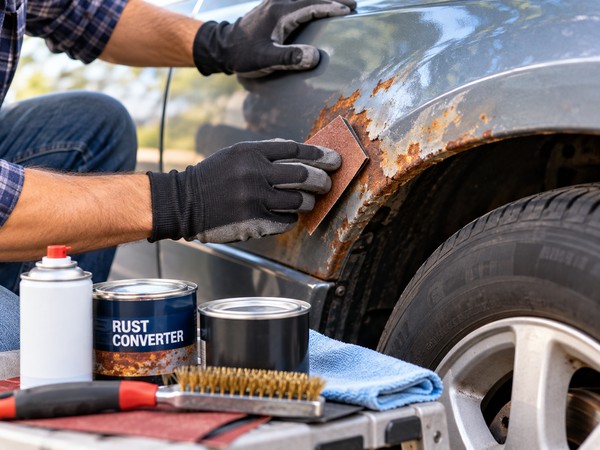
Finding rust on your car can be frustrating, especially when the rest of the vehicle is in good condition. What starts as a small orange spot along a wheel well or door edge can gradually spread beneath the paint, causing bubbling, flaking, and eventually more serious metal damage.
Rust is particularly common in areas that experience snowy winters and road salt. Moisture, salt, and debris can collect in hard-to-reach areas, accelerating corrosion and making even relatively newer vehicles vulnerable.
The good news is that minor surface rust can often be treated at home with the right materials and a little patience. The key is identifying how extensive the damage is before deciding whether to handle the repair yourself or seek professional help.
- Gather the Right Rust Removal Supplies
Before starting a DIY car rust repair, make sure you have the appropriate tools and materials.
For most small surface rust repairs, you'll need:
Safety equipment: Protective gloves, safety glasses, and a properly fitted respirator suitable for the dust or chemicals involved.
Automotive cleaner: Car wash soap or an appropriate degreaser to remove dirt, grease, and road residue.
Sandpaper: Several grits, typically ranging from coarse to fine, depending on the condition of the metal.
Wire brush: Useful for removing loose rust and flaking paint.
Automotive rust remover or converter: Choose a product designed for the type of corrosion you're treating.
Automotive primer: An appropriate corrosion-resistant primer helps protect exposed metal.
Touch-up paint and clear coat: Use products compatible with your vehicle's paint system.
Masking tape and protective paper: These protect surrounding surfaces during sanding and painting.
Work in a well-ventilated area and follow all product safety instructions. Sanding old automotive coatings can create hazardous dust, and some rust treatments contain chemicals that require additional precautions.
- Determine How Serious the Rust Is
Not all automotive rust requires the same approach. Before beginning repairs, examine the affected area carefully.
Surface Rust
Surface rust typically appears as small orange or brown spots on exposed metal. It often develops where paint has chipped or scratched, allowing moisture to reach the metal underneath.
When caught early, surface rust is usually the easiest type to repair.
Scale Rust
Scale rust occurs when corrosion progresses beyond the surface, creating rough patches, flaking metal, or visible pitting.
You may notice bubbling paint or areas where the metal looks uneven. Repairs become more involved because damaged material must be removed before the surface can be refinished.
Penetrating Rust
Penetrating rust occurs when corrosion eats through the metal, creating holes or significantly weakening the affected area.
Rust involving frame components, suspension mounting points, brake lines, or other structural and safety-related parts should be evaluated by a qualified automotive professional.
Simply covering these areas with body filler or paint does not restore their strength.
- Remove Minor Surface Rust
If the rust is limited to a small, nonstructural area, you may be able to remove it yourself.
Step 1: Clean the Area
Wash the affected section thoroughly with automotive soap and water. Remove road grime, salt, and grease, then allow the surface to dry completely.
Step 2: Remove Loose Rust and Paint
Use a wire brush or appropriately graded sandpaper to remove loose rust and damaged paint.
Work carefully to avoid removing more surrounding paint than necessary. Sand until you reach sound metal and stable paint edges.
Step 3: Treat Remaining Corrosion
If the product you're using requires a chemical rust remover or converter, follow its instructions carefully.
Rust removers and converters work differently. Some products dissolve rust and must be rinsed or neutralized, while others chemically convert remaining corrosion into a more stable coating.
Don't assume these products are interchangeable or compatible with every primer.
Step 4: Prepare and Prime the Surface
Once the area is clean and dry, smooth the transition between the exposed metal and surrounding paint.
Apply an automotive primer suitable for bare metal and compatible with your chosen paint system.
Step 5: Repaint and Protect
Apply matching automotive paint in thin coats, allowing the recommended drying time between applications.
Finish with a compatible clear coat if required by the paint system.
For the best color match, use your vehicle's paint code rather than relying solely on a color that looks similar.
- Know When Scale Rust Requires More Work
Scale rust is more challenging because corrosion may extend beneath surrounding paint or into pits in the metal.
Removing the visible orange discoloration isn't enough if corrosion remains underneath.
A thorough repair may involve removing damaged paint, mechanically cleaning the affected metal, treating remaining corrosion where appropriate, and refinishing the area.
Body filler can sometimes be used to smooth minor surface imperfections after the metal has been properly prepared. However, filler should never be used to conceal active rust or repair structurally weakened metal.
If the affected area is large, deeply pitted, or located near a seam or welded joint, professional evaluation is usually the safer choice.
Keep in mind that rust can spread from the back of a panel toward the painted surface. What appears to be a small blemish may involve more damage than you can see.
- Leave Structural Rust Repairs to Professionals
Some rust problems go beyond cosmetic damage.
Corrosion affecting a vehicle's frame, rocker panels, floor supports, suspension components, or brake system can compromise safety.
These repairs may require cutting away damaged metal, welding replacement sections, or replacing affected components.
Attempting to conceal penetrating rust with filler, fiberglass patches, or spray-on coatings can leave serious problems unresolved.
If you discover holes, soft metal, extensive flaking, or rust near critical mounting points, have the vehicle inspected before attempting repairs.
A professional can determine whether the affected component can be safely repaired or needs replacement.
- Prevent Rust From Returning
Once you've repaired the damage, prevention becomes the most important part of protecting your vehicle.
Wash Your Car Regularly
Road salt is a major contributor to automotive corrosion, particularly during winter.
Wash your vehicle regularly when conditions permit, paying special attention to the wheel wells, lower body panels, and undercarriage.
An underbody rinse can help remove salt and debris that collect in areas you don't normally see.
Keep Drainage Areas Clear
Doors, rocker panels, and other body sections often contain drainage openings designed to allow trapped water to escape.
When these openings become blocked with dirt or leaves, moisture can accumulate and encourage rust.
Inspect accessible drains periodically and clear debris according to your vehicle manufacturer's recommendations.
Repair Paint Chips Promptly
Small chips caused by stones and road debris expose metal to moisture.
Touching up damaged paint before rust develops is usually much easier and less expensive than repairing corrosion later.
Protect the Finish
Regular washing and applying a suitable automotive wax or paint sealant can help protect the vehicle's finish.
These products don't repair existing rust, but they can provide an additional barrier against environmental exposure.
Inspect Vulnerable Areas
Check wheel arches, door bottoms, rocker panels, trunk edges, and the underside of your vehicle.
Look for bubbling paint, reddish-brown stains, or areas where protective coatings have begun to peel.
Are Homemade Rust Removers Effective?
Household products such as white vinegar are sometimes recommended for removing rust from metal.
While vinegar can dissolve certain types of surface corrosion, it isn't necessarily the best choice for automotive body repairs. Prolonged exposure may affect surrounding finishes, and any residue left behind can interfere with primer or paint adhesion.
Baking soda may help with some light cleaning tasks, but it isn't a substitute for properly removing corrosion and protecting exposed metal.
For vehicle repairs, automotive-specific rust removal products are generally more predictable because they are designed for use with compatible surface preparation and refinishing systems.
Always follow the manufacturer's directions, particularly regarding rinsing, drying, and applying subsequent coatings.
Common Rust Repair Mistakes to Avoid
One of the biggest mistakes is painting directly over rust without preparing the surface. Even if the area looks better temporarily, corrosion can continue beneath the new coating.
Other common mistakes include failing to remove loose paint, applying incompatible products, rushing drying times, and neglecting corrosion on the back of a panel.
Another problem is assuming that a rust converter permanently stops all corrosion. These products can be useful in appropriate situations, but they cannot restore missing metal or guarantee that rust won't return.
Taking the time to prepare and protect the surface properly is just as important as removing the visible rust.
A Little Prevention Can Save a Major Repair
Rust damage becomes more difficult and expensive to address as it progresses. A small paint chip or surface blemish may require only a modest repair today, while the same area could develop extensive corrosion if ignored for several seasons.
Make rust inspections part of your regular vehicle maintenance, especially after winter or extended exposure to road salt.
If you catch corrosion early, use the proper materials and follow a careful repair process. For deeper or structural rust, seek professional assistance rather than attempting a cosmetic fix.
With regular cleaning, prompt attention to paint damage, and appropriate repairs, you can help protect your vehicle's appearance, safety, and long-term value.