
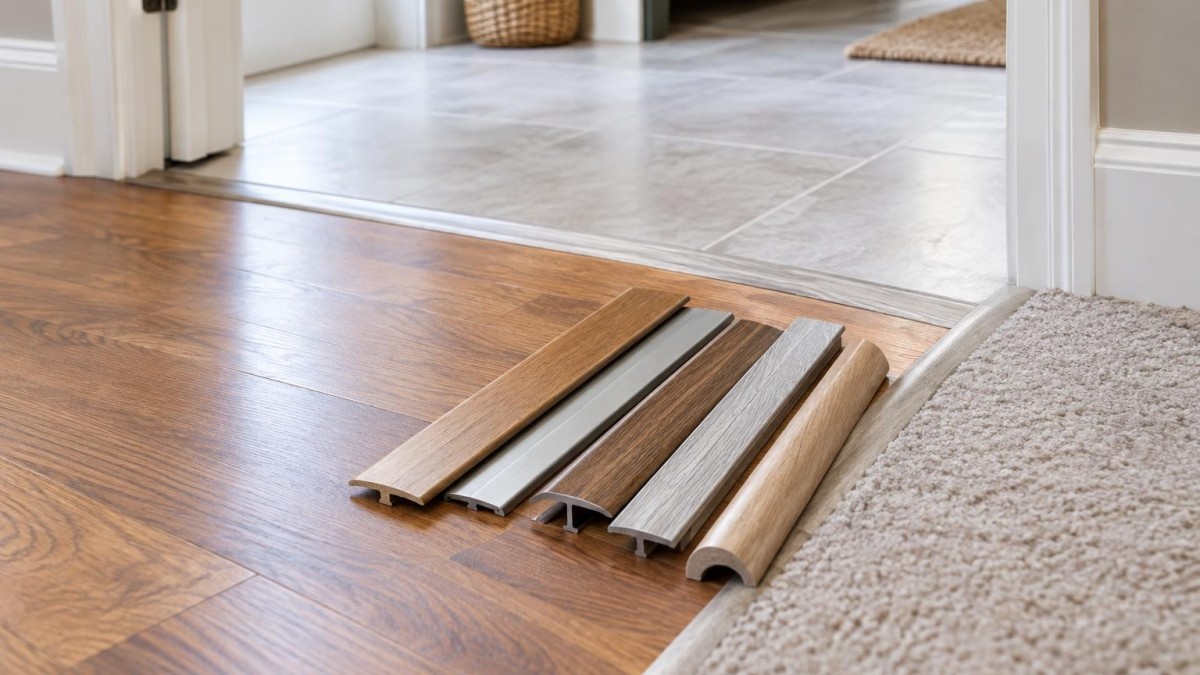
Why Flooring Transitions Matter
When installing new flooring, selecting a transition molding is more than just an afterthought. This small component plays a key role in giving your floors a polished finish, protecting edges from wear, and smoothing the height differences between different surfaces. Proper transitions also accommodate floor movement, especially for floating floors like laminate or engineered hardwood, which need room to expand and contract.
Types of Flooring Transitions
Choosing the right transition depends largely on the materials involved, their height difference, and installation location. Common types include:
T-Molding: Ideal for connecting two floors of similar height, such as hardwood meeting tile or laminate. Often placed in doorways, it visually links rooms without disrupting movement.
Reducer: Useful when flooring surfaces differ in height, offering a gradual slope—for example, transitioning from hardwood to a lower vinyl or carpeted surface.
Threshold or End Molding: Suitable where flooring meets vertical surfaces like doorways, fireplaces, or raised hearths.
Quarter Round or Shoe Molding: Typically covers expansion gaps between flooring and walls or baseboards. It’s important to attach these to fixed surfaces rather than floating floors to allow natural floor movement.
Stair Nosing: Provides a finished edge and protection on stair treads, matched to the flooring type and installation.
Considerations Beyond Appearance
While it’s tempting to pick transitions based on looks alone, function should come first. Ask yourself:
- What flooring materials are meeting?
- Are the floors the same height?
- Does either floor float with expansion space requirements?
- What do the manufacturer's installation instructions specify?
- Where will the transition be placed?
Height differences are crucial. A large mismatch might need subfloor adjustments rather than only a transition piece. And location matters—transitions near doors, stairs, or exterior entryways need special care to combine safety, appearance, and durability.
Installation and Finishing Touches
Correct installation is key. Floating floors require transition pieces that aren't fastened directly to the floor, allowing necessary movement. Follow manufacturer guidelines closely for proper spacing and mounting.
Don’t forget measuring all transition points before purchasing, including doorways and spaces where floors change, to avoid shortages or mismatched profiles. Keeping some leftover flooring and trim after installation is wise for easy repairs later.
In short, thoughtful selection and installation of flooring transitions protect your investment, ensure safety, and bring your flooring project together with a clean, professional look.
Newsletter Station provides professionally written, ready-to-send newsletters customized for your market and brand.
EXPLORE NEWSLETTER OPTIONS