
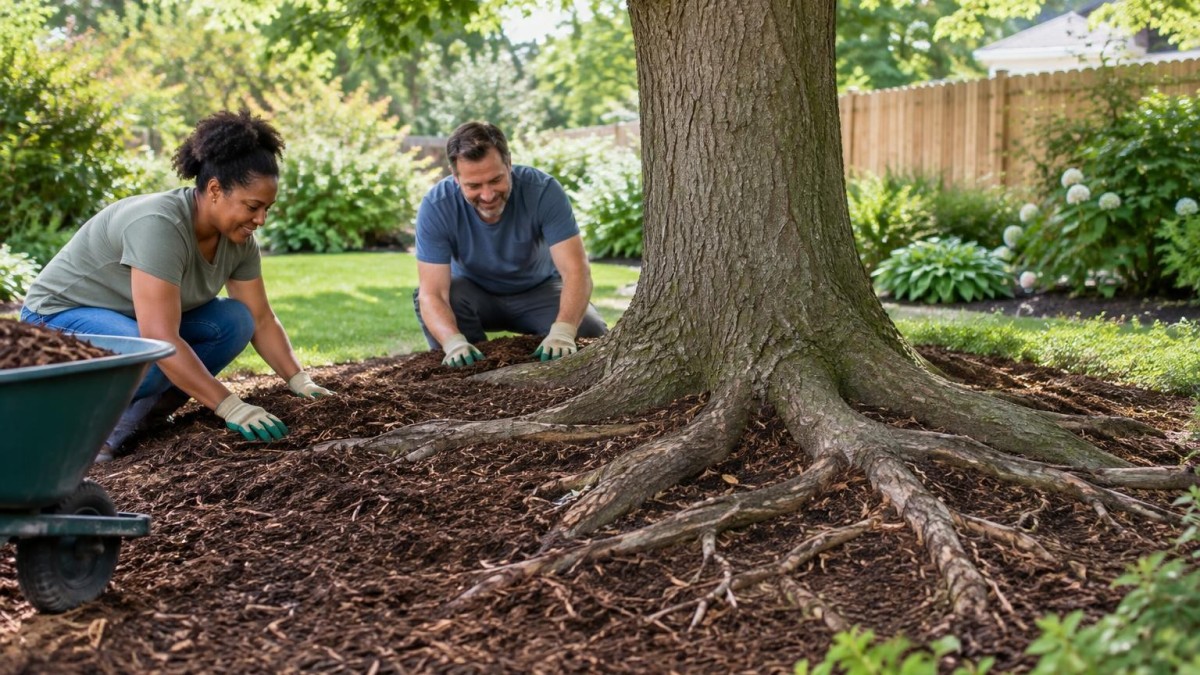
Why Tree Roots Become Visible
Exposed tree roots might catch your eye in the yard, but they’re usually part of natural growth rather than a sign of trouble. Roots often stay near the soil surface because that’s where they find the most oxygen, moisture, and nutrients. Several factors lead to roots becoming visible over time.
Soil erosion from rain, runoff, and slopes can gradually wash away covering soil and reveal roots. Compacted soil from frequent foot traffic or heavy equipment makes healthy root growth difficult and may cause roots to spread closer to the surface. Some trees like maples and willows naturally develop shallow roots, and as trees age, larger roots push up through the soil. Weather changes, such as drought or heavy rain, can further expose roots by affecting vegetation and soil stability.
Practical Steps to Manage Exposed Roots
Rather than trying to hide or cut roots—which often harms the tree—there are safe ways to protect roots and improve your yard’s look.
Mulching around the tree is a top recommendation. Spreading 2 to 3 inches of organic mulch such as bark or wood chips over exposed roots helps hold moisture, regulates temperature, suppresses weeds, and shields roots from mower damage. Just keep mulch a few inches from the trunk to avoid trapping moisture against the bark.
Addressing compacted soil can also support healthier roots. Avoid heavy foot or equipment traffic over root zones, and consult an arborist before aerating to prevent damage. Deep, infrequent watering during dry spells nourishes roots better than frequent shallow watering, supporting overall tree health even if it doesn't hide the visible roots.
If lawn grass struggles under the tree’s shade or competition, consider replacing it with shade-tolerant ground covers or mulch beds. These alternatives reduce the need to mow around roots and improve the landscape's appeal without root disturbance.
When to Seek Professional Advice
If roots are extensive, damaged, or affecting nearby structures like sidewalks or driveways, a certified arborist’s guidance is valuable. They can assess tree health, risks, and recommend suitable management strategies. Avoid cutting or grinding roots on your own, as this can compromise tree stability and introduce disease.
Root barriers should be installed cautiously and ideally planned before roots become a problem; an arborist can advise whether they’re appropriate or if modifying nearby walkways might be a better solution.
Sometimes adapting your landscape—such as creating paths that avoid roots or using flexible paving—is preferable to trying to change the tree. Proper care to protect roots while enhancing your yard helps keep your trees healthy and your outdoor space safe and beautiful for years.
Newsletter Station provides professionally written, ready-to-send newsletters customized for your market and brand.
EXPLORE NEWSLETTER OPTIONS