
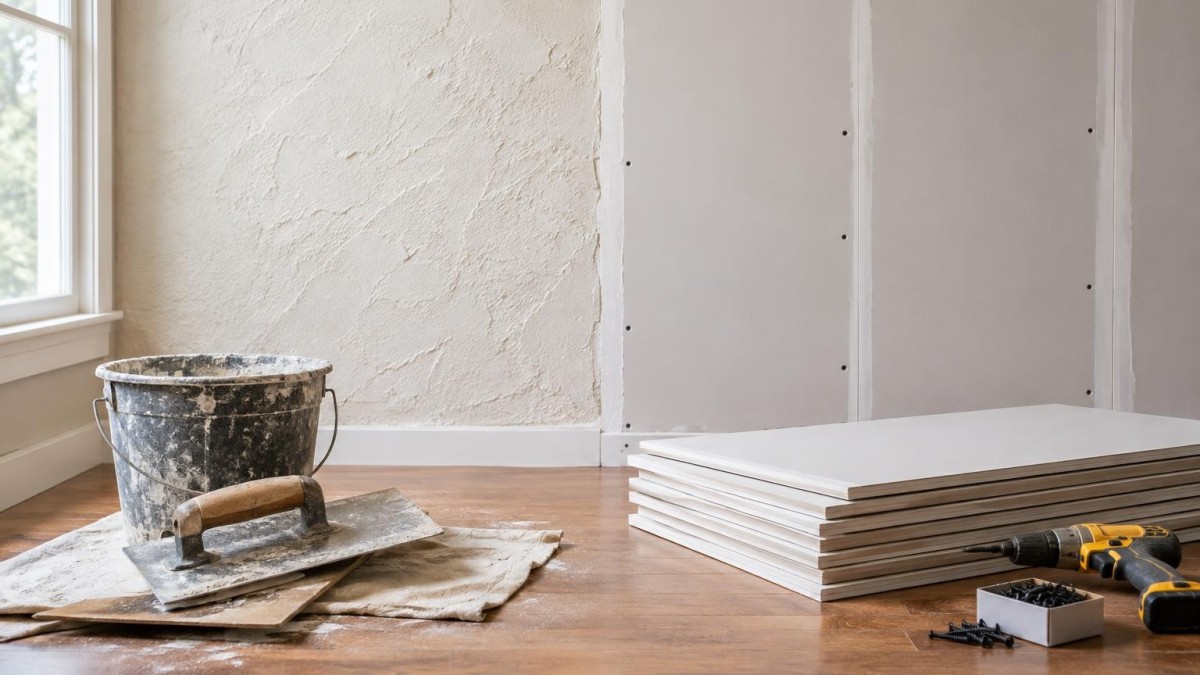
Plaster: Classic Strength with Unique Texture
Plaster has a long history as a durable wall finish, often found in older homes. It's applied in multiple layers over wood or metal lath, resulting in a hard, long-lasting surface. Plaster stands up well to everyday wear and offers flexibility in texture—from perfectly smooth finishes to detailed decorative effects uncommon with drywall.
Its density also generally improves sound resistance, though overall noise control depends on the entire wall construction. Skilled labor is essential to achieve the distinctive look plaster provides, and repairs may be tricky when cracks develop, especially if the plaster has pulled away from its base.
Drywall: Quick, Cost-Effective, and Consistent
Drywall, the modern standard, consists of large gypsum panels that fasten right onto wall framing, allowing for rapid installation. It’s usually more economical and easier to find experienced installers. Drywall creates a smooth, uniform surface that paints and wall coverings cling to well, and small repairs can often be done without major effort.
Moisture exposure requires caution, though, since typical drywall isn’t waterproof. Specialized moisture-resistant products exist, but areas like showers usually need a fully water-resistant system. Soundproofing can be enhanced with additional materials and design choices beyond the drywall itself.
Making the Right Choice for Your Home
For new builds, drywall’s speed and cost advantages often make it the practical option. In renovations, especially for older homes, preserving existing plaster might preserve character and avoid demolition expenses—provided the plaster is solid. If damage is widespread or walls need opening for updates, replacement with drywall may be better.
Budget and desired aesthetics play big roles too. Plaster, being labor-intensive, generally costs more, but its textured possibilities suit historic homes or special designs. Drywall fits well with modern, flat-wall styles and tighter schedules.
Remember to consider what lies behind your walls during renovations. Issues like outdated wiring, insulation needs, or hidden damage might influence your decision. Also, if your home predates 1978, lead paint precautions are essential when disturbing painted surfaces.
In the end, neither plaster nor drywall is inherently superior. The best choice depends on the existing material’s condition, your project’s scope, budget, and style goals. A thoughtful look at the total wall system will help you make a smart, cost-effective decision that suits your home’s needs.
Newsletter Station provides professionally written, ready-to-send newsletters customized for your market and brand.
EXPLORE NEWSLETTER OPTIONS